 Ozali dino nini? Kwizi
 Etumba ya badino
 Mbangu ya badino
 Masano mike ya badino
 Albumu ya bastika
 Bilisti TOP ya badino
 Kamwisa ngai!
Azalaki na bomoi ntango nini?

Azalaki monene boni?
Azalaki molai boni?
Azalaki molai boni na likolo?
Azalaki kilo boni?
 molai lokola bambwa 8 zolo kino mokila🍌molai lokola matoko 42 oyo balandani🍉kilo lokola bapasteke 220🧸kilo lokola bana 58 ya eteyelo ya bana mike🎒kilo lokola bana 34 ya kelasi🐻❄️kilo lokola ba-urs ya pembe 2,5🏃akokaki kopota metele 100 na sekonde 10 (moto oyo aleki mbangu asalelaka 9,6)
Lusovenator azalaki monene boni soki tokokanisi na YO?
Kaka matematiki na navigatere na yo. Eloko moko te ebombami to etindami esika moko.
Azalaki na mbangu boni?


Makambo ya kosepelisa
Lusovenator lived during the Late Jurassic and Early Cretaceous periods, about 154 to 144 million years ago.1
Its fossils were found in the Lourinhã Formation in Portugal, which is famous for many dinosaur discoveries.1
The first fossils of Lusovenator were discovered in the 1980s by a man named José Joaquim dos Santos, who later donated them to a museum.1
Lusovenator belongs to a group of large meat-eating dinosaurs called carcharodontosaurs, which includes some of the biggest predators ever.1
The known bones of Lusovenator include parts of the spine, hips, and a nearly complete right foot.1
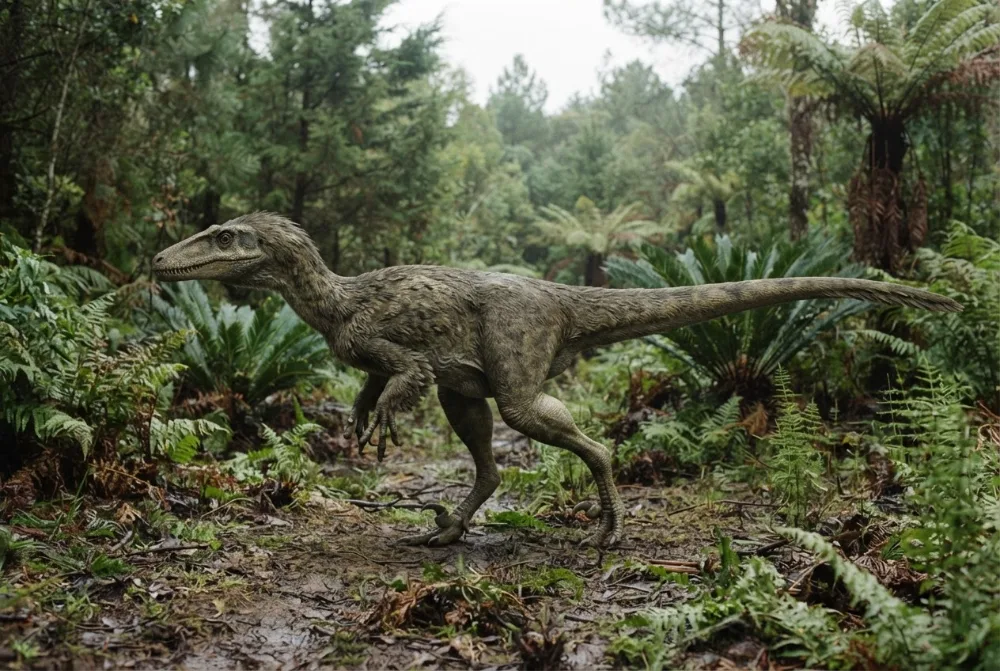
Mituna oyo batunaka mingi na ntina na Lusovenator
?How big was Lusovenator?
Scientists don't know its exact size because only partial bones were found, but it was a medium to large meat eater, likely around 6 to 8 metres long (20 to 26 feet).4
?What did Lusovenator eat?
Lusovenator was a carnivore, so it ate meat. It probably hunted smaller dinosaurs and other animals in its environment.4
?When did Lusovenator live?
It lived during the Late Jurassic and Early Cretaceous periods, about 154 to 144 million years ago.1
?Where was Lusovenator found?
Its fossils were found in Portugal, in the Lourinhã Formation, which is famous for many dinosaur discoveries.1
?Is Lusovenator a dinosaur?
Yes, it is a dinosaur. It belongs to a group of meat-eating dinosaurs called carcharodontosaurs.1
?Why is it called Lusovenator?
The name means 'Portuguese hunter' because it was found in Portugal and it was a predator.1
Mpo na bayebi ya badino
- Nkombo ya siansi
- Lusovenator
- Nkombo epesamaki na
- Malafaia et al. 20204
- Lisanga
- Badino ya kolia mosuni
- Libota / klade
- Carcharodontosauria4
- Klasifikasio
- Theropoda > Allosauroidea4
- Mbula ya mabanga
- mbula milio 152 kino 143 (Kimmeridgian / Tithonian)4
- Milongo ya mabanga
- Freixial, Praia da Amoreira-Porto Novo4
- Bikolo
- Portigale4
- Bafosile oyo ekomami
- 2 na The Paleobiology Database4
- Ntango bamonaki yango
- Lusovenator was named in 2020 by Malafaia and colleagues. The fossils were found in Portugal by José Joaquim dos Santos in the 1980s and later studied by scientists.14
- Naino bazali kowelana
- Scientists are not sure exactly how big Lusovenator grew, because the only skeleton found so far is from a young animal.1
Esika makambo euti
- Lusovenator (en.wikipedia.org)
- Lusovenator santosi: New Predatory Dinosaur Identified in Portugal | Paleontology World (paleontologyworld.com)
- Lusovenator santosi | Dinosaur Database by DinoAnimals.com (dinoanimals.com)
- Lusovenator in The Paleobiology Database (CC BY 4.0): mbula, bisika, milongo ya mabanga, klasifikasio.
Likambo nyonso na lokasa oyo ezali na nimero oyo elakisi liziba na yango. Soki tosali libunga, limbisa biso, tozali bato balingaka badino, zulunalo ya siansi te. Yebisa biso na [email protected] mpe tokobongisa yango.
 Rex azali na nzala! Dino Wiki ezali mosala ya tata moko mpo na mwana na ye ya mobali oyo alingaka badino, ofele, piblisite te mpe batrakere te. Bato bakolo bakoki kopesa Rex biskwi mpo na kosalisa ete etikala na internet.Leisa Rex
 Allosaurus
 Carnotaurus
 Dilophosaurus
 Giganotosaurus
 Compsognathus
 Paronychodon
 Brachiosaurus
 Diplodocus
 Brontosaurus
 Camarasaurus
 Morosaurus
 Apatosaurus