 Ozali dino nini? Kwizi
 Etumba ya badino
 Mbangu ya badino
 Masano mike ya badino
 Albumu ya bastika
 Bilisti TOP ya badino
 Kamwisa ngai!
Scaphognathus
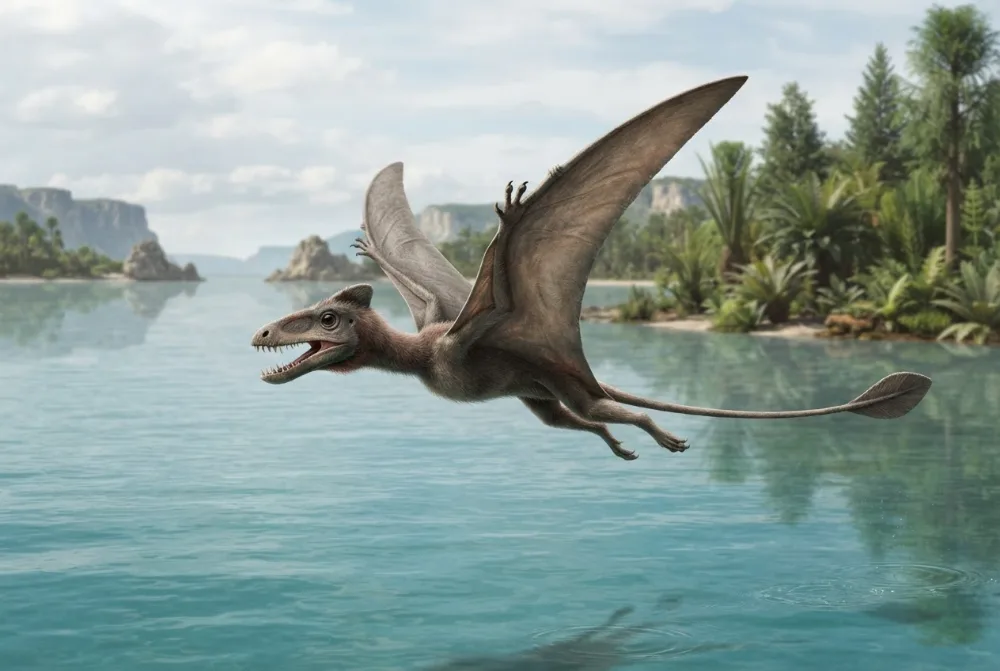
Scaphognathus was a small pterosaur with a blunt snout and a long tail. It flew over warm Jurassic lagoons and snatched fish from the water. Unlike many pterosaurs, it was probably awake during the day.1
Azalaki na bomoi ntango nini?
Azalaki monene boni?
Mapapu na ye ezalaki monene boni?
 molai lokola bapusu 2 ya ndako zolo kino mokila⚽akokaki kopumbwa kokatisa esika mobimba ya ndembo na sekonde 11
Scaphognathus azalaki monene boni soki tokokanisi na YO?
Kaka matematiki na navigatere na yo. Eloko moko te ebombami to etindami esika moko.
Azalaki na mbangu boni?


Makambo ya kosepelisa
Scaphognathus had a short, blunt skull only about 11 centimetres (4.5 inches) long.1
It had 16 teeth in the upper jaw and 10 in the lower jaw, and they pointed straight up and down, not forward.1
A second specimen found was much smaller, with a wingspan of only 50 centimetres (20 inches), and scientists think it was a juvenile.1
Scaphognathus lived during the Late Jurassic, about 155 to 150 million years ago.1
Its eye bones (scleral rings) suggest it was diurnal, or active during the day, unlike some other pterosaurs that were nocturnal.1
The first fossil was described in 1831 by August Goldfuss, who thought it was a species of Pterodactylus.1
Mituna oyo batunaka mingi na ntina na Scaphognathus
?How big was Scaphognathus?
Scaphognathus had a wingspan of about 0.9 metres (3 feet). A second, smaller specimen had a wingspan of only about 50 centimetres (20 inches) and was probably a juvenile.12
?What did Scaphognathus eat?
Scaphognathus was a carnivore, meaning it ate meat. Its main food was a type of ancient fish called Pholidophorus.2
?Was Scaphognathus a dinosaur?
No, Scaphognathus was a pterosaur, a flying reptile, not a dinosaur. It lived during the Late Jurassic, about 155 to 150 million years ago.12
?Why did Scaphognathus have a long tail?
Scaphognathus had a long tail that ended in a leaf-shaped flap. This probably helped it steer and balance while flying, like a rudder on a boat.2
Mobuki masapo
Lisapo: Scaphognathus is sometimes confused with Rhamphorhynchus because both have long tails.
Solo: Scaphognathus had a shorter, blunter skull and vertical teeth, while Rhamphorhynchus had a longer, thinner skull with forward-pointing teeth.1
Mpo na bayebi ya badino
- Nkombo ya siansi
- Scaphognathus
- Nkombo epesamaki na
- Wagner 18613
- Lisanga
- Bareptile oyo bapumbwaka
- Libota / klade
- Rhamphorhynchidae3
- Klasifikasio
- Pterosauria > Rhamphorhynchidae3
- Mbula ya mabanga
- mbula milio 168 kino 143 (Bathonian / Tithonian)3
- Milongo ya mabanga
- Solnhofener Plattenkalk, Tiaojishan3
- Bikolo
- Alemani, Sina3
- Bafosile oyo ekomami
- 3 na The Paleobiology Database3
- Bayebi ye mpe na nkombo
- Brachytrachelus, Pachyrhamphus (bankombo ya kala oyo sikoyo batangaka lokola nyama moko)3
- Ntango bamonaki yango
- The first Scaphognathus fossil was described by August Goldfuss in 1831 from the Solnhofen Limestone near Eichstätt, Germany. He originally named it a new species of Pterodactylus. In 1861, Johann Wagner gave it its own genus name Scaphognathus.1
- Naino bazali kowelana
- Scientists are not sure whether some fossils from China belong to Scaphognathus or to a related pterosaur.3
Esika makambo euti
- Scaphognathus (en.wikipedia.org)
- Scaphognathus Facts for Kids (kids.kiddle.co)
- Scaphognathus in The Paleobiology Database (CC BY 4.0): mbula, bisika, milongo ya mabanga, klasifikasio.
Likambo nyonso na lokasa oyo ezali na nimero oyo elakisi liziba na yango. Soki tosali libunga, limbisa biso, tozali bato balingaka badino, zulunalo ya siansi te. Yebisa biso na [email protected] mpe tokobongisa yango.
 Rex azali na nzala! Dino Wiki ezali mosala ya tata moko mpo na mwana na ye ya mobali oyo alingaka badino, ofele, piblisite te mpe batrakere te. Bato bakolo bakoki kopesa Rex biskwi mpo na kosalisa ete etikala na internet.Leisa Rex
 Pteranodon
 Quetzalcoatlus
 Dorygnathus
 Rhamphorhynchus
 Anhanguera
 Pterodactylus
 Brachiosaurus
 Diplodocus
 Allosaurus
 Brontosaurus
 Compsognathus
 Camarasaurus