 നീ ഏതു ദിനോയാണ്? ക്വിസ്
 ദിനോ പോരാട്ടം
 ദിനോ ഓട്ടമത്സരം
 ദിനോ മിനി ഗെയിമുകൾ
 സ്റ്റിക്കർ ആൽബം
 ദിനോ TOP ലിസ്റ്റുകൾ
 എന്നെ അത്ഭുതപ്പെടുത്തൂ!
അത് എപ്പോഴാണ് ജീവിച്ചിരുന്നത്?

അത് എത്ര വലുതായിരുന്നു?
അതിന് എത്ര നീളമുണ്ടായിരുന്നു?
അതിന് എത്ര ഉയരമുണ്ടായിരുന്നു?
ഏകദേശ കണക്ക്
 മൂക്കു മുതൽ വാൽ വരെ നിരന്നുനിൽക്കുന്ന 2 വീട്ടുപൂച്ചകളുടെ നീളം🍌നിരയായി വെച്ച 5 വാഴപ്പഴങ്ങളുടെ നീളം🪑ഒരു കസേരയ്ക്കടിയിലൂടെ നടക്കാൻ പറ്റുന്നത്ര ചെറുത്🏊ഒരു വലിയ നീന്തൽക്കുളത്തിന്റെ നീളം (50 മീ.) 20 സെക്കൻഡിൽ നീന്തും
Parahesperornis നിന്നെ അപേക്ഷിച്ച് എത്ര വലുതായിരുന്നു?
നിന്റെ ബ്രൗസറിൽ വെറും കണക്കുകൂട്ടൽ മാത്രം. ഒന്നും സേവ് ചെയ്യുന്നില്ല, എവിടേക്കും അയയ്ക്കുന്നുമില്ല.
അത് എത്ര വേഗത്തിൽ ഓടുമായിരുന്നു?


രസകരമായ വസ്തുതകൾ
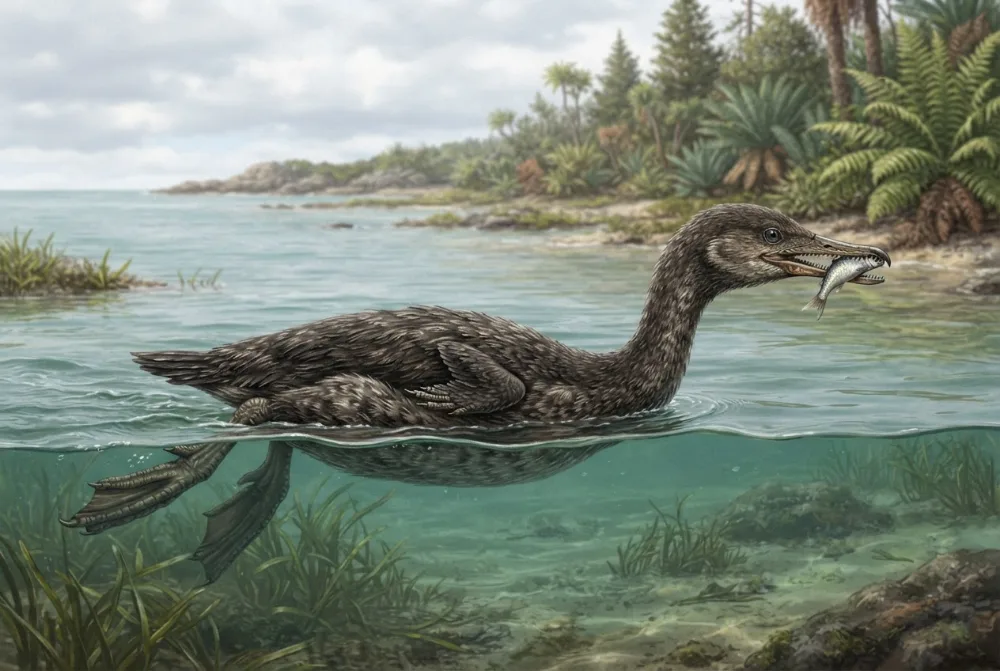
Parahesperornis could not fly. Its wings were tiny and useless for flying, but its legs were strong for swimming.12
It had sharp teeth in its beak, which is unusual for modern birds. These teeth helped it grab slippery fish.12
Parahesperornis is known from two nearly complete skeletons, which is rare for ancient birds. Most are found as just a few bones.2
It lived in the Western Interior Seaway, a shallow sea that covered central North America during the Cretaceous.1
The first fossil of Parahesperornis was found in 1894, but it was not named until 1984 by scientist L. D. Martin.24
Parahesperornis was about the size of a modern loon or a small penguin, around 60 to 90 centimeters long.2
Parahesperornis: ഏറ്റവും കൂടുതൽ ചോദിച്ച ചോദ്യങ്ങൾ
?Was Parahesperornis a dinosaur?
Yes, it was a type of prehistoric bird. While birds are descendants of dinosaurs, scientists classify Parahesperornis as an avialan bird rather than a dinosaur.1
?How big was Parahesperornis?
It was about 60 to 90 centimetres (2 to 3 feet) long, roughly the size of a modern loon or a small penguin.1
?Did Parahesperornis have teeth?
Yes, it had sharp teeth in its beak, which helped it grab slippery fish.2
?Could Parahesperornis swim?
Yes, it was a foot-propelled diving bird that swam like a penguin, using its strong legs to chase fish underwater.3
ദിനോ വിദഗ്ധർക്ക്
- ശാസ്ത്രീയ നാമം
- Parahesperornis
- പേരിട്ടത്
- Martin 19844
- ഗ്രൂപ്പ്
- ആദ്യകാല പക്ഷികൾ
- കുടുംബം / ക്ലേഡ്
- Hesperornithidae4
- വർഗ്ഗീകരണം
- Theropoda > Avialae4
- പാറകളുടെ പ്രായം
- 90 മുതൽ 84 ദശലക്ഷം വർഷം വരെ (Coniacian / Santonian)4
- ശിലാസമൂഹങ്ങൾ
- Niobrara4
- രാജ്യങ്ങൾ
- യുഎസ്എ4
- ഫോസിൽ രേഖകൾ
- The Paleobiology Database-ൽ 34
- കണ്ടെത്തൽ
- The first fossil of Parahesperornis alexi was found in 1894 by H. T. Martin in Graham County, Kansas. It was later named by L. D. Martin in 1984.24
- ഇപ്പോഴും തർക്കത്തിൽ
- Scientists are not sure if some fossils from Mongolia belong to Parahesperornis or a different, similar bird.1
വസ്തുതകൾ എവിടെനിന്ന്
- Parahesperornis (en.wikipedia.org)
- Anatomy of Parahesperornis: Evolutionary Mosaicism in the Cretaceous Hesperornithiformes (Aves) (mdpi.com)
- Anatomy of Parahesperornis: Evolutionary Mosaicism in the Cretaceous Hesperornithiformes (Aves) (pmc.ncbi.nlm.nih.gov)
- Parahesperornis in The Paleobiology Database (CC BY 4.0): പ്രായം, സ്ഥലങ്ങൾ, ശിലാസമൂഹങ്ങൾ, വർഗ്ഗീകരണം.
ഈ പേജിലെ ഓരോ വസ്തുതയ്ക്കും ഒരു നമ്പറുണ്ട്, അത് അതിന്റെ ഉറവിടത്തിലേക്ക് ചൂണ്ടുന്നു. എന്തെങ്കിലും തെറ്റിപ്പോയെങ്കിൽ ക്ഷമിക്കണം, ഞങ്ങൾ ദിനോ ആരാധകരാണ്, ശാസ്ത്ര ജേണലല്ല. [email protected] എന്ന വിലാസത്തിൽ അറിയിക്കൂ, ഞങ്ങൾ ശരിയാക്കാം.
 റെക്സിന് വിശക്കുന്നു! ദിനോസറുകളെ ഇഷ്ടപ്പെടുന്ന മകനുവേണ്ടി ഒരു അച്ഛൻ ഉണ്ടാക്കിയതാണ് Dino Wiki, പരസ്യങ്ങളും ട്രാക്കറുകളുമില്ലാതെ തികച്ചും സൗജന്യം. ഇത് ഓൺലൈനിൽ നിലനിർത്താൻ മുതിർന്നവർക്ക് റെക്സിന് ഒരു സ്നാക്ക് കൊടുക്കാം.റെക്സിനെ ഊട്ടൂ
 Archaeopteryx
 Hesperornis
 Ichthyornis
 Baptornis
 Jurapteryx
 Gobipteryx
 Tyrannosaurus
 Triceratops
 Velociraptor
 Spinosaurus
 Ankylosaurus
 Parasaurolophus