 Kwizi ya Ndiwe dino uti?
 Nkhondo ya madino
 Mpikisano wa madino
 Masewera ang'onoang'ono a madino
 Chimbale cha zomata
 Mindandanda ya TOP ya madino
 Ndidabwitse!
Ankakhala liti?

Anali wamkulu bwanji?
Anali wautali bwanji?
Msinkhu wake unali wautali bwanji?
Ankalemera bwanji?

 wautali ngati magalimoto 4 oimikidwa pamzere🍌wautali ngati nthochi 100 zotsatizanawolemera ngati magalimoto 13🍉wolemera ngati mavwende 4000🎒wolemera ngati makalasi athunthu a ana a sukulu 25🐻❄️wolemera ngati zimbalangondo zoyera 44🏃akanatha kuthamanga mamita 100 m'masekondi 22 (munthu waliwiro kwambiri amafunika 9.6)
Astrophocaudia anali wamkulu bwanji poyerekeza ndi IWEYO?
Ndi masamu chabe mu msakatuli wako. Palibe chimene chimasungidwa kapena kutumizidwa kwina kulikonse.
Anali ndi liwiro lotani?


Mfundo zosangalatsa
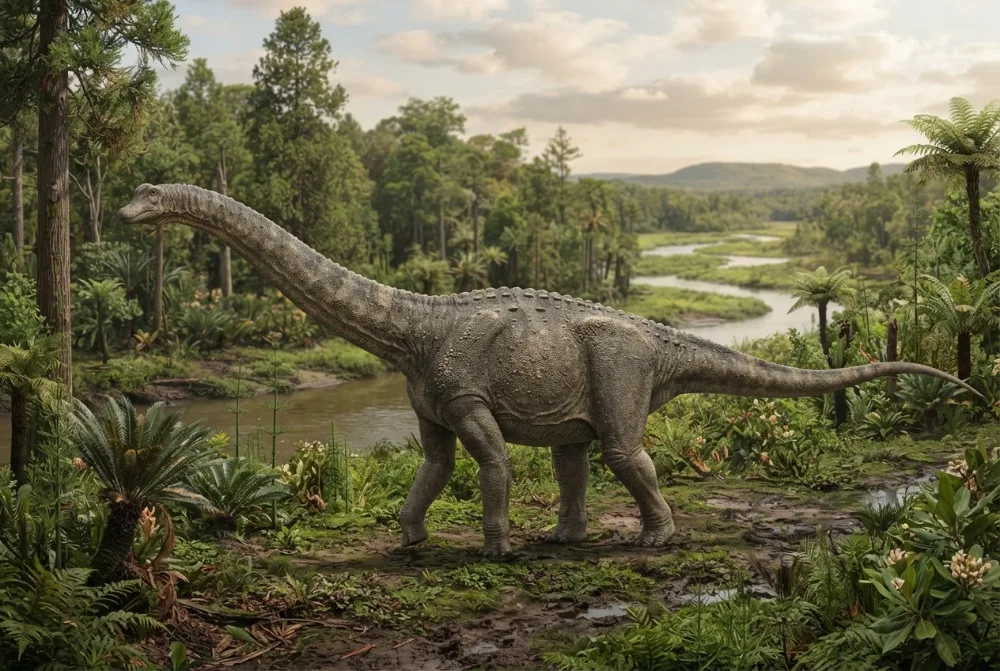
The name Astrophocaudia has a double meaning: 'non-twisting tail' because the tail bones were tightly connected, and 'star tail' because the tail bones look like a three-pointed star from behind.1
Scientists are not sure how big Astrophocaudia was. One study said it was about 10.9 metres (36 feet) long and weighed 2.85 tonnes (6,300 pounds), but another said 18.3 metres (60 feet) long and 20 tonnes (44,000 pounds).1
Most of the bones from one single Astrophocaudia were found together, including 24 tail bones, parts of the neck and back, ribs, a shoulder blade, and a hip bone.1
Astrophocaudia's fossils were first discovered in the 1960s by paleontologist Robert Slaughter, but they were not fully studied until the 2010s.1
The species name slaughteri honors Robert Slaughter, who dug up the bones.1
Mafunso ofunsidwa kwambiri okhudza Astrophocaudia
?How big was Astrophocaudia?
Scientists are not sure. One study estimated it at 10.9 metres (36 feet) long and 2.85 tonnes (6,300 pounds), while another estimated 18.3 metres (60 feet) long and 20 tonnes (44,000 pounds).1
?What did Astrophocaudia eat?
It was a herbivore, meaning it ate plants.3
?When did Astrophocaudia live?
It lived during the Early Cretaceous Period, about 112 to 106 million years ago.1
Kwa akatswiri a madino
- Dzina la sayansi
- Astrophocaudia
- Anapatsidwa dzina ndi
- D'Emic 20133
- Gulu
- Makosi atali
- Banja / kladi
- Somphospondyli3
- Magawidwe a sayansi
- Sauropodomorpha > Sauropoda > Macronaria3
- Zaka za miyala
- zaka 113 mpaka 110 miliyoni (Albian)3
- Mapangidwe a miyala
- Paluxy3
- Mayiko
- Amereka3
- Zolemba za mafosili
- 1 mu The Paleobiology Database3
- Kupezeka
- Astrophocaudia was named in 2012 (published 2013) by Michael D. D'Emic based on fossils found in the 1960s by Robert Slaughter in the Paluxy Formation of Texas.13
- Akukambiranabe
- Scientists are not sure exactly how large Astrophocaudia grew because different estimates give very different sizes.1
Kumene mfundo zimachokera
- Astrophocaudia (en.wikipedia.org)
- Astrophocaudia (ru.wikipedia.org)
- Astrophocaudia in The Paleobiology Database (CC BY 4.0): zaka, malo, mapangidwe a miyala, magawidwe a sayansi.
Mfundo iliyonse patsamba lino ili ndi nambala yosonyeza kumene yachokera. Ngati talakwitsa kanthu, pepa, ndife okonda madino, osati magazini ya sayansi. Tiuze pa [email protected] ndipo tikonza.
 Rex ali ndi njala! Dino Wiki ndi ntchito ya bambo kwa mwana wawo wamwamuna wokonda madainoso, yaulere popanda zotsatsa ndi zokazonda. Akuluakulu angadyetse Rex zokhwasula-khwasula kuti tsambali lipitirize kupezeka pa intaneti.Dyetsa Rex
 Brachiosaurus
 Diplodocus
 Brontosaurus
 Argentinosaurus
 Camarasaurus
 Morosaurus
 Stegosaurus
 Iguanodon
 Archaeopteryx
 Giganotosaurus
 Microraptor
 Deinonychus