 Kwizi ya Ndiwe dino uti?
 Nkhondo ya madino
 Mpikisano wa madino
 Masewera ang'onoang'ono a madino
 Chimbale cha zomata
 Mindandanda ya TOP ya madino
 Ndidabwitse!
Bannykus
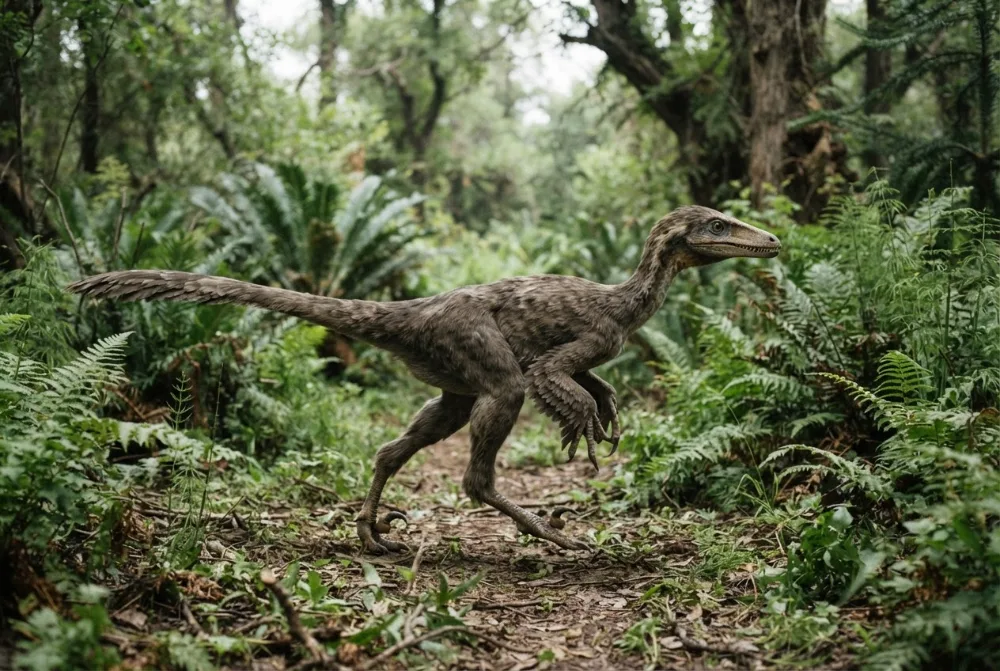
Bannykus was a meat-eating dinosaur about the size of a large dog. It lived during the Early Cretaceous period, around 125 to 113 million years ago, in what is now Inner Mongolia, China. Bannykus is special because its arms are halfway between those of earlier, longer-armed alvarezsaurians and later ones with very short arms.123
Ankakhala liti?
Anali wamkulu bwanji?
Anali wautali bwanji?
Msinkhu wake unali wautali bwanji?
kuyerekeza
Ankalemera bwanji?

 wautali ngati agalu 3 otsatizana mphuno ndi mchira🍌wautali ngati nthochi 15 zotsatizana🍉wolemera ngati mavwende 6🏃akanatha kuthamanga mamita 100 m'masekondi 7.8 (munthu waliwiro kwambiri amafunika 9.6)
Bannykus anali wamkulu bwanji poyerekeza ndi IWEYO?
Ndi masamu chabe mu msakatuli wako. Palibe chimene chimasungidwa kapena kutumizidwa kwina kulikonse.
Anali ndi liwiro lotani?


Mfundo zosangalatsa
Bannykus lived about 125 to 113 million years ago during the Aptian age of the Early Cretaceous.3
Its arm bones are halfway between the longer arms of older alvarezsaurian dinosaurs and the very short, strong arms of later ones like Shuvuuia.12
The only known Bannykus skeleton belonged to an 8-year-old sub-adult that still had some growing to do.1
Its thumb, or digit II, was much larger than its ring finger, or digit IV, but not as extreme as in later alvarezsaurids.1
Bannykus could move its arms in many directions and probably used them for different kinds of digging.2
Scientists found the fossil in 2009, and in 2012 it was displayed in Japan under the nickname 'Wulatesaurus' before getting its official name in 2018.2
Mafunso ofunsidwa kwambiri okhudza Bannykus
?What did Bannykus eat?
Bannykus probably ate meat. Scientists found bone fragments in its stomach, which suggests it was a carnivore.2
?How big was Bannykus?
Bannykus was about 2.77 metres (9.1 feet) long and weighed around 24 to 30 kilograms (53 to 66 pounds). That is about the size of a large dog.2
?Could Bannykus dig?
Yes, Bannykus could probably dig. Its arms were good for different kinds of digging motions, but not as specialized as later relatives.2
Kwa akatswiri a madino
- Dzina la sayansi
- Bannykus
- Anapatsidwa dzina ndi
- Xu et al. 20184
- Gulu
- Madino odya nyama
- Banja / kladi
- Alvarezsauroidea4
- Magawidwe a sayansi
- Theropoda4
- Zaka za miyala
- zaka 121 mpaka 113 miliyoni (Aptian)4
- Mapangidwe a miyala
- Bayangobi4
- Mayiko
- China4
- Zolemba za mafosili
- 1 mu The Paleobiology Database4
- Kupezeka
- Bannykus was named in 2018 by Xu Xing and colleagues. The holotype skeleton was found in 2009 at Chaoge, Inner Mongolia, China, and was displayed in Japan in 2012 under the informal name 'Wulatesaurus'.123
Kumene mfundo zimachokera
- Two Early Cretaceous Fossils Document Transitional Stages in Alvarezsaurian Dinosaur Evolution: Current Biology (cell.com)
- Bannykus (en.wikipedia.org)
- PBDB Taxon (paleobiodb.org)
- Bannykus in The Paleobiology Database (CC BY 4.0): zaka, malo, mapangidwe a miyala, magawidwe a sayansi.
Mfundo iliyonse patsamba lino ili ndi nambala yosonyeza kumene yachokera. Ngati talakwitsa kanthu, pepa, ndife okonda madino, osati magazini ya sayansi. Tiuze pa [email protected] ndipo tikonza.
 Rex ali ndi njala! Dino Wiki ndi ntchito ya bambo kwa mwana wawo wamwamuna wokonda madainoso, yaulere popanda zotsatsa ndi zokazonda. Akuluakulu angadyetse Rex zokhwasula-khwasula kuti tsambali lipitirize kupezeka pa intaneti.Dyetsa Rex
 Allosaurus
 Carnotaurus
 Dilophosaurus
 Giganotosaurus
 Compsognathus
 Paronychodon
 Stegosaurus
 Iguanodon
 Archaeopteryx
 Microraptor
 Deinonychus
 Baryonyx