 Kwizi ya Ndiwe dino uti?
 Nkhondo ya madino
 Mpikisano wa madino
 Masewera ang'onoang'ono a madino
 Chimbale cha zomata
 Mindandanda ya TOP ya madino
 Ndidabwitse!
Campananeyen
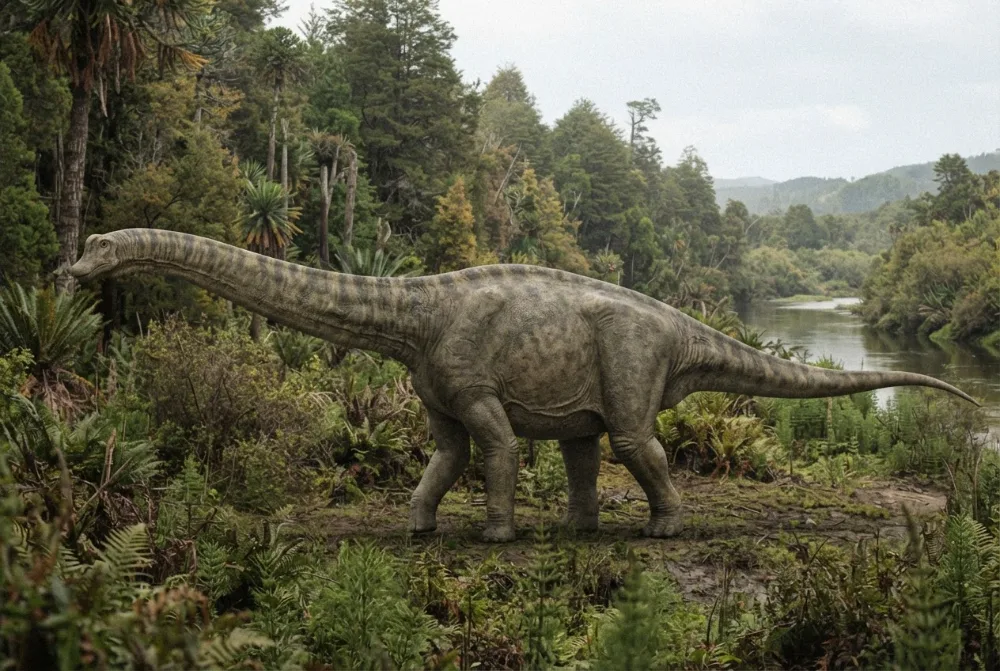
Campananeyen was a long-necked sauropod that lived in a huge desert in what is now Argentina. Its bones were so full of air pockets that scientists named it after the Mapuche word for 'air'. This dinosaur had a very thin and fragile hip bone, which is why its species name means 'the most fragile'.1
Ankakhala liti?
Anali wamkulu bwanji?
Anali wautali bwanji?
Msinkhu wake unali wautali bwanji?
kuyerekeza
Ankalemera bwanji?
 wautali ngati magalimoto 2.5 oimikidwa pamzere🍌wautali ngati nthochi 58 zotsatizana
 wolemera ngati agalu 120🍉wolemera ngati mavwende 500🎒wolemera ngati makalasi athunthu a ana a sukulu 3🐻❄️wolemera ngati zimbalangondo zoyera 6🏃akanatha kuthamanga mamita 100 m'masekondi 16 (munthu waliwiro kwambiri amafunika 9.6)
Campananeyen anali wamkulu bwanji poyerekeza ndi IWEYO?
Ndi masamu chabe mu msakatuli wako. Palibe chimene chimasungidwa kapena kutumizidwa kwina kulikonse.
Anali ndi liwiro lotani?


Mfundo zosangalatsa
Campananeyen had a very thin and fragile ilium (hip bone), so thin that scientists gave it the species name fragilissimus, meaning 'the most fragile'.1
Its bones were extremely pneumatized, meaning they were filled with air pockets, which made the skeleton lighter. The name Campananeyen comes from the Mapuche word for 'air'.1
The quadrate fossa, a large pit on the back of the skull's cheek bone, was 30 to 70 percent larger in Campananeyen than in any other known rebbachisaurid.1
Unlike most rebbachisaurids, Campananeyen had hyposphene-hypantrum joints between its vertebrae, which helped lock the backbone together. Its hyposphene was hollow and ovoid, like in Nigersaurus.1
The sacral ribs of Campananeyen had a unique 'dorsal alar arm' that helped support the leg muscles, especially the muscle that pulls the thigh forward.1
Campananeyen lived in the Kokorkom Desert, a huge sandy desert with some oases, alongside other dinosaurs like the giant predator Giganotosaurus and the long-necked Limaysaurus.1
The first fossils of Campananeyen were found in 2016 but were not named until 2024, when scientists realized they belonged to a new species.1
Mafunso ofunsidwa kwambiri okhudza Campananeyen
?What did Campananeyen eat?
Campananeyen was a herbivore, meaning it ate plants. It likely used its many closely aligned teeth to eat leaves and other vegetation.4
?How big was Campananeyen?
Scientists do not know exactly how big Campananeyen was because only a fragmentary skeleton has been found. It was a sauropod, so it had a long neck, a large body, and strong limbs.14
?When did Campananeyen live?
Campananeyen lived during the Early Cretaceous Period, about 111 to 106 million years ago. It lived in a desert environment in what is now Argentina.1
?Why is Campananeyen called 'the most fragile'?
Its species name, fragilissimus, means 'the most fragile' in Latin. This is because its hip bone (ilium) was very thin and delicate, filled with air pockets.1
Kwa akatswiri a madino
- Dzina la sayansi
- Campananeyen
- Anapatsidwa dzina ndi
- Lerzo et al. 20245
- Gulu
- Makosi atali
- Banja / kladi
- Rebbachisauridae5
- Magawidwe a sayansi
- Sauropodomorpha > Sauropoda > Diplodocoidea5
- Zaka za miyala
- zaka 113 mpaka 110 miliyoni (Albian)5
- Mapangidwe a miyala
- Candeleros5
- Mayiko
- Argentina5
- Zolemba za mafosili
- 1 mu The Paleobiology Database5
- Kupezeka
- The Campananeyen holotype specimen was discovered in the Candeleros Formation near Villa El Chocón, Neuquén Province, Argentina. It was first described in 2016 but left unnamed, and then in 2024 scientists Lerzo et al. named it Campananeyen fragilissimus.1
- Akukambiranabe
- Scientists are still debating exactly how Campananeyen is related to other rebbachisaurids, because its fossils are fragmentary and incomplete.2
Kumene mfundo zimachokera
- Campananeyen (en.wikipedia.org)
- They all floated in the cretaceous: new rebbachisaurid (Sauropoda, Diplodocoidea) with a highly pneumatized skeleton from the Upper Cretaceous (lower Cenomanian) of Patagonia, Argentina: Historical Biology: Vol 37 , No 8 - Get Access (tandfonline.com)
- Campananeyen fragilissimus | Dinosaur Database by DinoAnimals.com (dinoanimals.com)
- Campananeyen | The Lightweight Sauropod of Late Cretaceous (thedinosaurs.org)
- Campananeyen in The Paleobiology Database (CC BY 4.0): zaka, malo, mapangidwe a miyala, magawidwe a sayansi.
Mfundo iliyonse patsamba lino ili ndi nambala yosonyeza kumene yachokera. Ngati talakwitsa kanthu, pepa, ndife okonda madino, osati magazini ya sayansi. Tiuze pa [email protected] ndipo tikonza.
 Rex ali ndi njala! Dino Wiki ndi ntchito ya bambo kwa mwana wawo wamwamuna wokonda madainoso, yaulere popanda zotsatsa ndi zokazonda. Akuluakulu angadyetse Rex zokhwasula-khwasula kuti tsambali lipitirize kupezeka pa intaneti.Dyetsa Rex
 Brachiosaurus
 Diplodocus
 Brontosaurus
 Argentinosaurus
 Camarasaurus
 Morosaurus
 Stegosaurus
 Iguanodon
 Archaeopteryx
 Giganotosaurus
 Microraptor
 Deinonychus