 Kwizi ya Ndiwe dino uti?
 Nkhondo ya madino
 Mpikisano wa madino
 Masewera ang'onoang'ono a madino
 Chimbale cha zomata
 Mindandanda ya TOP ya madino
 Ndidabwitse!
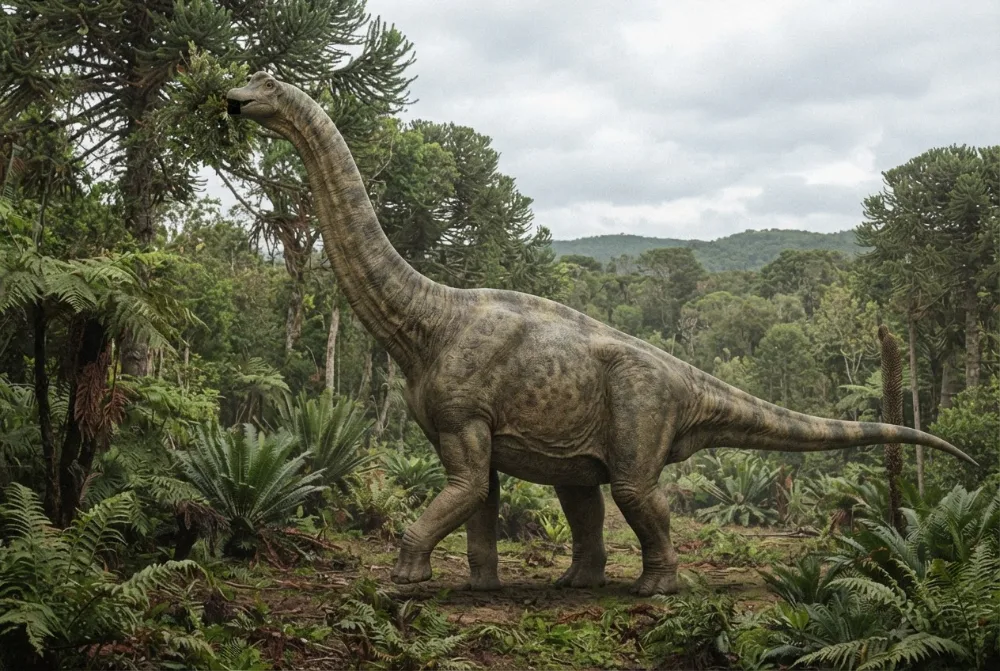
Cedarosaurus
Cedarosaurus was a giant, long-necked plant-eater that lived during the Early Cretaceous. It stomped through what is now Utah, USA, using its long neck to munch leaves high in the trees.1
Ankakhala liti?
Anali wamkulu bwanji?
Anali wautali bwanji?
Msinkhu wake unali wautali bwanji?
kuyerekeza
Ankalemera bwanji?
 wautali ngati magalimoto 3 oimikidwa pamzere🍌wautali ngati nthochi 83 zotsatizana
 wolemera ngati njovu 1.5🍉wolemera ngati mavwende 2000🎒wolemera ngati makalasi athunthu a ana a sukulu 12🐻❄️wolemera ngati zimbalangondo zoyera 22🏃akanatha kuthamanga mamita 100 m'masekondi 24 (munthu waliwiro kwambiri amafunika 9.6)
Cedarosaurus anali wamkulu bwanji poyerekeza ndi IWEYO?
Ndi masamu chabe mu msakatuli wako. Palibe chimene chimasungidwa kapena kutumizidwa kwina kulikonse.
Anali ndi liwiro lotani?


Mfundo zosangalatsa
Cedarosaurus had a more slender arm bone (radius) than its relative Venenosaurus.1
Scientists found 115 gastroliths (stomach stones) with a Cedarosaurus skeleton. The stones weighed about 7 kilograms (15 pounds) in total.1
Most of the gastroliths were smaller than 10 millilitres in volume, and the largest one weighed 715 grams (25.2 ounces).1
The gastroliths were mostly made of chert, with some sandstone, siltstone, and quartzite. Some even contained tiny fossils inside.1
Its middle tail vertebrae have neural spines that point forward when the bones are lined up, a feature also seen in some other sauropods like Gondwanatitan.1
Mafunso ofunsidwa kwambiri okhudza Cedarosaurus
?How big was Cedarosaurus?
About 15 metres (49 feet) long and weighed up to 10 metric tons (11 short tons). That is roughly as long as a bus and as heavy as two elephants.1
?What did Cedarosaurus eat?
It was a plant-eater that used its long neck to reach leaves high in trees. It also swallowed gastroliths (stomach stones) to help grind up the tough plants inside its belly.1
?When did Cedarosaurus live?
It lived during the Early Cretaceous Period, about 139 to 134 million years ago.1
?Where was Cedarosaurus found?
Its fossils were discovered in 1996 in eastern Utah, USA, in the Cedar Mountain Formation.1
Kwa akatswiri a madino
- Dzina la sayansi
- Cedarosaurus
- Anapatsidwa dzina ndi
- Tidwell et al. 19992
- Gulu
- Makosi atali
- Banja / kladi
- Brachiosauridae2
- Magawidwe a sayansi
- Sauropodomorpha > Sauropoda > Macronaria2
- Zaka za miyala
- zaka 137 mpaka 110 miliyoni (Valanginian / Albian)2
- Mapangidwe a miyala
- Cedar Mountain, Paluxy2
- Mayiko
- Amereka2
- Zolemba za mafosili
- 3 mu The Paleobiology Database2
- Kupezeka
- Cedarosaurus was named in 1999 by Virginia Tidwell, Kenneth Carpenter, and William Brooks. The fossils were found in 1996 in eastern Utah, USA.12
- Akukambiranabe
- Scientists are not sure exactly how Cedarosaurus used its gastroliths. Some stones were large and irregular, which might have been hard to swallow, so they may have been swallowed by accident.1
Kumene mfundo zimachokera
- Cedarosaurus (en.wikipedia.org)
- Cedarosaurus in The Paleobiology Database (CC BY 4.0): zaka, malo, mapangidwe a miyala, magawidwe a sayansi.
Mfundo iliyonse patsamba lino ili ndi nambala yosonyeza kumene yachokera. Ngati talakwitsa kanthu, pepa, ndife okonda madino, osati magazini ya sayansi. Tiuze pa [email protected] ndipo tikonza.
 Rex ali ndi njala! Dino Wiki ndi ntchito ya bambo kwa mwana wawo wamwamuna wokonda madainoso, yaulere popanda zotsatsa ndi zokazonda. Akuluakulu angadyetse Rex zokhwasula-khwasula kuti tsambali lipitirize kupezeka pa intaneti.Dyetsa Rex
 Brachiosaurus
 Diplodocus
 Brontosaurus
 Argentinosaurus
 Camarasaurus
 Morosaurus
 Stegosaurus
 Iguanodon
 Archaeopteryx
 Giganotosaurus
 Microraptor
 Deinonychus