 Kwizi ya Ndiwe dino uti?
 Nkhondo ya madino
 Mpikisano wa madino
 Masewera ang'onoang'ono a madino
 Chimbale cha zomata
 Mindandanda ya TOP ya madino
 Ndidabwitse!
Chiappeavis
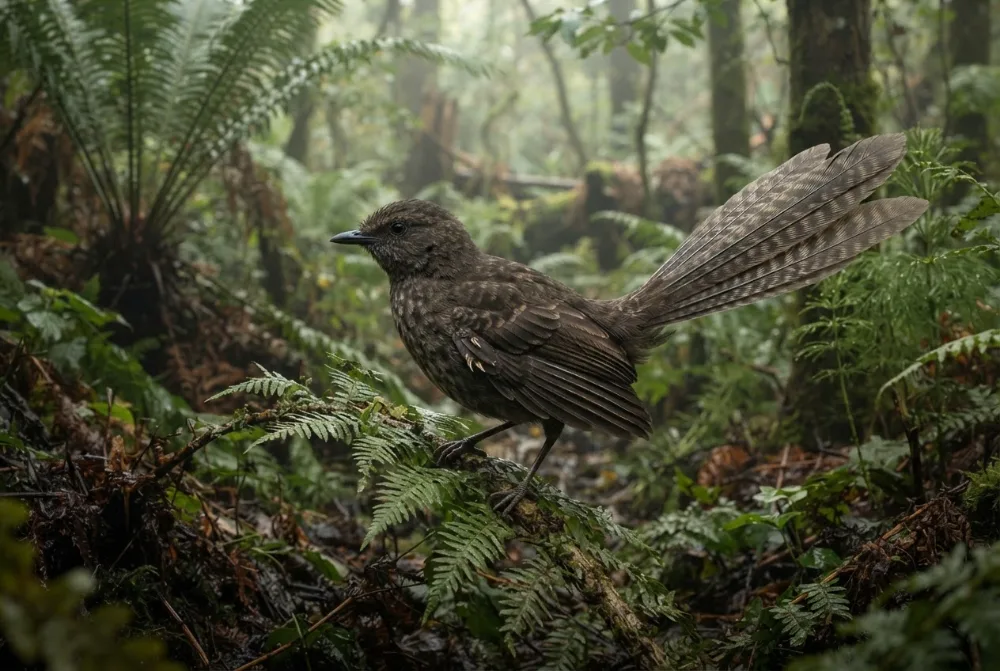
Chiappeavis was a bird that lived in the Early Cretaceous, about 120 million years ago. It had a fan-shaped tail made of long feathers that helped it fly. This bird was about the size of a modern pigeon and lived in what is now northeastern China.21
Ankakhala liti?
Anali wamkulu bwanji?
Anali wautali bwanji?
Msinkhu wake unali wautali bwanji?
kuyerekeza
Ankalemera bwanji?
Chiappeavis anali wamkulu bwanji poyerekeza ndi IWEYO?
Ndi masamu chabe mu msakatuli wako. Palibe chimene chimasungidwa kapena kutumizidwa kwina kulikonse.
Anali ndi liwiro lotani?


Mfundo zosangalatsa
Chiappeavis had a fan-shaped tail made of about ten feathers, with the middle feathers being the longest at about 74 mm.1
It is one of the earliest birds known to have an aerodynamic tail fan, which helped it steer during flight.1
The only fossil of Chiappeavis is a nearly complete skeleton with feather impressions, found in the Jiufotang Formation.2
Chiappeavis belongs to a group of early birds called enantiornithines, which were very common in the Cretaceous.2
Its name honors Dr. Luis Chiappe, a scientist who studied many ancient birds.1
The species name 'magnapremaxillo' means 'large premaxilla', referring to its big upper jaw bone.1
Wothetsa nthano zabodza
Nthano: Some people think Chiappeavis had teeth like other early birds.
Zoona: The fossil does not show teeth, and scientists think its beak was toothless, similar to some later birds.1
Kwa akatswiri a madino
- Dzina la sayansi
- Chiappeavis
- Anapatsidwa dzina ndi
- O'Connor et al. 20163
- Gulu
- Mbalame zoyambirira
- Banja / kladi
- Pengornithidae3
- Magawidwe a sayansi
- Theropoda > Avialae3
- Zaka za miyala
- zaka 121 mpaka 113 miliyoni (Aptian)3
- Mapangidwe a miyala
- Jiufotang3
- Mayiko
- China3
- Zolemba za mafosili
- 1 mu The Paleobiology Database3
- Kupezeka
- Chiappeavis was named in 2016 by Jingmai O'Connor and colleagues, based on a fossil found in Jianchang, Liaoning, China.23
- Akukambiranabe
- Scientists are not sure exactly what Chiappeavis ate, because its diet is still being studied from its claws and jaw.1
Kumene mfundo zimachokera
- Report An Enantiornithine with a Fan-Shaped Tail, and the Evolution of the Rectricial Complex in Early Birds (sciencedirect.com)
- Chiappeavis (en.wikipedia.org)
- Chiappeavis in The Paleobiology Database (CC BY 4.0): zaka, malo, mapangidwe a miyala, magawidwe a sayansi.
Mfundo iliyonse patsamba lino ili ndi nambala yosonyeza kumene yachokera. Ngati talakwitsa kanthu, pepa, ndife okonda madino, osati magazini ya sayansi. Tiuze pa [email protected] ndipo tikonza.
 Rex ali ndi njala! Dino Wiki ndi ntchito ya bambo kwa mwana wawo wamwamuna wokonda madainoso, yaulere popanda zotsatsa ndi zokazonda. Akuluakulu angadyetse Rex zokhwasula-khwasula kuti tsambali lipitirize kupezeka pa intaneti.Dyetsa Rex
 Archaeopteryx
 Hesperornis
 Ichthyornis
 Baptornis
 Jurapteryx
 Gobipteryx
 Stegosaurus
 Iguanodon
 Giganotosaurus
 Microraptor
 Deinonychus
 Baryonyx