 Kwizi ya Ndiwe dino uti?
 Nkhondo ya madino
 Mpikisano wa madino
 Masewera ang'onoang'ono a madino
 Chimbale cha zomata
 Mindandanda ya TOP ya madino
 Ndidabwitse!
Ankakhala liti?

Anali wamkulu bwanji?
Ankalemera bwanji?
Eopengornis anali wamkulu bwanji poyerekeza ndi IWEYO?
Ndi masamu chabe mu msakatuli wako. Palibe chimene chimasungidwa kapena kutumizidwa kwina kulikonse.
Anali ndi liwiro lotani?


Mfundo zosangalatsa
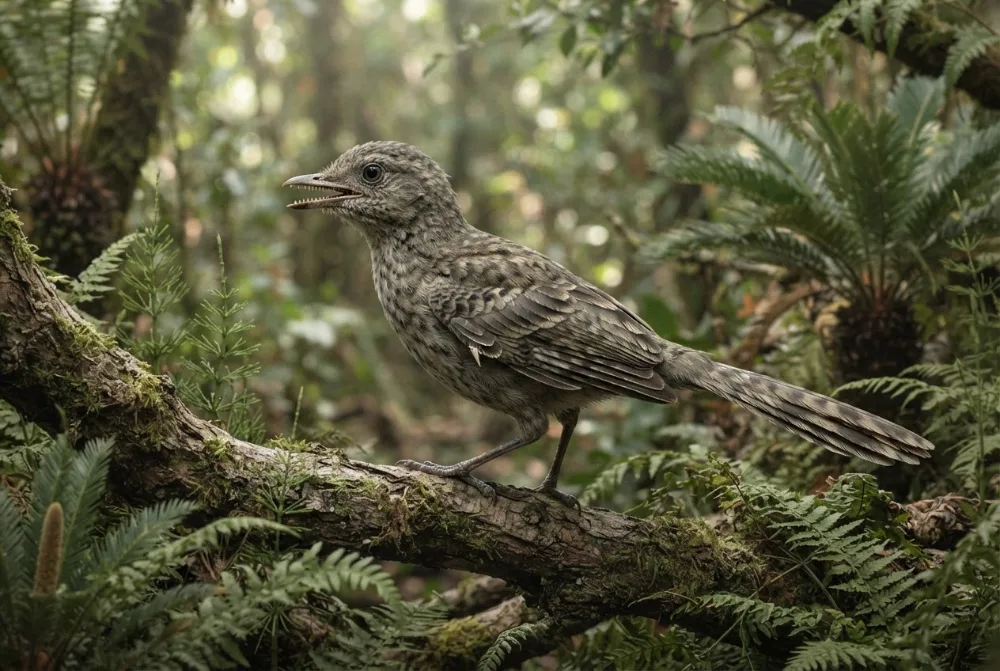
Eopengornis had special tail feathers with a strong central shaft, called a rachis, which helped it fly and show off.12
It belonged to a group of early birds called enantiornithes, which were very common during the time of dinosaurs.1
The only known species is called Eopengornis martini.1
Its fossils were found in rocks that are about 132 to 125 million years old, from a time called the Hauterivian.5
Eopengornis is part of the pengornithid family, a group of early birds that lived in Asia.1
Kwa akatswiri a madino
- Dzina la sayansi
- Eopengornis
- Anapatsidwa dzina ndi
- Wang et al. 20145
- Gulu
- Mbalame zoyambirira
- Banja / kladi
- Pengornithidae5
- Magawidwe a sayansi
- Theropoda > Avialae5
- Zaka za miyala
- zaka 133 mpaka 126 miliyoni (Hauterivian)5
- Mapangidwe a miyala
- Huajiying5
- Mayiko
- China5
- Zolemba za mafosili
- 1 mu The Paleobiology Database5
- Kupezeka
- Eopengornis was named and described by scientists Wang, O'Connor, Zheng, Wang, Hu, and Zhou in 2014, based on a fossil found in China.15
- Akukambiranabe
- Scientists are still studying exactly how Eopengornis used its strong tail feathers for flight and display.12
Kumene mfundo zimachokera
- Eopengornis (en.wikipedia.org)
- Insights into the evolution of rachis dominated tail feathers from a new basal enantiornithine (Aves: Ornithothoraces) (bionames.org)
- Quantitative investigation of pengornithid enantiornithine diet reveals macrocarnivorous ecology evolved in birds by Early Cretaceous (pmc.ncbi.nlm.nih.gov)
- Quantitative investigation of pengornithid enantiornithine diet reveals macrocarnivorous ecology evolved in birds by Early Cretaceous: iScience (cell.com)
- Eopengornis in The Paleobiology Database (CC BY 4.0): zaka, malo, mapangidwe a miyala, magawidwe a sayansi.
Mfundo iliyonse patsamba lino ili ndi nambala yosonyeza kumene yachokera. Ngati talakwitsa kanthu, pepa, ndife okonda madino, osati magazini ya sayansi. Tiuze pa [email protected] ndipo tikonza.
 Rex ali ndi njala! Dino Wiki ndi ntchito ya bambo kwa mwana wawo wamwamuna wokonda madainoso, yaulere popanda zotsatsa ndi zokazonda. Akuluakulu angadyetse Rex zokhwasula-khwasula kuti tsambali lipitirize kupezeka pa intaneti.Dyetsa Rex
 Archaeopteryx
 Hesperornis
 Ichthyornis
 Baptornis
 Jurapteryx
 Gobipteryx
 Stegosaurus
 Iguanodon
 Giganotosaurus
 Microraptor
 Deinonychus
 Baryonyx