 Kwizi ya Ndiwe dino uti?
 Nkhondo ya madino
 Mpikisano wa madino
 Masewera ang'onoang'ono a madino
 Chimbale cha zomata
 Mindandanda ya TOP ya madino
 Ndidabwitse!
Ankakhala liti?

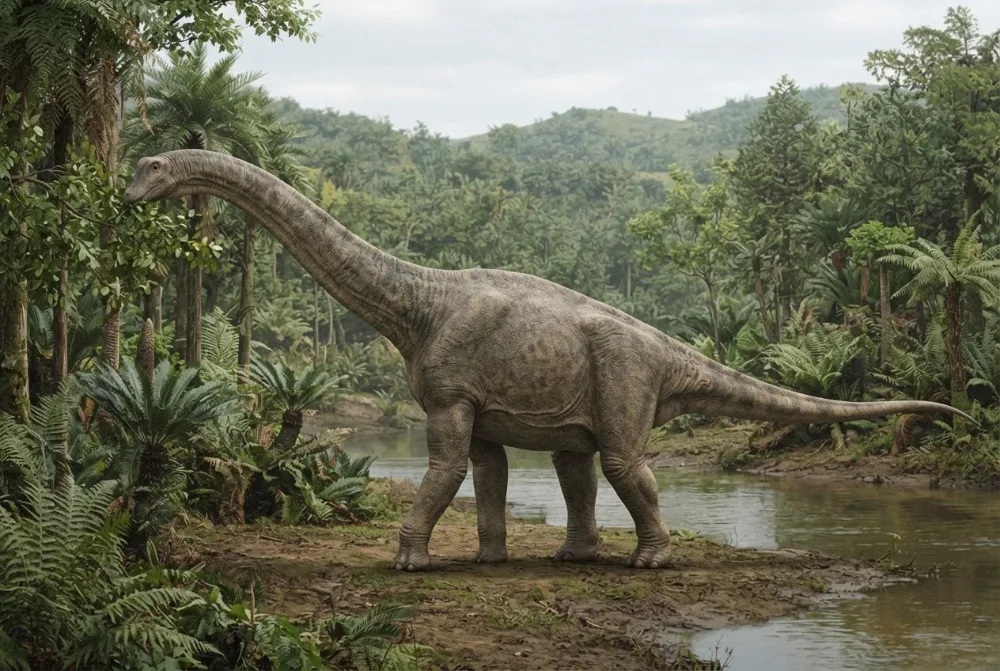
Anali wamkulu bwanji?
Anali wautali bwanji?
Msinkhu wake unali wautali bwanji?
Ankalemera bwanji?
 wautali ngati magalimoto 3 oimikidwa pamzere🍌wautali ngati nthochi 83 zotsatizana
 wolemera pafupifupi ngati njovu🍉wolemera ngati mavwende 1200🎒wolemera ngati makalasi athunthu a ana a sukulu 7🐻❄️wolemera ngati zimbalangondo zoyera 13🏢wamtali moti angasuzumire pawindo la nsanjika ya 3🏃akanatha kuthamanga mamita 100 m'masekondi 19 (munthu waliwiro kwambiri amafunika 9.6)
Euhelopus anali wamkulu bwanji poyerekeza ndi IWEYO?
Ndi masamu chabe mu msakatuli wako. Palibe chimene chimasungidwa kapena kutumizidwa kwina kulikonse.
Anali ndi liwiro lotani?


Mfundo zosangalatsa
Euhelopus had longer front legs than back legs, like a giraffe.1
Its neck was about 4 metres long and made of 17 vertebrae.1
The first fossils were found by a priest in 1913, but the dinosaur was named in 1929.1
Euhelopus was originally called Helopus, but that name was already used for a bird, so it was changed.1
Scientists think Euhelopus is closely related to titanosaurs, a group of huge sauropods.1
Its bones had many tiny air pockets, making them lighter.1
Mafunso ofunsidwa kwambiri okhudza Euhelopus
?How big was Euhelopus?
Scientists disagree on its size. Some earlier estimates said it was about 15 metres (49 feet) long and weighed 15 to 20 tonnes (17 to 22 short tons). Newer estimates suggest it was about 11 metres (36 feet) long and weighed around 3.5 to 5.9 tonnes (3.9 to 6.5 short tons).1
?What did Euhelopus eat?
Euhelopus was a herbivore, meaning it ate plants. Its strong, broad teeth and skull shape suggest it fed on tough, hardy vegetation.15
?When did Euhelopus live?
Euhelopus lived during the Early Cretaceous period, between about 143 and 133 million years ago.1
Kwa akatswiri a madino
- Dzina la sayansi
- Euhelopus
- Anapatsidwa dzina ndi
- Romer 19566
- Gulu
- Makosi atali
- Banja / kladi
- Euhelopodidae6
- Magawidwe a sayansi
- Sauropodomorpha > Sauropoda > Macronaria6
- Zaka za miyala
- zaka 143 mpaka 100 miliyoni (Berriasian / Albian)6
- Mapangidwe a miyala
- Mengyin, Shahai, Yixian6
- Mayiko
- China6
- Zolemba za mafosili
- 5 mu The Paleobiology Database6
- Amadziwikanso kuti
- Helopus (mayina akale tsopano amawerengedwa ngati nyama yomweyi)6
- Kupezeka
- The first Euhelopus fossils were found by a priest in 1913 in China. They were dug up in 1923 by Otto Zdansky, and the dinosaur was named Helopus by Carl Wiman in 1929. Later the name was changed to Euhelopus in 1956.1
- Akukambiranabe
- Scientists are not sure if Euhelopus is more closely related to Mamenchisaurus-like sauropods or to titanosaurs.1
Kumene mfundo zimachokera
- Euhelopus (en.wikipedia.org)
- Euhelopus | Natural History Museum (nhm.ac.uk)
- Euhelopus zdanskyi (thesauropodomorphlair.wordpress.com)
- Euhelopus zdanskyi skeletal reconstructions (deviantart.com)
- Reconstruction of the Holotype Skull of Euhelopus zdanskyi with Description of Additional Cranial Elements (journals.plos.org)
- Euhelopus in The Paleobiology Database (CC BY 4.0): zaka, malo, mapangidwe a miyala, magawidwe a sayansi.
Mfundo iliyonse patsamba lino ili ndi nambala yosonyeza kumene yachokera. Ngati talakwitsa kanthu, pepa, ndife okonda madino, osati magazini ya sayansi. Tiuze pa [email protected] ndipo tikonza.
 Rex ali ndi njala! Dino Wiki ndi ntchito ya bambo kwa mwana wawo wamwamuna wokonda madainoso, yaulere popanda zotsatsa ndi zokazonda. Akuluakulu angadyetse Rex zokhwasula-khwasula kuti tsambali lipitirize kupezeka pa intaneti.Dyetsa Rex
 Brachiosaurus
 Diplodocus
 Brontosaurus
 Argentinosaurus
 Camarasaurus
 Morosaurus
 Stegosaurus
 Iguanodon
 Archaeopteryx
 Giganotosaurus
 Microraptor
 Deinonychus