 Kwizi ya Ndiwe dino uti?
 Nkhondo ya madino
 Mpikisano wa madino
 Masewera ang'onoang'ono a madino
 Chimbale cha zomata
 Mindandanda ya TOP ya madino
 Ndidabwitse!
Ankakhala liti?

Anali wamkulu bwanji?
Anali wautali bwanji?
Msinkhu wake unali wautali bwanji?
kuyerekeza
Ankalemera bwanji?

 wautali ngati amphaka a pakhomo 4 otsatizana mphuno ndi mchira🍌wautali ngati nthochi 11 zotsatizana🍉wolemera ngati mavwende 29🧸wolemera ngati ana a sukulu ya mkaka 8🎒wolemera ngati ana a sukulu 5🏃akanatha kuthamanga mamita 100 m'masekondi 5.5 (munthu waliwiro kwambiri amafunika 9.6)
Harpymimus anali wamkulu bwanji poyerekeza ndi IWEYO?
Ndi masamu chabe mu msakatuli wako. Palibe chimene chimasungidwa kapena kutumizidwa kwina kulikonse.
Anali ndi liwiro lotani?


Mfundo zosangalatsa
Harpymimus had about 11 small, blunt teeth only in its lower jaw, unlike later ostrich dinosaurs which had no teeth at all.2
Its name comes from the Harpies, scary bird monsters from Greek myths, and the Greek word for mimic.2
The only known skeleton is almost complete but was crushed flat, making some details hard to see.2
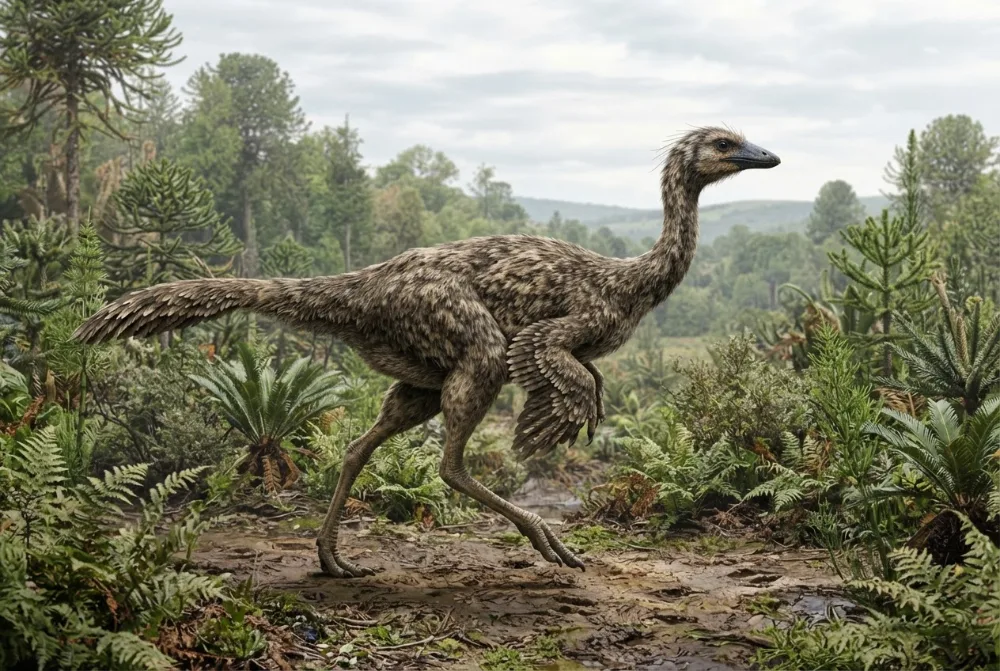
Harpymimus had a long neck, long arms with sharp claws, and long legs built for running.2
It lived alongside the horned dinosaur Psittacosaurus in the same region of Mongolia.2
Scientists think Harpymimus was an early member of the group that includes the giant-clawed Deinocheirus.2
Mafunso ofunsidwa kwambiri okhudza Harpymimus
?How big was Harpymimus?
About 2 metres (6.6 feet) long and weighed over 146.5 kilograms (323 pounds).12
?What did Harpymimus eat?
It was omnivorous. Its small, blunt teeth and beak were used for grabbing and holding food, not cutting or piercing.12
?Did Harpymimus have feathers?
The sources do not mention feathers, but as a theropod dinosaur related to birds, it may have had simple feathers. No direct evidence has been found.2
?When did Harpymimus live?
It lived during the Early Cretaceous Period, about 121 to 99 million years ago.1
Kwa akatswiri a madino
- Dzina la sayansi
- Harpymimus
- Anapatsidwa dzina ndi
- Barsbold and Perle 19843
- Gulu
- Madino a nthiwatiwa
- Banja / kladi
- Deinocheiridae3
- Magawidwe a sayansi
- Theropoda > Ornithomimosauria3
- Zaka za miyala
- zaka 110 mpaka 100 miliyoni (Albian)3
- Mapangidwe a miyala
- Khuren Dukh3
- Mayiko
- Mongoliya3
- Zolemba za mafosili
- 1 mu The Paleobiology Database3
- Kupezeka
- A Soviet-Mongolian expedition found the skeleton in the Gobi Desert in 1981. In 1984, paleontologists Rinchen Barsbold and Altangerel Perle named it Harpymimus okladnikovi after the archaeologist Alexey Okladnikov.2
- Akukambiranabe
- Scientists are not sure exactly how Harpymimus used its small teeth, since they were too blunt for cutting meat or plants.2
Kumene mfundo zimachokera
- Harpymimus | Natural History Museum (nhm.ac.uk)
- Harpymimus (en.wikipedia.org)
- Harpymimus in The Paleobiology Database (CC BY 4.0): zaka, malo, mapangidwe a miyala, magawidwe a sayansi.
Mfundo iliyonse patsamba lino ili ndi nambala yosonyeza kumene yachokera. Ngati talakwitsa kanthu, pepa, ndife okonda madino, osati magazini ya sayansi. Tiuze pa [email protected] ndipo tikonza.
 Rex ali ndi njala! Dino Wiki ndi ntchito ya bambo kwa mwana wawo wamwamuna wokonda madainoso, yaulere popanda zotsatsa ndi zokazonda. Akuluakulu angadyetse Rex zokhwasula-khwasula kuti tsambali lipitirize kupezeka pa intaneti.Dyetsa Rex
 Gallimimus
 Ornithomimus
 Struthiomimus
 Deinocheirus
 Dromiceiomimus
 Archaeornithomimus
 Stegosaurus
 Iguanodon
 Archaeopteryx
 Giganotosaurus
 Microraptor
 Deinonychus