 Kwizi ya Ndiwe dino uti?
 Nkhondo ya madino
 Mpikisano wa madino
 Masewera ang'onoang'ono a madino
 Chimbale cha zomata
 Mindandanda ya TOP ya madino
 Ndidabwitse!
Iberomesornis
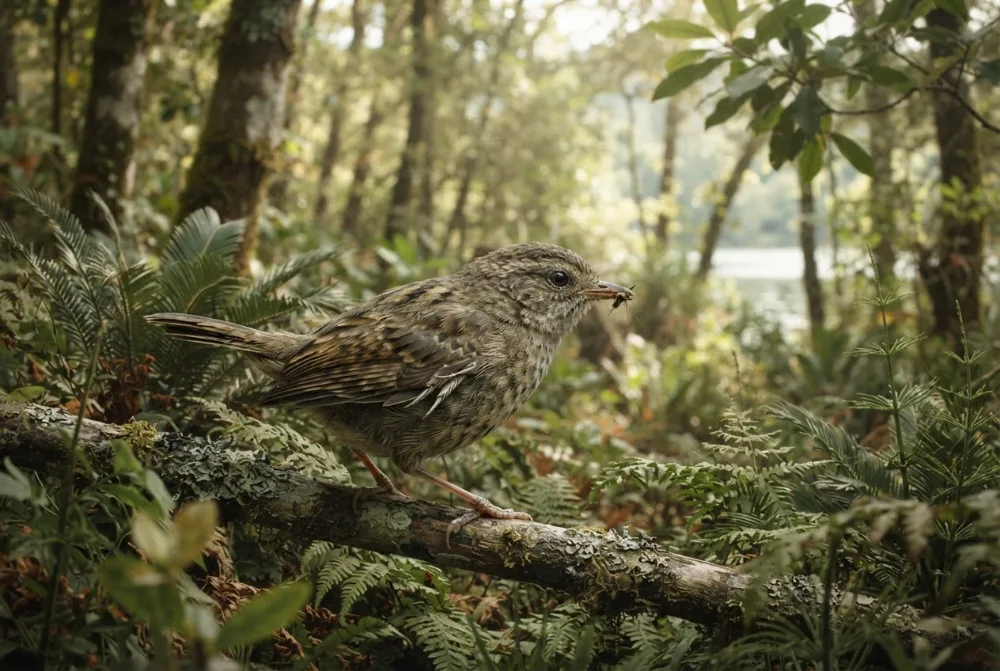
Iberomesornis was a tiny bird that lived about 125 million years ago in what is now Spain. It was no bigger than a sparrow and fluttered through warm forests near lakes, snatching insects. It was an early bird, but not a dinosaur like T. rex, it was a type of bird called an enantiornithine.1
Ankakhala liti?
Anali wamkulu bwanji?
Anali wautali bwanji?
Ankalemera bwanji?
Iberomesornis anali wamkulu bwanji poyerekeza ndi IWEYO?
Ndi masamu chabe mu msakatuli wako. Palibe chimene chimasungidwa kapena kutumizidwa kwina kulikonse.
Anali ndi liwiro lotani?


Mfundo zosangalatsa
Iberomesornis had a single claw on each wing, which is unusual for modern birds.1
Its tail was short and ended in a pygostyle, a fused bone that supports tail feathers, making it more advanced than Archaeopteryx.1
It had strong, clawed feet for perching on branches, with long curved toes and a special toe that helped it grip.1
The fossil was found in rocks that were once a forest around a lake, with a warm climate and a dry season.1
Its ribcage did not have bony uncinate processes, but scientists think it had cartilage there instead.1
Iberomesornis is one of the earliest known enantiornithine birds, a group that lived alongside dinosaurs.1
Mafunso ofunsidwa kwambiri okhudza Iberomesornis
?How big was Iberomesornis?
It was tiny, no bigger than a large modern sparrow. Its wingspan was about 20 centimetres (8 inches) and it weighed 15 to 20 grams (0.5 to 0.7 ounces).1
?What did Iberomesornis eat?
Nobody knows for sure because its skull has not been found. It probably hunted insects and other small animals, catching them in the air or from the ground.1
?Could Iberomesornis fly?
Yes, it could flap its wings and fly. A 2025 study found that it had strong muscles for flapping flight, even though it lacked a bony keel on its breastbone.2
?When did Iberomesornis live?
It lived about 125 million years ago, during the Early Cretaceous period. Its fossils were found in Spain.1
Wothetsa nthano zabodza
Nthano: Some people think Iberomesornis was a dinosaur like Velociraptor.
Zoona: It was a bird, specifically an enantiornithine, which is a type of bird that lived in the Cretaceous. Birds are related to dinosaurs, but they are not the same as non-avian dinosaurs.1
Kwa akatswiri a madino
- Dzina la sayansi
- Iberomesornis
- Anapatsidwa dzina ndi
- Sanz et al. 19903
- Gulu
- Mbalame zoyambirira
- Banja / kladi
- Enantiornithes3
- Magawidwe a sayansi
- Theropoda > Avialae3
- Zaka za miyala
- zaka 126 mpaka 121 miliyoni (Barremian)3
- Mapangidwe a miyala
- La Huérguina3
- Mayiko
- Sipeyini3
- Zolemba za mafosili
- 2 mu The Paleobiology Database3
- Kupezeka
- The fossil was found in 1985 by Armando Díaz Romeral in Spain. It was named Iberomesornis romerali in 1992 by José Luis Sanz and José Fernando Bonaparte.1
- Akukambiranabe
- Scientists are not sure what Iberomesornis ate because its skull has not been found, so they guess it ate insects and small animals.1
Kumene mfundo zimachokera
- Iberomesornis (en.wikipedia.org)
- Micro-CT reconstruction reveals new information about the phylogenetic position and locomotion of the Early Cretaceous bird Iberomesornis romerali (dinosaurier-info.de)
- Iberomesornis in The Paleobiology Database (CC BY 4.0): zaka, malo, mapangidwe a miyala, magawidwe a sayansi.
Mfundo iliyonse patsamba lino ili ndi nambala yosonyeza kumene yachokera. Ngati talakwitsa kanthu, pepa, ndife okonda madino, osati magazini ya sayansi. Tiuze pa [email protected] ndipo tikonza.
 Rex ali ndi njala! Dino Wiki ndi ntchito ya bambo kwa mwana wawo wamwamuna wokonda madainoso, yaulere popanda zotsatsa ndi zokazonda. Akuluakulu angadyetse Rex zokhwasula-khwasula kuti tsambali lipitirize kupezeka pa intaneti.Dyetsa Rex
 Archaeopteryx
 Hesperornis
 Ichthyornis
 Baptornis
 Jurapteryx
 Gobipteryx
 Stegosaurus
 Iguanodon
 Giganotosaurus
 Microraptor
 Deinonychus
 Baryonyx