 Kwizi ya Ndiwe dino uti?
 Nkhondo ya madino
 Mpikisano wa madino
 Masewera ang'onoang'ono a madino
 Chimbale cha zomata
 Mindandanda ya TOP ya madino
 Ndidabwitse!
Ankakhala liti?

Anali wamkulu bwanji?
Anali wautali bwanji?
Ankalemera bwanji?
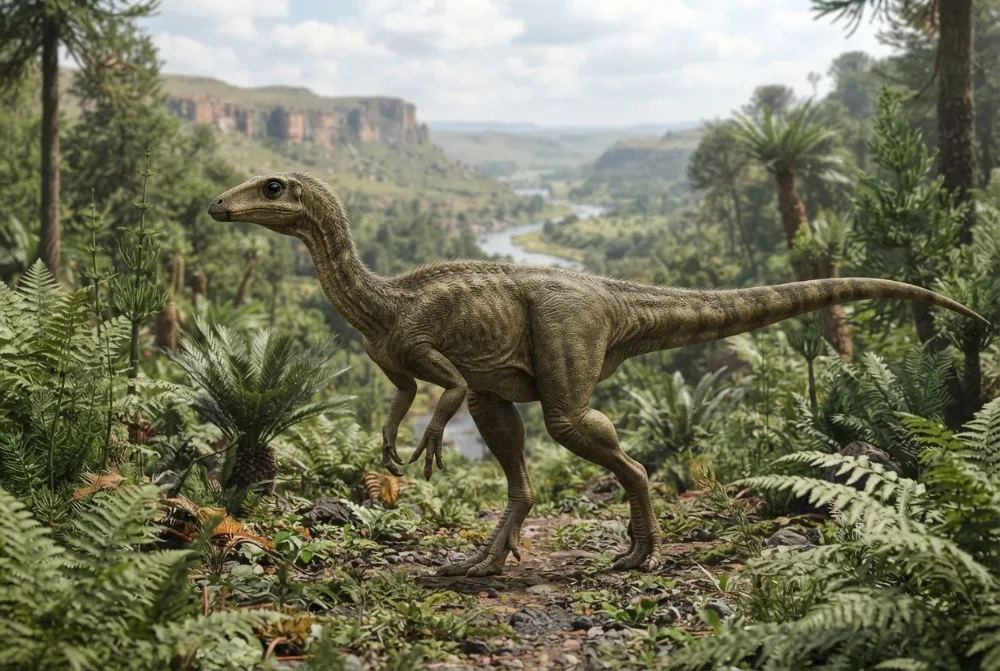
 wautali ngati amphaka a pakhomo 3 otsatizana mphuno ndi mchira🍌wautali ngati nthochi 8 zotsatizana🍉wolemera ngati mavwende 4🏃akanatha kuthamanga mamita 100 m'masekondi 10 (munthu waliwiro kwambiri amafunika 9.6)
Ignavusaurus anali wamkulu bwanji poyerekeza ndi IWEYO?
Ndi masamu chabe mu msakatuli wako. Palibe chimene chimasungidwa kapena kutumizidwa kwina kulikonse.
Anali ndi liwiro lotani?


Mfundo zosangalatsa
The name Ignavusaurus comes from the Latin word for 'coward' because it was found at a place called Ha Ralekoala, which means 'the place of the father of the coward'.1
The only known fossil of Ignavusaurus is a nearly complete skeleton of a baby that was less than one year old when it died.1
Its skull was broken into more than 120 pieces, but scientists were able to put it back together.1
Ignavusaurus had a long, slender neck and a long tail, just like its relatives Massospondylus and Melanorosaurus.1
Some scientists think Ignavusaurus might actually be a baby Massospondylus, because the two look very similar.1
Mafunso ofunsidwa kwambiri okhudza Ignavusaurus
?How big was Ignavusaurus?
About 1.5 metres (4.9 ft) long and weighed about 22.5 kilograms (50 lb). That is roughly the size of a large dog.1
?What did Ignavusaurus eat?
It was a plant-eater, or herbivore. It had a long neck to reach leaves and other plants.1
?Is Ignavusaurus a dinosaur?
Yes, it is a dinosaur. It was a basal sauropodomorph, a type of long-necked, plant-eating dinosaur.1
?Could Ignavusaurus be a baby Massospondylus?
Some scientists think so. They say the only known fossil looks very similar to a young Massospondylus, so Ignavusaurus might be the same dinosaur.1
Kwa akatswiri a madino
- Dzina la sayansi
- Ignavusaurus
- Anapatsidwa dzina ndi
- Knoll 20102
- Gulu
- Makosi atali
- Banja / kladi
- Massospondylidae2
- Magawidwe a sayansi
- Sauropodomorpha2
- Zaka za miyala
- zaka 201 mpaka 193 miliyoni (Hettangian / Sinemurian)2
- Mapangidwe a miyala
- Elliot2
- Mayiko
- Lesotho2
- Zolemba za mafosili
- 2 mu The Paleobiology Database2
- Kupezeka
- The fossils were found in Lesotho and described in 2010 by Spanish paleontologist F. Knoll. The skeleton was brought to the National Museum of Natural History in Paris for study.1
- Akukambiranabe
- Scientists are not sure if Ignavusaurus is a separate species or just a young Massospondylus.1
Kumene mfundo zimachokera
- Ignavusaurus (en.wikipedia.org)
- Ignavusaurus in The Paleobiology Database (CC BY 4.0): zaka, malo, mapangidwe a miyala, magawidwe a sayansi.
Mfundo iliyonse patsamba lino ili ndi nambala yosonyeza kumene yachokera. Ngati talakwitsa kanthu, pepa, ndife okonda madino, osati magazini ya sayansi. Tiuze pa [email protected] ndipo tikonza.
 Rex ali ndi njala! Dino Wiki ndi ntchito ya bambo kwa mwana wawo wamwamuna wokonda madainoso, yaulere popanda zotsatsa ndi zokazonda. Akuluakulu angadyetse Rex zokhwasula-khwasula kuti tsambali lipitirize kupezeka pa intaneti.Dyetsa Rex
 Brachiosaurus
 Diplodocus
 Brontosaurus
 Argentinosaurus
 Camarasaurus
 Morosaurus
 Dilophosaurus
 Stenopterygius
 Dorygnathus
 Scutellosaurus
 Sinosaurus
 Temnodontosaurus