 Kwizi ya Ndiwe dino uti?
 Nkhondo ya madino
 Mpikisano wa madino
 Masewera ang'onoang'ono a madino
 Chimbale cha zomata
 Mindandanda ya TOP ya madino
 Ndidabwitse!
Imparavis
Imparavis was a tiny, toothless bird that lived about 120 million years ago in what is now China. It was one of the first of its kind to lose its teeth, and it had strong wings that might have let it flap really fast, like a modern quail or puffin.2
Ankakhala liti?
Anali wamkulu bwanji?
Anali wautali bwanji?
Msinkhu wake unali wautali bwanji?
kuyerekeza
Imparavis anali wamkulu bwanji poyerekeza ndi IWEYO?
Ndi masamu chabe mu msakatuli wako. Palibe chimene chimasungidwa kapena kutumizidwa kwina kulikonse.
Anali ndi liwiro lotani?


Mfundo zosangalatsa
Imparavis is the earliest known toothless bird from a group called enantiornithines, or 'opposite birds'. Scientists used to think toothlessness in this group appeared only about 72 million years ago, but Imparavis pushes that back by 48 to 50 million years.2
Its name means 'odd bird' in Latin, and it was named after the famous naturalist Sir David Attenborough.1
Imparavis had a large bony crest on its upper arm bone where muscles attached. This might have let it flap its wings with extra power, similar to modern birds like puffins or quails.2
The fossil was found by an amateur collector and donated to the Shandong Tianyu Museum of Nature in China.2
Imparavis lived alongside many other early birds and dinosaurs in the Early Cretaceous period, about 120 million years ago.13
Unlike most other enantiornithines, which lived mainly in trees, Imparavis might have spent time on the ground foraging for food, like a modern robin.2
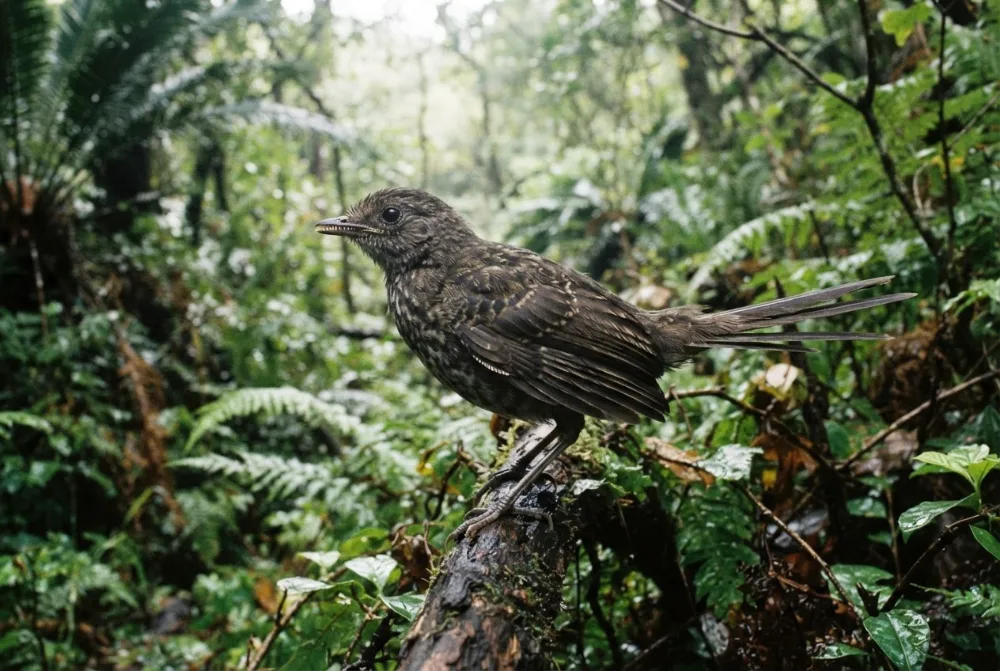
Wothetsa nthano zabodza
Nthano: All early birds had teeth.
Zoona: Imparavis shows that some early birds, like enantiornithines, lost their teeth much earlier than scientists thought. It was toothless about 120 million years ago.2
Kwa akatswiri a madino
- Dzina la sayansi
- Imparavis
- Anapatsidwa dzina ndi
- Wang et al. 20244
- Gulu
- Mbalame zoyambirira
- Banja / kladi
- Enantiornithes4
- Magawidwe a sayansi
- Theropoda > Avialae4
- Zaka za miyala
- zaka 121 mpaka 120 miliyoni (Aptian)4
- Mapangidwe a miyala
- Jiufotang4
- Mayiko
- China4
- Zolemba za mafosili
- 1 mu The Paleobiology Database4
- Kupezeka
- Imparavis was named in 2024 by Wang and colleagues. The fossil was found by an amateur collector near Toudaoyingzi village in China and later studied by scientists at the Field Museum and Shandong Tianyu Museum.12
- Akukambiranabe
- Scientists are still debating why Imparavis lost its teeth and what it ate, since its toothless beak and lack of a gizzard make its diet unclear.2
Kumene mfundo zimachokera
- Imparavis (en.wikipedia.org)
- Fossil named “Attenborough’s strange bird” was the first of its kind without teeth - Field Museum (fieldmuseum.org)
- PBDB Taxon (paleobiodb.org)
- Imparavis in The Paleobiology Database (CC BY 4.0): zaka, malo, mapangidwe a miyala, magawidwe a sayansi.
Mfundo iliyonse patsamba lino ili ndi nambala yosonyeza kumene yachokera. Ngati talakwitsa kanthu, pepa, ndife okonda madino, osati magazini ya sayansi. Tiuze pa [email protected] ndipo tikonza.
 Rex ali ndi njala! Dino Wiki ndi ntchito ya bambo kwa mwana wawo wamwamuna wokonda madainoso, yaulere popanda zotsatsa ndi zokazonda. Akuluakulu angadyetse Rex zokhwasula-khwasula kuti tsambali lipitirize kupezeka pa intaneti.Dyetsa Rex
 Archaeopteryx
 Hesperornis
 Ichthyornis
 Baptornis
 Jurapteryx
 Gobipteryx
 Stegosaurus
 Iguanodon
 Giganotosaurus
 Microraptor
 Deinonychus
 Baryonyx