 Kwizi ya Ndiwe dino uti?
 Nkhondo ya madino
 Mpikisano wa madino
 Masewera ang'onoang'ono a madino
 Chimbale cha zomata
 Mindandanda ya TOP ya madino
 Ndidabwitse!
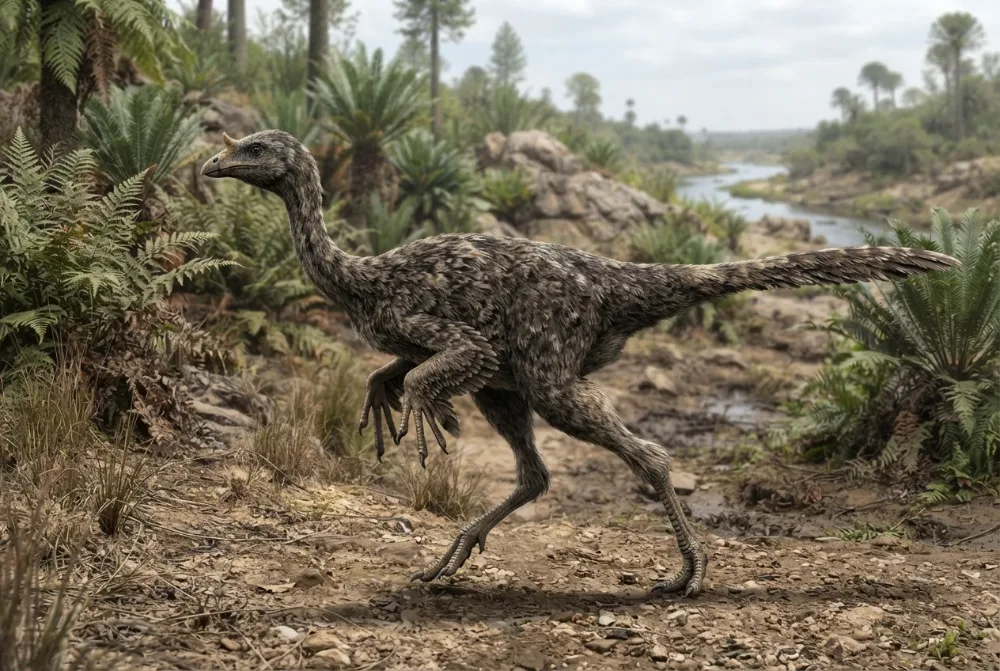
Nqwebasaurus
Nqwebasaurus was a small, fast-running dinosaur that lived in what is now South Africa. It had a long, three-fingered hand with a thumb that could partly grip things, and it swallowed stones to help grind up its food.12
Ankakhala liti?
Anali wamkulu bwanji?
Anali wautali bwanji?
Msinkhu wake unali wautali bwanji?
Ankalemera bwanji?
 wautali ngati amphaka a pakhomo 2 otsatizana mphuno ndi mchira🍌wautali ngati nthochi 6 zotsatizana🪶wopepuka kuposa mphaka wa pakhomo🍌wolemera ngati nthochi 8🪑wamng'ono moti angayende pansi pa mpando🏃akanatha kuthamanga mamita 100 m'masekondi 13 (munthu waliwiro kwambiri amafunika 9.6)
Nqwebasaurus anali wamkulu bwanji poyerekeza ndi IWEYO?
Ndi masamu chabe mu msakatuli wako. Palibe chimene chimasungidwa kapena kutumizidwa kwina kulikonse.
Anali ndi liwiro lotani?


Mfundo zosangalatsa
Nqwebasaurus is the oldest coelurosaur dinosaur ever found in Africa, pushing the record back about 50 million years.2
Its hands had three fingers, and the first finger (like a thumb) was partly opposable, meaning it could grasp things a little bit.1
The claws on its first and second fingers were curved, but the third claw was straight, which is unusual for a theropod dinosaur.1
Scientists found gastroliths (stomach stones) in its belly, which it used to help grind up tough plant food, just like some birds do today.2
Its species name, thwazi, means 'fast runner' in the Xhosa language.1
The only known fossil is a nearly complete skeleton nicknamed 'Kirky' because it was found in the Kirkwood Formation.1
Mafunso ofunsidwa kwambiri okhudza Nqwebasaurus
?How big was Nqwebasaurus?
About 1 metre (3.3 feet) long and 1 kilogram (2.2 pounds) in weight, based on estimates by Gregory S. Paul. The only known fossil was a late juvenile about 0.9 metres (3 feet) long.1
?What did Nqwebasaurus eat?
It probably ate both plants and small animals. Scientists found gastroliths (stomach stones) in its belly, which it used to grind up tough plant food, and its teeth were reduced and not serrated.1
?How fast could Nqwebasaurus run?
Its species name thwazi means 'fast runner' in the Xhosa language, so it was built for speed. No exact speed is known from the fossils.1
?When did Nqwebasaurus live?
It lived during the Early Cretaceous period, about 140 million years ago.1
?Where was Nqwebasaurus found?
In South Africa, in the Kirkwood Formation. The only fossil was discovered in July 1996.1
?Is Nqwebasaurus a dinosaur?
Yes, it is a small theropod dinosaur, specifically a basal coelurosaur.1
Kwa akatswiri a madino
- Dzina la sayansi
- Nqwebasaurus
- Anapatsidwa dzina ndi
- de Klerk et al. 20003
- Gulu
- Madino a nthiwatiwa
- Banja / kladi
- Ornithomimosauria3
- Magawidwe a sayansi
- Theropoda > Ornithomimosauria3
- Zaka za miyala
- zaka 143 mpaka 133 miliyoni (Berriasian / Valanginian)3
- Mapangidwe a miyala
- Kirkwood3
- Mayiko
- South Africa3
- Zolemba za mafosili
- 1 mu The Paleobiology Database3
- Kupezeka
- Nqwebasaurus was discovered in July 1996 by William J. de Klerk and Callum Ross during a joint expedition in the Kirkwood Formation of South Africa. It was named and described in 2000.1
- Akukambiranabe
- Scientists are not sure exactly where Nqwebasaurus fits in the dinosaur family tree. Some studies say it is a basal ornithomimosaur, but others have placed it among coelurosaurs, compsognathids, or alvarezsaurids.1
Kumene mfundo zimachokera
- Nqwebasaurus (en.wikipedia.org)
- A new coelurosaurian dinosaur from the Early Cretaceous of South Africa (tandfonline.com)
- Nqwebasaurus in The Paleobiology Database (CC BY 4.0): zaka, malo, mapangidwe a miyala, magawidwe a sayansi.
Mfundo iliyonse patsamba lino ili ndi nambala yosonyeza kumene yachokera. Ngati talakwitsa kanthu, pepa, ndife okonda madino, osati magazini ya sayansi. Tiuze pa [email protected] ndipo tikonza.
 Rex ali ndi njala! Dino Wiki ndi ntchito ya bambo kwa mwana wawo wamwamuna wokonda madainoso, yaulere popanda zotsatsa ndi zokazonda. Akuluakulu angadyetse Rex zokhwasula-khwasula kuti tsambali lipitirize kupezeka pa intaneti.Dyetsa Rex
 Gallimimus
 Ornithomimus
 Struthiomimus
 Deinocheirus
 Dromiceiomimus
 Archaeornithomimus
 Stegosaurus
 Iguanodon
 Archaeopteryx
 Giganotosaurus
 Microraptor
 Deinonychus