 Kwizi ya Ndiwe dino uti?
 Nkhondo ya madino
 Mpikisano wa madino
 Masewera ang'onoang'ono a madino
 Chimbale cha zomata
 Mindandanda ya TOP ya madino
 Ndidabwitse!
Orienantius
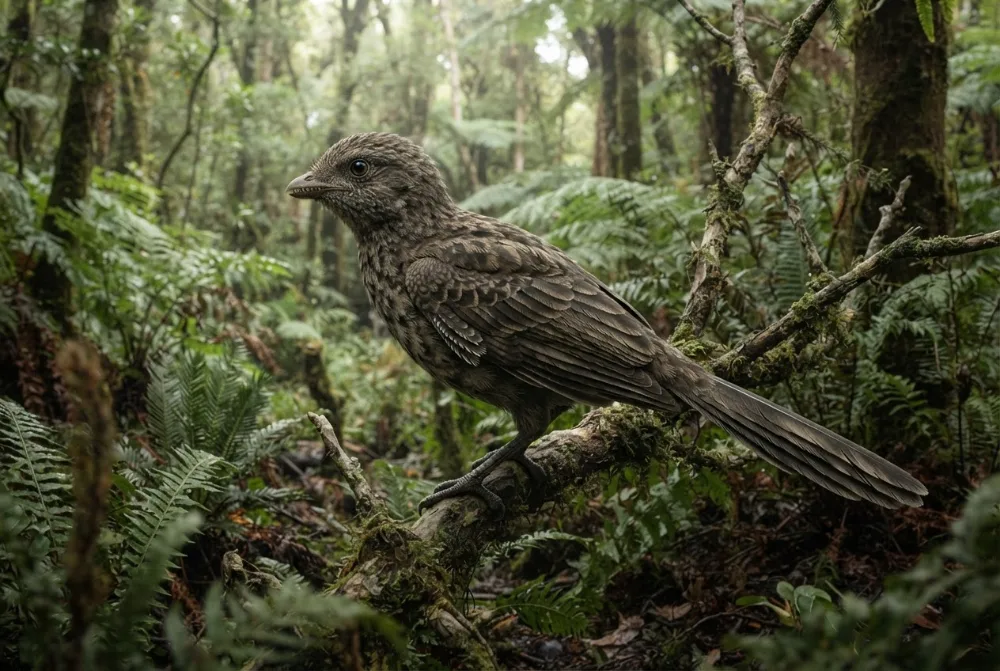
Orienantius was a tiny bird that lived about 130 million years ago in what is now China. It had feathers and could fly, but it was not like modern birds, it belonged to an ancient group called enantiornithines, which had a different way of flying.21
Ankakhala liti?
Anali ndi liwiro lotani?


Mfundo zosangalatsa
Orienantius is known from two nearly complete skeletons that still have feathers and even soft tissues like wing skin preserved.12
It was about the size of a modern Eurasian Skylark, a small songbird.1
Orienantius could fly with high maneuverability and used a flap-gliding style, like some birds today.2
The holotype (main specimen) was not fully grown when it died, some of its bones had not yet fused together.1
Its name comes from Latin and Greek words meaning 'east' and 'opposite', referring to its discovery in East Asia and its group Enantiornithes.1
Orienantius lived during the Early Cretaceous, making it one of the oldest known enantiornithine birds.2
Kwa akatswiri a madino
- Dzina la sayansi
- Orienantius
- Anapatsidwa dzina ndi
- Liu et al. 20193
- Gulu
- Mbalame zoyambirira
- Banja / kladi
- Enantiornithes3
- Magawidwe a sayansi
- Theropoda > Avialae3
- Zaka za miyala
- zaka 133 mpaka 126 miliyoni (Hauterivian)3
- Mapangidwe a miyala
- Huajiying3
- Mayiko
- China3
- Zolemba za mafosili
- 1 mu The Paleobiology Database3
- Kupezeka
- Orienantius was named in 2019 by Di Liu and colleagues based on two fossils from the Huajiying Formation in Hebei, China. The species name ritteri honors German scientist Johann Wilhelm Ritter.12
- Akukambiranabe
- Scientists are still debating exactly how Orienantius and other early enantiornithines evolved their flight abilities, since they show features of both primitive and advanced birds.2
Kumene mfundo zimachokera
- Orienantius (en.wikipedia.org)
- Soft tissue preservation in two new enantiornithine specimens (Aves) from the Lower Cretaceous Huajiying Formation of Hebei Province, China (sciencedirect.com)
- Orienantius in The Paleobiology Database (CC BY 4.0): zaka, malo, mapangidwe a miyala, magawidwe a sayansi.
Mfundo iliyonse patsamba lino ili ndi nambala yosonyeza kumene yachokera. Ngati talakwitsa kanthu, pepa, ndife okonda madino, osati magazini ya sayansi. Tiuze pa [email protected] ndipo tikonza.
 Rex ali ndi njala! Dino Wiki ndi ntchito ya bambo kwa mwana wawo wamwamuna wokonda madainoso, yaulere popanda zotsatsa ndi zokazonda. Akuluakulu angadyetse Rex zokhwasula-khwasula kuti tsambali lipitirize kupezeka pa intaneti.Dyetsa Rex
 Archaeopteryx
 Hesperornis
 Ichthyornis
 Baptornis
 Jurapteryx
 Gobipteryx
 Stegosaurus
 Iguanodon
 Giganotosaurus
 Microraptor
 Deinonychus
 Baryonyx