 Kwizi ya Ndiwe dino uti?
 Nkhondo ya madino
 Mpikisano wa madino
 Masewera ang'onoang'ono a madino
 Chimbale cha zomata
 Mindandanda ya TOP ya madino
 Ndidabwitse!
Ankakhala liti?

Anali wamkulu bwanji?
Anali wautali bwanji?
Msinkhu wake unali wautali bwanji?
kuyerekeza
Ankalemera bwanji?

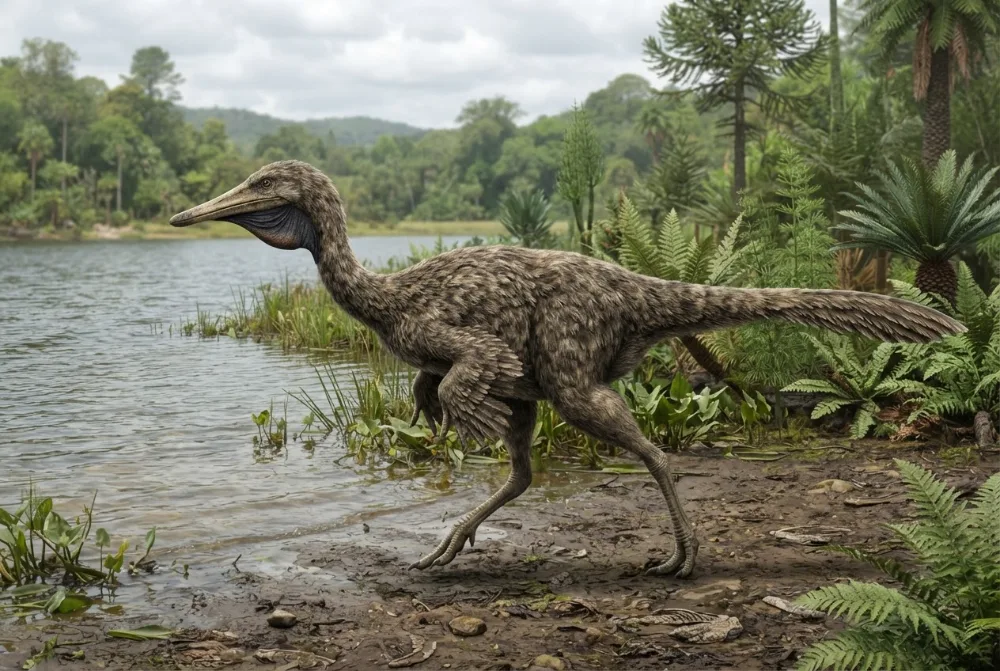
 wautali ngati agalu 2.5 otsatizana mphuno ndi mchira🍌wautali ngati nthochi 14 zotsatizana🍉wolemera ngati mavwende 6🏃akanatha kuthamanga mamita 100 m'masekondi 6.2 (munthu waliwiro kwambiri amafunika 9.6)
Pelecanimimus anali wamkulu bwanji poyerekeza ndi IWEYO?
Ndi masamu chabe mu msakatuli wako. Palibe chimene chimasungidwa kapena kutumizidwa kwina kulikonse.
Anali ndi liwiro lotani?


Mfundo zosangalatsa
Pelecanimimus had about 220 tiny teeth in its mouth, more than any other meat-eating dinosaur.1
Its teeth were different shapes: front teeth were broad and D-shaped, while back teeth were blade-like.1
It also had a small crest on the back of its head, made of skin or keratin.1
Pelecanimimus lived about 125 million years ago during the Early Cretaceous in what is now Spain.13
Only the front half of one skeleton has been found, but it includes amazing details like skin impressions and throat bones.1
Mafunso ofunsidwa kwambiri okhudza Pelecanimimus
?How big was Pelecanimimus?
About 1.9 to 2.5 metres long and weighed 17 to 30 kilograms. That is about as long as a large bicycle.12
?What did Pelecanimimus eat?
It was carnivorous, meaning it ate meat. It probably waded in lakes or ponds to catch fish with its claws and many teeth, storing them in its throat pouch.12
?Did Pelecanimimus have feathers?
No, the preserved skin impressions show wrinkled skin that lacked scales or feathers. Some filament-like structures were once thought to be feathers, but they are now seen as muscle fibers.1
?When did Pelecanimimus live?
It lived during the Early Cretaceous period, about 127 to 121 million years ago.2
Wothetsa nthano zabodza
Nthano: Some people think Pelecanimimus could fly because of its large chest bones.
Zoona: Scientists are not sure, but most think it was a ground dinosaur, not a flier.1
Kwa akatswiri a madino
- Dzina la sayansi
- Pelecanimimus
- Anapatsidwa dzina ndi
- Pérez-Moreno et al. 19943
- Gulu
- Madino a nthiwatiwa
- Banja / kladi
- Ornithomimosauria3
- Magawidwe a sayansi
- Theropoda > Ornithomimosauria3
- Zaka za miyala
- zaka 126 mpaka 121 miliyoni (Barremian)3
- Mapangidwe a miyala
- La Huérguina3
- Mayiko
- Sipeyini3
- Zolemba za mafosili
- 1 mu The Paleobiology Database3
- Kupezeka
- Armando Díaz Romeral found the first skeleton in 1993 in Spain. Scientists named it Pelecanimimus polyodon in 1994.12
- Akukambiranabe
- Scientists still debate whether Pelecanimimus could fly or if its large chest muscles were for something else.1
Kumene mfundo zimachokera
- Pelecanimimus (en.wikipedia.org)
- Pelecanimimus | Natural History Museum (nhm.ac.uk)
- Pelecanimimus in The Paleobiology Database (CC BY 4.0): zaka, malo, mapangidwe a miyala, magawidwe a sayansi.
Mfundo iliyonse patsamba lino ili ndi nambala yosonyeza kumene yachokera. Ngati talakwitsa kanthu, pepa, ndife okonda madino, osati magazini ya sayansi. Tiuze pa [email protected] ndipo tikonza.
 Rex ali ndi njala! Dino Wiki ndi ntchito ya bambo kwa mwana wawo wamwamuna wokonda madainoso, yaulere popanda zotsatsa ndi zokazonda. Akuluakulu angadyetse Rex zokhwasula-khwasula kuti tsambali lipitirize kupezeka pa intaneti.Dyetsa Rex
 Gallimimus
 Ornithomimus
 Struthiomimus
 Deinocheirus
 Dromiceiomimus
 Archaeornithomimus
 Stegosaurus
 Iguanodon
 Archaeopteryx
 Giganotosaurus
 Microraptor
 Deinonychus