 Kwizi ya Ndiwe dino uti?
 Nkhondo ya madino
 Mpikisano wa madino
 Masewera ang'onoang'ono a madino
 Chimbale cha zomata
 Mindandanda ya TOP ya madino
 Ndidabwitse!
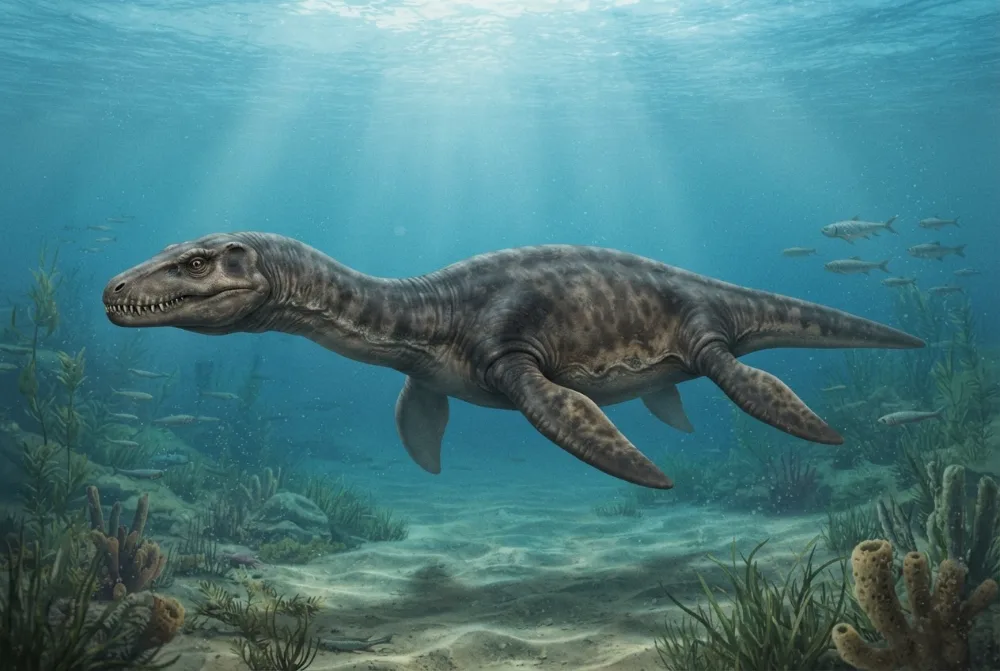
Polycotylus
Polycotylus was a short-necked plesiosaur that swam in the warm seas of North America and Europe during the Cretaceous. It had a big head, strong flippers, and gave birth to live babies in the water, just like whales do today.1
Ankakhala liti?
Anali wamkulu bwanji?
Anali wautali bwanji?
Ankalemera bwanji?
 wautali ngati agalu 5 otsatizana mphuno ndi mchira🍌wautali ngati nthochi 30 zotsatizana🍉wolemera ngati mavwende 200🧸wolemera ngati ana a sukulu ya mkaka 53🎒wolemera ngati ana a sukulu 31🐻❄️wolemera ngati zimbalangondo zoyera 2🏊akanatha kusambira utali wa dziwe lalikulu losambira (50 m) m'masekondi 6.7
Polycotylus anali wamkulu bwanji poyerekeza ndi IWEYO?
Ndi masamu chabe mu msakatuli wako. Palibe chimene chimasungidwa kapena kutumizidwa kwina kulikonse.
Anali ndi liwiro lotani?


Mfundo zosangalatsa
Polycotylus was named by famous paleontologist Edward Drinker Cope in 1869 from fossils found in Kansas.1
A fossil of Polycotylus found in Kansas contains a single large fetus inside the mother, proving that these plesiosaurs gave live birth.1
The baby Polycotylus was about 1.5 metres (4.9 feet) long, which is about 32 percent of the mother's length.1
Polycotylus had a short neck and a long head, making it look a bit like a pliosaur, but it is actually a type of plesiosaur called a polycotylid.1
Its name means 'much-cupped vertebrae' because the bones in its spine have deep cup-like hollows.1
Polycotylus lived in the Western Interior Seaway, a shallow sea that split North America in two during the Cretaceous.1
Scientists think Polycotylus gave birth to just one large baby at a time, a strategy called K-selection.1
Mafunso ofunsidwa kwambiri okhudza Polycotylus
?How big was Polycotylus?
Polycotylus was a medium-sized plesiosaur, measuring about 4.7 to 5.4 metres (15 to 18 feet) long and weighing over 1 metric ton (1.1 short tons).1
?Did Polycotylus have a short neck?
Yes, Polycotylus had a short neck and a long head, unlike the long-necked plesiosaurs like Elasmosaurus.1
?What did Polycotylus eat?
Polycotylus had thick teeth with striations on their surfaces, which suggests it ate fish and other marine animals, but the sources do not give a specific diet.1
?When did Polycotylus live?
Polycotylus lived toward the end of the Cretaceous period, about 84 to 66 million years ago.1
Wothetsa nthano zabodza
Nthano: Many people think all plesiosaurs had long necks like the Loch Ness Monster.
Zoona: Polycotylus had a short neck and a large head, very different from long-necked plesiosaurs like Elasmosaurus.1
Kwa akatswiri a madino
- Dzina la sayansi
- Polycotylus
- Anapatsidwa dzina ndi
- Cope 18693
- Gulu
- Maplesiosauri
- Banja / kladi
- Polycotylidae3
- Magawidwe a sayansi
- Plesiosauria > Sauropterygia3
- Zaka za miyala
- zaka 152 mpaka 72 miliyoni (Kimmeridgian / Campanian)3
- Mapangidwe a miyala
- Niobrara, Frontier, Mooreville Chalk3
- Mayiko
- Amereka, Falansa, Rasha3
- Zolemba za mafosili
- 10 mu The Paleobiology Database3
- Kupezeka
- Edward Drinker Cope named Polycotylus in 1869 from fragmentary bones found in the Niobrara Formation of Kansas. A nearly complete skeleton was later found in Alabama in 1949 but not described until 2002.1
- Akukambiranabe
- Scientists are not sure exactly how many species of Polycotylus existed, and some species may be the same as others.1
Kumene mfundo zimachokera
- Polycotylus (en.wikipedia.org)
- PBDB Taxon (paleobiodb.org)
- Polycotylus in The Paleobiology Database (CC BY 4.0): zaka, malo, mapangidwe a miyala, magawidwe a sayansi.
Mfundo iliyonse patsamba lino ili ndi nambala yosonyeza kumene yachokera. Ngati talakwitsa kanthu, pepa, ndife okonda madino, osati magazini ya sayansi. Tiuze pa [email protected] ndipo tikonza.
 Rex ali ndi njala! Dino Wiki ndi ntchito ya bambo kwa mwana wawo wamwamuna wokonda madainoso, yaulere popanda zotsatsa ndi zokazonda. Akuluakulu angadyetse Rex zokhwasula-khwasula kuti tsambali lipitirize kupezeka pa intaneti.Dyetsa Rex
 Elasmosaurus
 Pliosaurus
 Plesiosaurus
 Cimoliasaurus
 Colymbosaurus
 Trinacromerum
 Stegosaurus
 Iguanodon
 Archaeopteryx
 Giganotosaurus
 Microraptor
 Deinonychus