 Kwizi ya Ndiwe dino uti?
 Nkhondo ya madino
 Mpikisano wa madino
 Masewera ang'onoang'ono a madino
 Chimbale cha zomata
 Mindandanda ya TOP ya madino
 Ndidabwitse!
Ankakhala liti?

Anali wamkulu bwanji?
Anali wautali bwanji?
Msinkhu wake unali wautali bwanji?
Ankalemera bwanji?
 wautali ngati agalu 3 otsatizana mphuno ndi mchira🍌wautali ngati nthochi 18 zotsatizana🍉wolemera ngati mavwende 13🧸wolemera ngati ana a sukulu ya mkaka 3🎒wolemera ngati ana a sukulu 2🏃akanatha kuthamanga mamita 100 m'masekondi 7.2 (munthu waliwiro kwambiri amafunika 9.6)
Richardoestesia anali wamkulu bwanji poyerekeza ndi IWEYO?
Ndi masamu chabe mu msakatuli wako. Palibe chimene chimasungidwa kapena kutumizidwa kwina kulikonse.
Anali ndi liwiro lotani?


Mfundo zosangalatsa
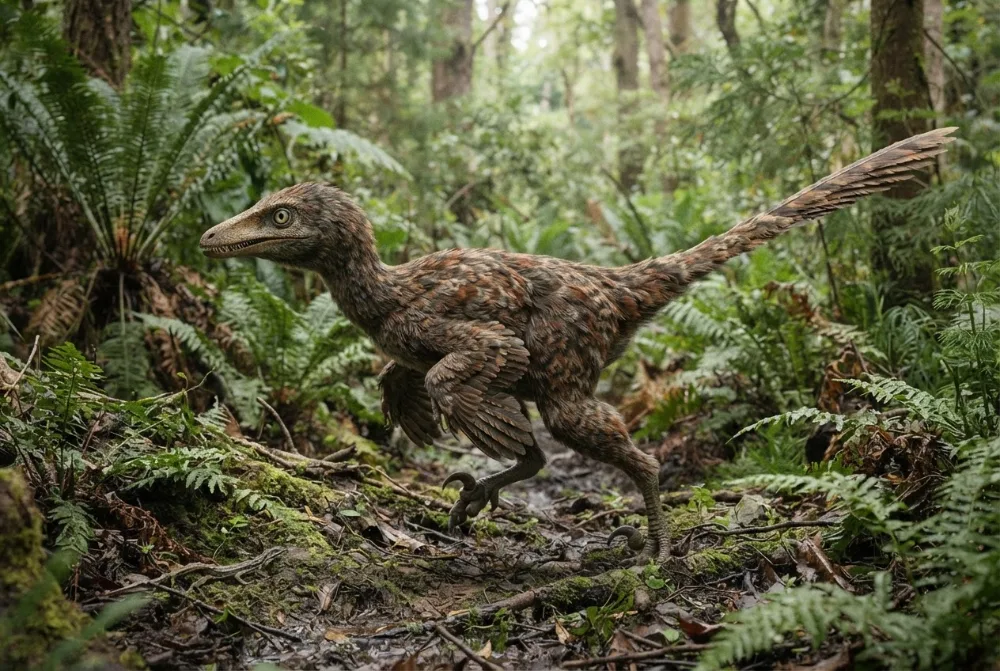
Richardoestesia is known only from its teeth, not from whole skeletons. Scientists call it a 'form taxon' because they group similar-looking teeth together.1
The teeth of Richardoestesia are very long and slender compared to other meat-eating dinosaurs. They look like thin blades.1
If all the teeth assigned to Richardoestesia really belong to the same kind of dinosaur, it would have lived for over 80 million years, from the Late Jurassic to the end of the Cretaceous.1
Richardoestesia teeth have been found all over the world, including North America, Europe, and Asia. That would make it one of the most widespread dinosaurs ever.1
The name Richardoestesia honors paleontologist Richard Estes, who studied small fossils and dinosaur teeth.1
Some scientists think Richardoestesia might have been a dromaeosaur (a raptor) or a troodontid, but nobody knows for sure because no body fossils have been found.5
Mafunso ofunsidwa kwambiri okhudza Richardoestesia
?What did Richardoestesia eat?
Richardoestesia was a meat-eating dinosaur, and some studies think it may have eaten fish because its teeth are often found in marine sites. Its long, slender teeth were good for catching small animals like lizards and mammals.14
?How big was Richardoestesia?
Nobody knows for sure because only its teeth have been found. One estimate from a tooth in Wyoming suggests it weighed about 100 kilograms (220 pounds), but scientists are not certain.4
?When did Richardoestesia live?
Richardoestesia lived during the Late Cretaceous, about 76.5 to 75 million years ago, based on teeth from the Dinosaur Park Formation. Some similar teeth are much older, from the Late Jurassic, but those may belong to different dinosaurs.1
?Was Richardoestesia a dinosaur?
Yes, Richardoestesia was a theropod dinosaur, a meat-eater related to raptors and other bird-like dinosaurs. It is known only from its teeth, not from a full skeleton.1
?Why is Richardoestesia known only from teeth?
Scientists have only found Richardoestesia's teeth, not its body fossils. That is why it is called a 'form taxon', because they group similar-looking teeth together without knowing the whole animal.1
?Could Richardoestesia swim?
Some scientists think Richardoestesia might have eaten fish because its teeth are often found in marine rocks, but nobody knows if it could swim. It was probably a land dinosaur that sometimes hunted near water.1
Wothetsa nthano zabodza
Nthano: Richardoestesia is a well-known dinosaur with a complete skeleton.
Zoona: Richardoestesia is only known from isolated teeth. No complete skeleton has ever been found, so scientists are not sure what it looked like.1
Kwa akatswiri a madino
- Dzina la sayansi
- Richardoestesia
- Anapatsidwa dzina ndi
- Currie et al. 19905
- Gulu
- Maraputala
- Banja / kladi
- Dromaeosauridae5
- Magawidwe a sayansi
- Theropoda > Dromaeosauridae5
- Zaka za miyala
- zaka 155 mpaka 66 miliyoni (Kimmeridgian / Maastrichtian)5
- Mapangidwe a miyala
- Hell Creek, Milk River, Dinosaur Park5
- Mayiko
- Amereka, Kanada, Sipeyini, Uzbekistan, Romaniya, Mekisiko5
- Zolemba za mafosili
- 239 mu The Paleobiology Database5
- Kupezeka
- The first Richardoestesia fossils were jaws found in 1917 by Charles Hazelius Sternberg and his sons in Dinosaur Provincial Park, Alberta, Canada. The name was given in 1990 by paleontologist Philip Currie and colleagues.1
- Akukambiranabe
- Scientists are not sure if all the teeth called Richardoestesia really belong to the same dinosaur. Many may come from different species that have not been named yet.1
Kumene mfundo zimachokera
- Richardoestesia (en.wikipedia.org)
- Richardoestesia (elmirador.edu.co)
- Richardoestesia gilmorei | Dinosaur Database by DinoAnimals.com (dinoanimals.com)
- University of Colorado Museum of Natural History: Harvester Ants: Richardoestesia Tooth (cumuseum-archive.colorado.edu)
- Richardoestesia in The Paleobiology Database (CC BY 4.0): zaka, malo, mapangidwe a miyala, magawidwe a sayansi.
Mfundo iliyonse patsamba lino ili ndi nambala yosonyeza kumene yachokera. Ngati talakwitsa kanthu, pepa, ndife okonda madino, osati magazini ya sayansi. Tiuze pa [email protected] ndipo tikonza.
 Rex ali ndi njala! Dino Wiki ndi ntchito ya bambo kwa mwana wawo wamwamuna wokonda madainoso, yaulere popanda zotsatsa ndi zokazonda. Akuluakulu angadyetse Rex zokhwasula-khwasula kuti tsambali lipitirize kupezeka pa intaneti.Dyetsa Rex
 Velociraptor
 Microraptor
 Deinonychus
 Asiamericana
 Saurornitholestes
 Troodon
 Stegosaurus
 Iguanodon
 Archaeopteryx
 Giganotosaurus
 Baryonyx
 Paronychodon