 Kwizi ya Ndiwe dino uti?
 Nkhondo ya madino
 Mpikisano wa madino
 Masewera ang'onoang'ono a madino
 Chimbale cha zomata
 Mindandanda ya TOP ya madino
 Ndidabwitse!
Scaphognathus
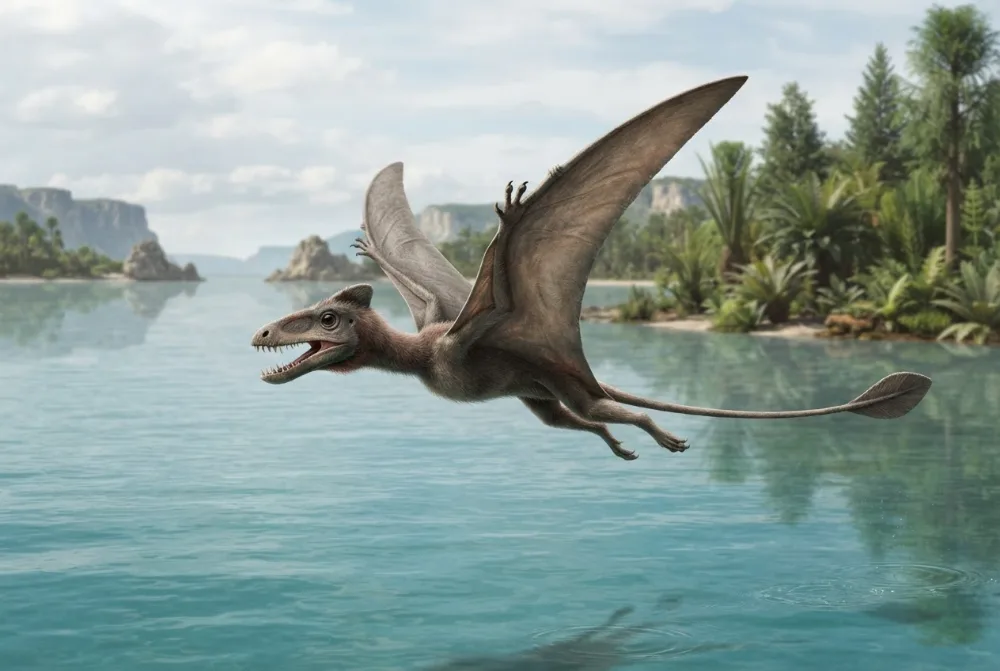
Scaphognathus was a small pterosaur with a blunt snout and a long tail. It flew over warm Jurassic lagoons and snatched fish from the water. Unlike many pterosaurs, it was probably awake during the day.1
Ankakhala liti?
Anali wamkulu bwanji?
Mapiko ake anali otambalala bwanji?
 wautali ngati amphaka a pakhomo 2 otsatizana mphuno ndi mchira⚽akanatha kuuluka kudutsa bwalo lonse la mpira m'masekondi 11
Scaphognathus anali wamkulu bwanji poyerekeza ndi IWEYO?
Ndi masamu chabe mu msakatuli wako. Palibe chimene chimasungidwa kapena kutumizidwa kwina kulikonse.
Anali ndi liwiro lotani?


Mfundo zosangalatsa
Scaphognathus had a short, blunt skull only about 11 centimetres (4.5 inches) long.1
It had 16 teeth in the upper jaw and 10 in the lower jaw, and they pointed straight up and down, not forward.1
A second specimen found was much smaller, with a wingspan of only 50 centimetres (20 inches), and scientists think it was a juvenile.1
Scaphognathus lived during the Late Jurassic, about 155 to 150 million years ago.1
Its eye bones (scleral rings) suggest it was diurnal, or active during the day, unlike some other pterosaurs that were nocturnal.1
The first fossil was described in 1831 by August Goldfuss, who thought it was a species of Pterodactylus.1
Mafunso ofunsidwa kwambiri okhudza Scaphognathus
?How big was Scaphognathus?
Scaphognathus had a wingspan of about 0.9 metres (3 feet). A second, smaller specimen had a wingspan of only about 50 centimetres (20 inches) and was probably a juvenile.12
?What did Scaphognathus eat?
Scaphognathus was a carnivore, meaning it ate meat. Its main food was a type of ancient fish called Pholidophorus.2
?Was Scaphognathus a dinosaur?
No, Scaphognathus was a pterosaur, a flying reptile, not a dinosaur. It lived during the Late Jurassic, about 155 to 150 million years ago.12
?Why did Scaphognathus have a long tail?
Scaphognathus had a long tail that ended in a leaf-shaped flap. This probably helped it steer and balance while flying, like a rudder on a boat.2
Wothetsa nthano zabodza
Nthano: Scaphognathus is sometimes confused with Rhamphorhynchus because both have long tails.
Zoona: Scaphognathus had a shorter, blunter skull and vertical teeth, while Rhamphorhynchus had a longer, thinner skull with forward-pointing teeth.1
Kwa akatswiri a madino
- Dzina la sayansi
- Scaphognathus
- Anapatsidwa dzina ndi
- Wagner 18613
- Gulu
- Zokwawa zouluka
- Banja / kladi
- Rhamphorhynchidae3
- Magawidwe a sayansi
- Pterosauria > Rhamphorhynchidae3
- Zaka za miyala
- zaka 168 mpaka 143 miliyoni (Bathonian / Tithonian)3
- Mapangidwe a miyala
- Solnhofener Plattenkalk, Tiaojishan3
- Mayiko
- Jeremani, China3
- Zolemba za mafosili
- 3 mu The Paleobiology Database3
- Amadziwikanso kuti
- Brachytrachelus, Pachyrhamphus (mayina akale tsopano amawerengedwa ngati nyama yomweyi)3
- Kupezeka
- The first Scaphognathus fossil was described by August Goldfuss in 1831 from the Solnhofen Limestone near Eichstätt, Germany. He originally named it a new species of Pterodactylus. In 1861, Johann Wagner gave it its own genus name Scaphognathus.1
- Akukambiranabe
- Scientists are not sure whether some fossils from China belong to Scaphognathus or to a related pterosaur.3
Kumene mfundo zimachokera
- Scaphognathus (en.wikipedia.org)
- Scaphognathus Facts for Kids (kids.kiddle.co)
- Scaphognathus in The Paleobiology Database (CC BY 4.0): zaka, malo, mapangidwe a miyala, magawidwe a sayansi.
Mfundo iliyonse patsamba lino ili ndi nambala yosonyeza kumene yachokera. Ngati talakwitsa kanthu, pepa, ndife okonda madino, osati magazini ya sayansi. Tiuze pa [email protected] ndipo tikonza.
 Rex ali ndi njala! Dino Wiki ndi ntchito ya bambo kwa mwana wawo wamwamuna wokonda madainoso, yaulere popanda zotsatsa ndi zokazonda. Akuluakulu angadyetse Rex zokhwasula-khwasula kuti tsambali lipitirize kupezeka pa intaneti.Dyetsa Rex
 Pteranodon
 Quetzalcoatlus
 Dorygnathus
 Rhamphorhynchus
 Anhanguera
 Pterodactylus
 Brachiosaurus
 Diplodocus
 Allosaurus
 Brontosaurus
 Compsognathus
 Camarasaurus