 Kwizi ya Ndiwe dino uti?
 Nkhondo ya madino
 Mpikisano wa madino
 Masewera ang'onoang'ono a madino
 Chimbale cha zomata
 Mindandanda ya TOP ya madino
 Ndidabwitse!
Shenqiornis
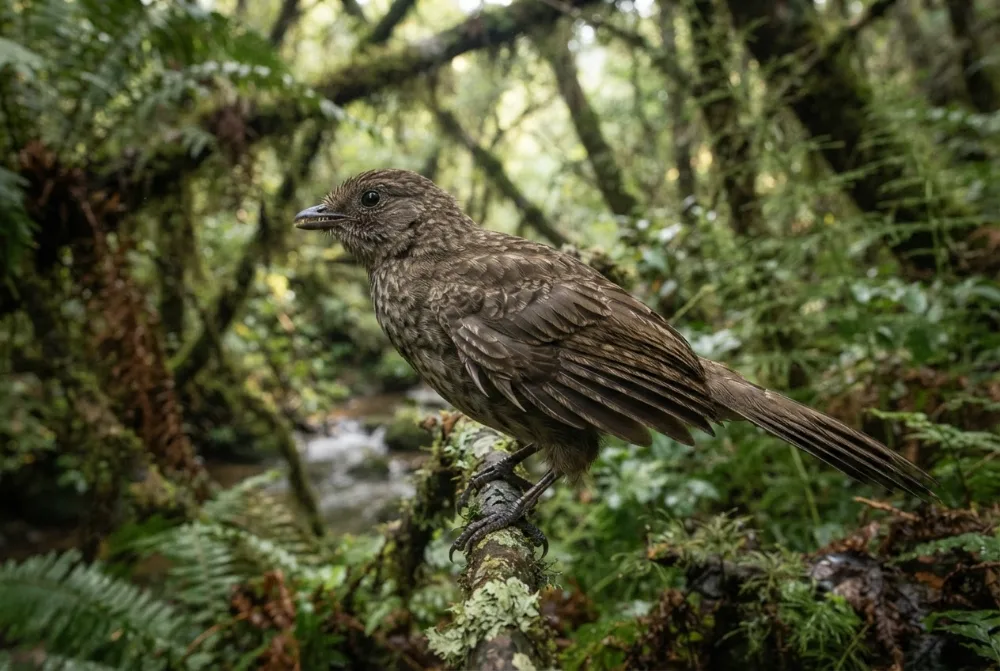
Shenqiornis was a small, toothed bird that lived in what is now China. It had a strong beak and sharp teeth, and it probably hunted insects and other small animals. Its skull was built like a reptile's, with two openings behind the eye.13
Ankakhala liti?
Anali ndi liwiro lotani?


Mfundo zosangalatsa
Shenqiornis is known from a nearly complete skeleton with carbonized feather traces, found in China.2
It belonged to a group of ancient birds called enantiornithines, which had teeth and clawed wings.1
Shenqiornis had a large postorbital bone with a long, tapering jugal process, meaning its skull might have been fully diapsid (with two openings behind each eye) like some early birds.1
Its tooth shape is unique among enantiornithines and suggests it had a special diet, possibly eating different prey than its relatives.1
The fossils were found in rocks that are between about 161 and 121 million years old, from the Late Jurassic to the Early Cretaceous.2
Kwa akatswiri a madino
- Dzina la sayansi
- Shenqiornis
- Anapatsidwa dzina ndi
- Wang et al. 20103
- Gulu
- Mbalame zoyambirira
- Banja / kladi
- Bohaiornithidae3
- Magawidwe a sayansi
- Theropoda > Avialae3
- Zaka za miyala
- zaka 162 mpaka 121 miliyoni (Oxfordian / Barremian)3
- Mapangidwe a miyala
- Qiaotou3
- Mayiko
- China3
- Zolemba za mafosili
- 1 mu The Paleobiology Database3
- Kupezeka
- Shenqiornis was named by Xuri Wang and colleagues in 2010. The type specimen, a nearly complete skeleton with feather traces, was found at Shenjitu in the Qiaotou Formation of northern Hebei, China.31
- Akukambiranabe
- Scientists are not sure exactly what Shenqiornis ate. Its unusual teeth hint at a special diet, but no one knows for sure what that was.1
Kumene mfundo zimachokera
- New Species of Enantiornithes (Aves: Ornithothoraces) from the Qiaotou Formation in Northern Hebei, China (onlinelibrary.wiley.com)
- paleobiodb.org (paleobiodb.org)
- Shenqiornis in The Paleobiology Database (CC BY 4.0): zaka, malo, mapangidwe a miyala, magawidwe a sayansi.
Mfundo iliyonse patsamba lino ili ndi nambala yosonyeza kumene yachokera. Ngati talakwitsa kanthu, pepa, ndife okonda madino, osati magazini ya sayansi. Tiuze pa [email protected] ndipo tikonza.
 Rex ali ndi njala! Dino Wiki ndi ntchito ya bambo kwa mwana wawo wamwamuna wokonda madainoso, yaulere popanda zotsatsa ndi zokazonda. Akuluakulu angadyetse Rex zokhwasula-khwasula kuti tsambali lipitirize kupezeka pa intaneti.Dyetsa Rex
 Archaeopteryx
 Hesperornis
 Ichthyornis
 Baptornis
 Jurapteryx
 Gobipteryx
 Stegosaurus
 Iguanodon
 Giganotosaurus
 Microraptor
 Deinonychus
 Baryonyx