 Kwizi ya Ndiwe dino uti?
 Nkhondo ya madino
 Mpikisano wa madino
 Masewera ang'onoang'ono a madino
 Chimbale cha zomata
 Mindandanda ya TOP ya madino
 Ndidabwitse!
Sinocalliopteryx
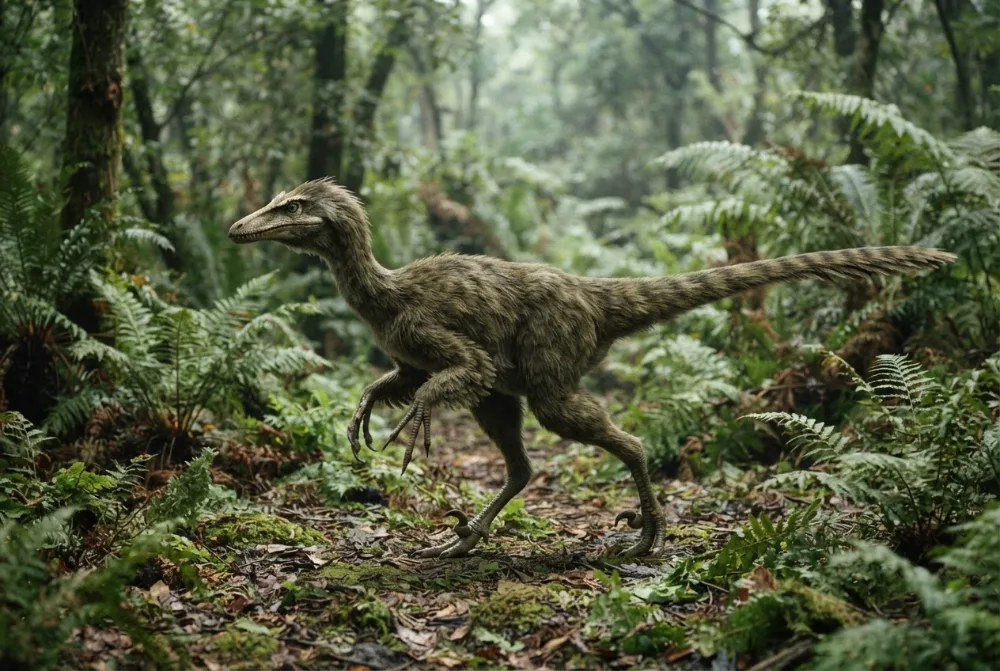
Sinocalliopteryx was a fast, feathered hunter that lived in what is now China. It had long legs and arms, and its body was covered in simple, hair-like feathers. This dinosaur was a fierce predator that could even catch birds on the ground.21
Ankakhala liti?
Anali wamkulu bwanji?
Anali wautali bwanji?
Msinkhu wake unali wautali bwanji?
kuyerekeza
Ankalemera bwanji?
 wautali ngati amphaka a pakhomo 5 otsatizana mphuno ndi mchira🍌wautali ngati nthochi 13 zotsatizana🍉wolemera ngati mavwende 4🏃akanatha kuthamanga mamita 100 m'masekondi 8.4 (munthu waliwiro kwambiri amafunika 9.6)
Sinocalliopteryx anali wamkulu bwanji poyerekeza ndi IWEYO?
Ndi masamu chabe mu msakatuli wako. Palibe chimene chimasungidwa kapena kutumizidwa kwina kulikonse.
Anali ndi liwiro lotani?


Mfundo zosangalatsa
Sinocalliopteryx was the largest known compsognathid dinosaur when it was discovered in 2007.2
One Sinocalliopteryx fossil had the leg of a dromaeosaurid dinosaur inside its stomach, showing it ate other predators.21
Another fossil contained the bones of at least two Confuciusornis birds in its belly, suggesting it hunted birds.2
Sinocalliopteryx had long protofeathers on its hips, tail, and thighs, some up to 10 centimeters (4 inches) long.2
It also had protofeathers on its feet, which is unusual for a dinosaur that was not closely related to birds.2
The stomach acid in one fossil had etched a bone for about 13 days, showing Sinocalliopteryx had a high metabolism.2
Mafunso ofunsidwa kwambiri okhudza Sinocalliopteryx
?How big was Sinocalliopteryx?
About 2.4 metres (7.8 feet) long and weighed around 20 kilograms (44 pounds).21
?Did Sinocalliopteryx have feathers?
Yes, it was covered in simple, hair-like protofeathers, with the longest ones on its hips, tail, and thighs.21
Kwa akatswiri a madino
- Dzina la sayansi
- Sinocalliopteryx
- Anapatsidwa dzina ndi
- Ji et al. 20075
- Gulu
- Madino odya nyama
- Banja / kladi
- Compsognathidae5
- Magawidwe a sayansi
- Theropoda > Compsognathidae5
- Zaka za miyala
- zaka 126 mpaka 120 miliyoni (Barremian / Aptian)5
- Mapangidwe a miyala
- Yixian5
- Mayiko
- China5
- Zolemba za mafosili
- 2 mu The Paleobiology Database5
- Kupezeka
- Sinocalliopteryx was named in 2007 by Ji Shu'an, Ji Qiang, Lü Junchang, and Yuan Chongxi. The first fossil was found at Hengdaozi, in Sihetun, Liaoning Province, China.21
- Akukambiranabe
- Scientists are not sure if the stones found in the first Sinocalliopteryx fossil were swallowed on purpose to help digestion or by accident.2
Kumene mfundo zimachokera
- Sinocalliopteryx | Natural History Museum (nhm.ac.uk)
- Sinocalliopteryx (en.wikipedia.org)
- PBDB Taxon (paleobiodb.org)
- Abdominal Contents from Two Large Early Cretaceous Compsognathids (Dinosauria: Theropoda) Demonstrate Feeding on Confuciusornithids and Dromaeosaurids | PLOS One (journals.plos.org)
- Sinocalliopteryx in The Paleobiology Database (CC BY 4.0): zaka, malo, mapangidwe a miyala, magawidwe a sayansi.
Mfundo iliyonse patsamba lino ili ndi nambala yosonyeza kumene yachokera. Ngati talakwitsa kanthu, pepa, ndife okonda madino, osati magazini ya sayansi. Tiuze pa [email protected] ndipo tikonza.
 Rex ali ndi njala! Dino Wiki ndi ntchito ya bambo kwa mwana wawo wamwamuna wokonda madainoso, yaulere popanda zotsatsa ndi zokazonda. Akuluakulu angadyetse Rex zokhwasula-khwasula kuti tsambali lipitirize kupezeka pa intaneti.Dyetsa Rex
 Allosaurus
 Carnotaurus
 Dilophosaurus
 Giganotosaurus
 Compsognathus
 Paronychodon
 Stegosaurus
 Iguanodon
 Archaeopteryx
 Microraptor
 Deinonychus
 Baryonyx