 Kwizi ya Ndiwe dino uti?
 Nkhondo ya madino
 Mpikisano wa madino
 Masewera ang'onoang'ono a madino
 Chimbale cha zomata
 Mindandanda ya TOP ya madino
 Ndidabwitse!
Sinornis
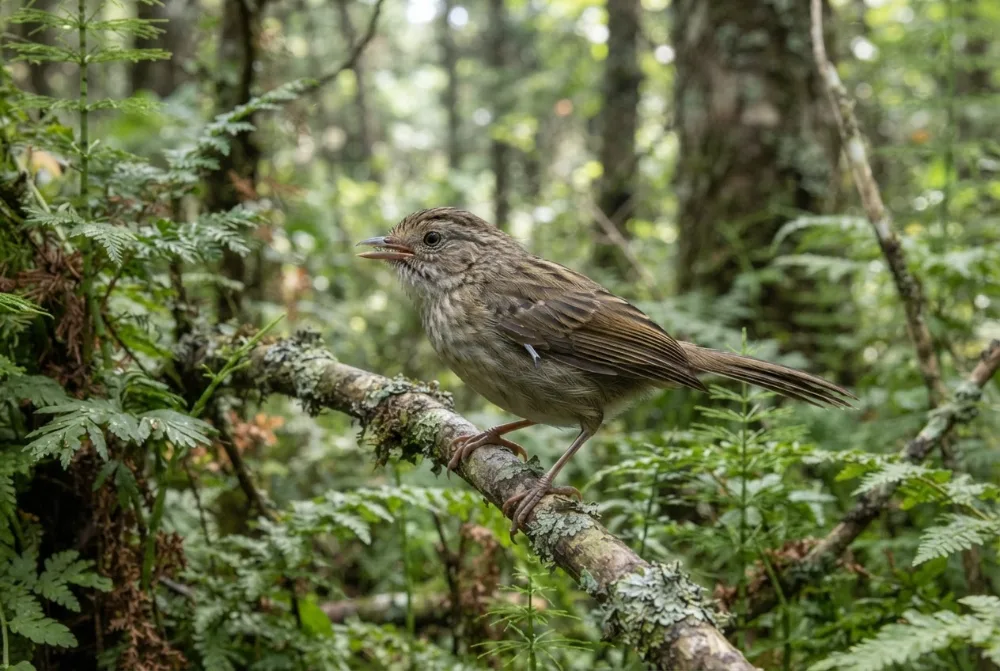
Sinornis was a tiny bird that lived about 120 million years ago in what is now China. It was about the size of a sparrow and could fly and perch just like modern birds. Its fossils helped scientists understand how birds evolved from dinosaurs.21
Ankakhala liti?
Anali ndi liwiro lotani?


Mfundo zosangalatsa
Sinornis had a special wrist bone with a groove that let it bend its wrist sharply, tucking its wings tightly during flight or rest.1
Unlike modern birds, Sinornis had separate finger bones with small claws on its first and second digits.1
Sinornis had a fully opposable hallux (back toe) with a large claw, which helped it perch on branches.1
Its breastbone and shoulder structures were built for strong flight muscles, similar to birds today.1
Sinornis still had some primitive features like a flexible hand, a footed pubis, and stomach ribs (gastralia), which it shared with the early bird Archaeopteryx.21
The fossil of Sinornis was discovered by a Chinese farmer before 1992, and scientists Paul Sereno and Rao Chenggang named and described it.1
Mafunso ofunsidwa kwambiri okhudza Sinornis
?How big was Sinornis?
About the size of a sparrow. Its skeleton was sparrow-sized, so it was a very small bird.12
?Could Sinornis fly?
Yes. It had a broad sternum and shoulder structures for strong flight muscles, and a special wrist bone that let it tuck its wings, so it could fly like modern birds.1
?Did Sinornis have teeth?
Yes. Its skull had a short, toothed snout, similar to the early bird Archaeopteryx.1
?When did Sinornis live?
It lived about 120 million years ago, during the Early Cretaceous period.1
Kwa akatswiri a madino
- Dzina la sayansi
- Sinornis
- Anapatsidwa dzina ndi
- Sereno and Rao 19923
- Gulu
- Mbalame zoyambirira
- Banja / kladi
- Enantiornithes3
- Magawidwe a sayansi
- Theropoda > Avialae3
- Zaka za miyala
- zaka 121 mpaka 113 miliyoni (Aptian)3
- Mapangidwe a miyala
- Jiufotang3
- Mayiko
- China3
- Zolemba za mafosili
- 1 mu The Paleobiology Database3
- Kupezeka
- Sinornis was named by Paul Sereno and Rao Chenggang in 1992. The fossil was found in the Jiufotang Formation in Liaoning, China, and was originally thought to be 135 million years old, but later research showed it is about 120 million years old.12
- Akukambiranabe
- Scientists still debate whether another bird from the same area, Cathayornis, is actually the same species as Sinornis or a different one.1
Kumene mfundo zimachokera
- Sinornis (en.wikipedia.org)
- Early Evolution of Avian Flight and Perching: New Evidence from the Lower Cretaceous of China | Science (science.org)
- Sinornis in The Paleobiology Database (CC BY 4.0): zaka, malo, mapangidwe a miyala, magawidwe a sayansi.
Mfundo iliyonse patsamba lino ili ndi nambala yosonyeza kumene yachokera. Ngati talakwitsa kanthu, pepa, ndife okonda madino, osati magazini ya sayansi. Tiuze pa [email protected] ndipo tikonza.
 Rex ali ndi njala! Dino Wiki ndi ntchito ya bambo kwa mwana wawo wamwamuna wokonda madainoso, yaulere popanda zotsatsa ndi zokazonda. Akuluakulu angadyetse Rex zokhwasula-khwasula kuti tsambali lipitirize kupezeka pa intaneti.Dyetsa Rex
 Archaeopteryx
 Hesperornis
 Ichthyornis
 Baptornis
 Jurapteryx
 Gobipteryx
 Stegosaurus
 Iguanodon
 Giganotosaurus
 Microraptor
 Deinonychus
 Baryonyx