 Kwizi ya Ndiwe dino uti?
 Nkhondo ya madino
 Mpikisano wa madino
 Masewera ang'onoang'ono a madino
 Chimbale cha zomata
 Mindandanda ya TOP ya madino
 Ndidabwitse!
Vescornis
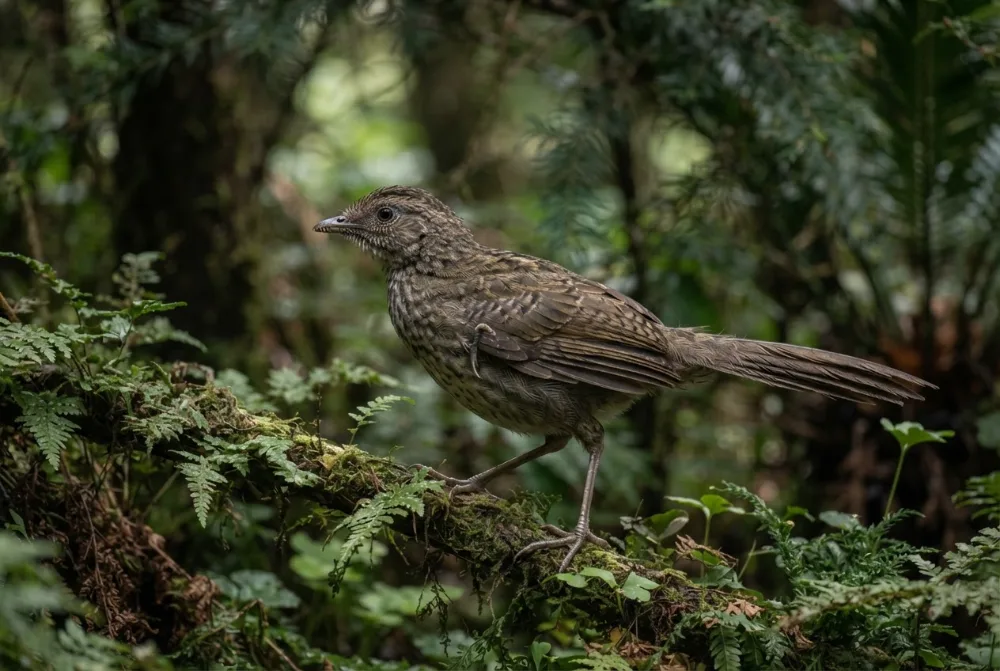
Vescornis was a tiny, feathered dinosaur that could fly. It lived during the Early Cretaceous, about 122 million years ago, in what is now China. This little bird had long foot claws and short wing fingers, which made it great at flying but not so good at climbing trees.12
Ankakhala liti?
Anali ndi liwiro lotani?


Mfundo zosangalatsa
Vescornis had very small wing claws and long, strong foot claws, which helped it fly better but made it worse at climbing than many other early birds.2
The only known fossil of Vescornis was first thought to come from the Yixian Formation, but later geologists realized it was actually from the Huajiying Formation.1
Vescornis might be the same animal as another early bird called Jibeinia, but scientists are not sure because the Jibeinia fossil got lost.1
The name 'Hebeiornis' was given to the same fossil in 1999, but that name is not used because it was not described well enough.1
Vescornis lived about 122 million years ago, during the Early Cretaceous period.1
Wothetsa nthano zabodza
Nthano: Some people think Vescornis was a true bird like modern birds.
Zoona: Vescornis was an enantiornithine, a group of ancient birds that had teeth and claws, and it is not a direct ancestor of today's birds.1
Kwa akatswiri a madino
- Dzina la sayansi
- Vescornis
- Anapatsidwa dzina ndi
- Zhang et al. 20044
- Gulu
- Mbalame zoyambirira
- Banja / kladi
- Enantiornithes4
- Magawidwe a sayansi
- Theropoda > Avialae4
- Zaka za miyala
- zaka 126 mpaka 120 miliyoni (Barremian / Aptian)4
- Mapangidwe a miyala
- Yixian4
- Mayiko
- China4
- Zolemba za mafosili
- 1 mu The Paleobiology Database4
- Kupezeka
- The fossil was found in Hebei Province, China, and was described by Zhang and colleagues in 2004. It is stored at the Nanjing Institute of Geology and Paleontology.1
- Akukambiranabe
- Scientists still debate whether Vescornis is the same species as Jibeinia, because the Jibeinia fossil is lost and the two look very similar.1
Kumene mfundo zimachokera
- Vescornis (en.wikipedia.org)
- Description of a new enantiornithine bird from the Early Cretaceous of Hebei, northern China (cdnsciencepub.com)
- PBDB Taxon (paleobiodb.org)
- Vescornis in The Paleobiology Database (CC BY 4.0): zaka, malo, mapangidwe a miyala, magawidwe a sayansi.
Mfundo iliyonse patsamba lino ili ndi nambala yosonyeza kumene yachokera. Ngati talakwitsa kanthu, pepa, ndife okonda madino, osati magazini ya sayansi. Tiuze pa [email protected] ndipo tikonza.
 Rex ali ndi njala! Dino Wiki ndi ntchito ya bambo kwa mwana wawo wamwamuna wokonda madainoso, yaulere popanda zotsatsa ndi zokazonda. Akuluakulu angadyetse Rex zokhwasula-khwasula kuti tsambali lipitirize kupezeka pa intaneti.Dyetsa Rex
 Archaeopteryx
 Hesperornis
 Ichthyornis
 Baptornis
 Jurapteryx
 Gobipteryx
 Stegosaurus
 Iguanodon
 Giganotosaurus
 Microraptor
 Deinonychus
 Baryonyx