 Kwizi ya Ndiwe dino uti?
 Nkhondo ya madino
 Mpikisano wa madino
 Masewera ang'onoang'ono a madino
 Chimbale cha zomata
 Mindandanda ya TOP ya madino
 Ndidabwitse!
Volkheimeria
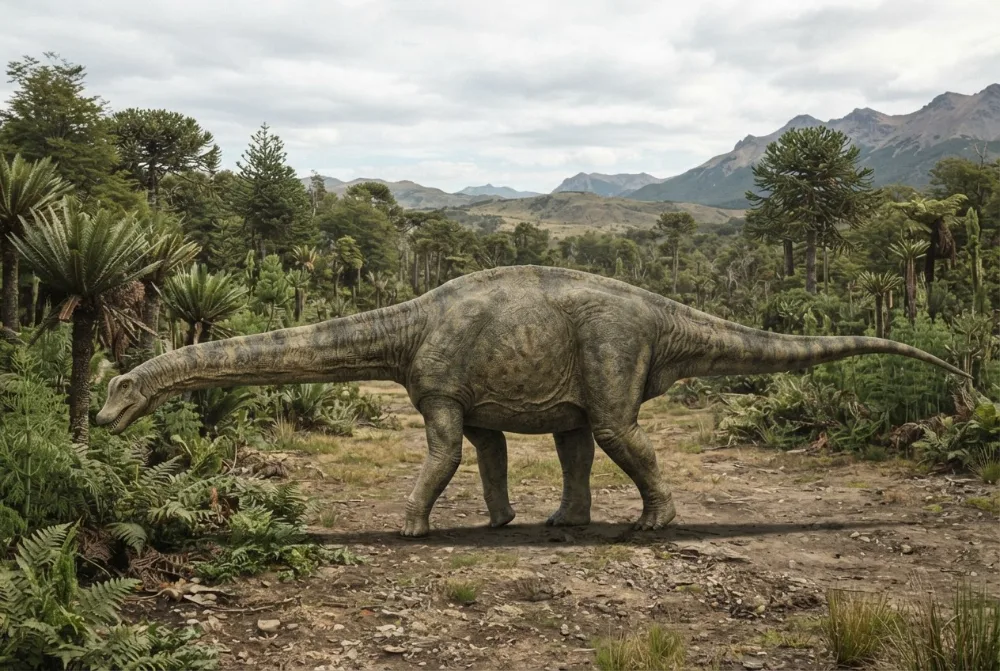
Volkheimeria was an early, long-necked dinosaur that lived in what is now Argentina about 180 million years ago. It was a sauropod, but not one of the giant ones you might know like Brachiosaurus. Scientists think it was still growing when it died, so we don't know exactly how big a full-grown one would be.1
Ankakhala liti?
Anali ndi liwiro lotani?


Mfundo zosangalatsa
Volkheimeria lived during the Early Jurassic, about 179 to 178 million years ago, at a time when many other early sauropods were also appearing.1
The only known skeleton is a partial one, including parts of the backbone, hip bones, a thigh bone, and a shin bone.1
Its thigh bone is 63 cm long, which gives scientists a clue about its size.2
Volkheimeria had air sacs in its neck vertebrae, making its skeleton lighter, but not in its back vertebrae.1
Its tail was probably short because the tail bones are short from front to back.1
Scientists are not sure exactly where Volkheimeria fits in the sauropod family tree. Some think it is a very early sauropod, not yet a eusauropod.1
Mafunso ofunsidwa kwambiri okhudza Volkheimeria
?What did Volkheimeria eat?
Volkheimeria was a plant-eating dinosaur. A tooth that may belong to it is broad and spoon-shaped with large denticles, which is good for eating plants.1
?How big was Volkheimeria?
The size of a fully grown Volkheimeria is not known because the only known specimen was still growing. An estimate based on the partial skeleton suggests it was about 11 metres long.13
?Where was Volkheimeria found?
Volkheimeria was found in Argentina, near the village of Cerro Cóndor in Chubut Province.1
?When did Volkheimeria live?
Volkheimeria lived during the Early Jurassic, about 179 to 178 million years ago.1
Kwa akatswiri a madino
- Dzina la sayansi
- Volkheimeria
- Anapatsidwa dzina ndi
- Bonaparte 19794
- Gulu
- Makosi atali
- Banja / kladi
- Gravisauria4
- Magawidwe a sayansi
- Sauropodomorpha > Sauropoda4
- Zaka za miyala
- zaka 183 mpaka 180 miliyoni (Toarcian)4
- Mapangidwe a miyala
- Cañadón Asfalto4
- Mayiko
- Argentina4
- Zolemba za mafosili
- 1 mu The Paleobiology Database4
- Kupezeka
- Volkheimeria was named by Argentine paleontologist José Bonaparte in 1979. The name honors Wolfgang Volkheimer, another Argentine scientist. The fossils were found near Cerro Cóndor in Chubut, Argentina.1
- Akukambiranabe
- Scientists are not sure whether Volkheimeria was a very early sauropod or a more advanced eusauropod, because the only skeleton is incomplete.1
Kumene mfundo zimachokera
- Volkheimeria (en.wikipedia.org)
- PBDB Taxon (paleobiodb.org)
- VOLKHEIMERIA - DinoChecker dinosaur archive (dinochecker.com)
- Volkheimeria in The Paleobiology Database (CC BY 4.0): zaka, malo, mapangidwe a miyala, magawidwe a sayansi.
Mfundo iliyonse patsamba lino ili ndi nambala yosonyeza kumene yachokera. Ngati talakwitsa kanthu, pepa, ndife okonda madino, osati magazini ya sayansi. Tiuze pa [email protected] ndipo tikonza.
 Rex ali ndi njala! Dino Wiki ndi ntchito ya bambo kwa mwana wawo wamwamuna wokonda madainoso, yaulere popanda zotsatsa ndi zokazonda. Akuluakulu angadyetse Rex zokhwasula-khwasula kuti tsambali lipitirize kupezeka pa intaneti.Dyetsa Rex
 Brachiosaurus
 Diplodocus
 Brontosaurus
 Argentinosaurus
 Camarasaurus
 Morosaurus
 Dilophosaurus
 Stenopterygius
 Dorygnathus
 Scutellosaurus
 Sinosaurus
 Temnodontosaurus