 Kwizi ya Ndiwe dino uti?
 Nkhondo ya madino
 Mpikisano wa madino
 Masewera ang'onoang'ono a madino
 Chimbale cha zomata
 Mindandanda ya TOP ya madino
 Ndidabwitse!
Wuerhosaurus
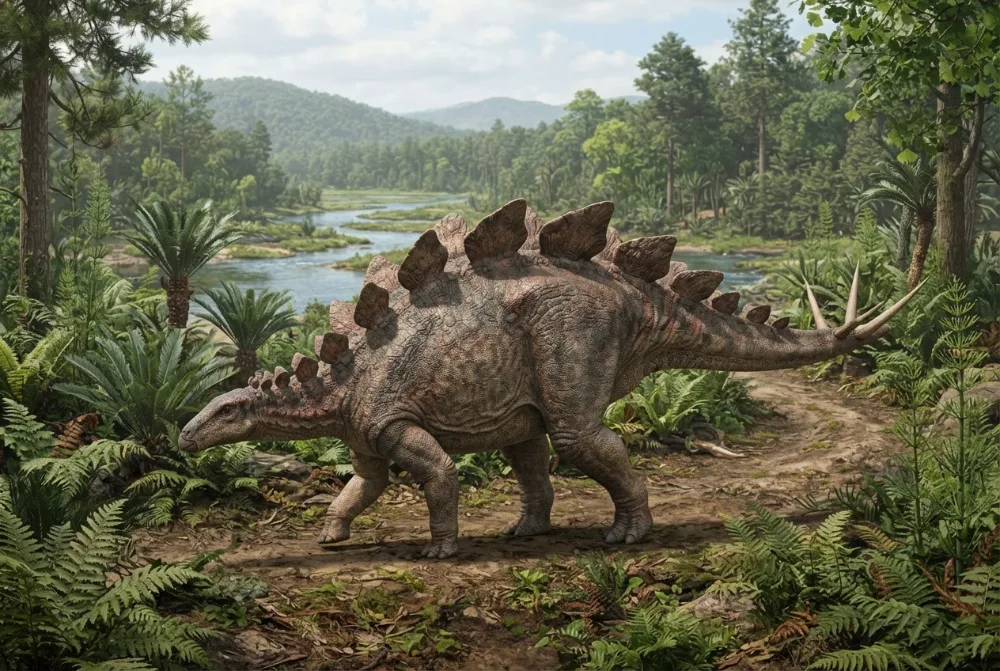
Wuerhosaurus was a plated dinosaur that munched on plants in ancient China. It had bony plates on its back and a spiky tail to protect itself. This stegosaur lived during the early Cretaceous period, about 137 to 100 million years ago.5
Ankakhala liti?
Anali wamkulu bwanji?
Anali wautali bwanji?
Msinkhu wake unali wautali bwanji?
Ankalemera bwanji?

 wautali ngati agalu 7 otsatizana mphuno ndi mchira🍌wautali ngati nthochi 39 zotsatizanawolemera ngati agalu 200🍉wolemera ngati mavwende 800🎒wolemera ngati makalasi athunthu a ana a sukulu 5🐻❄️wolemera ngati zimbalangondo zoyera 9🏃akanatha kuthamanga mamita 100 m'masekondi 24 (munthu waliwiro kwambiri amafunika 9.6)
Wuerhosaurus anali wamkulu bwanji poyerekeza ndi IWEYO?
Ndi masamu chabe mu msakatuli wako. Palibe chimene chimasungidwa kapena kutumizidwa kwina kulikonse.
Anali ndi liwiro lotani?


Mfundo zosangalatsa
Wuerhosaurus was named by Chinese paleontologist Dong Zhiming in 1973.5
Its fossils were found in the Lianmuqin Formation in Xinjiang, China.2
Some scientists think Wuerhosaurus might actually be a species of Stegosaurus, called Stegosaurus homheni.1
The type specimen of Wuerhosaurus is a partial skeleton stored at the Institute of Vertebrate Paleontology and Paleoanthropology in Beijing.1
Wuerhosaurus lived alongside the meat-eating dinosaur Kelmayisaurus and the pterosaur Noripterus.2
Its back vertebrae had deep hollows above the spinal cord, which is different from other stegosaurs.1
Wuerhosaurus was a ground-dwelling herbivore that probably moved on all four legs.5
Mafunso ofunsidwa kwambiri okhudza Wuerhosaurus
?How big was Wuerhosaurus?
Wuerhosaurus homheni was about 7 metres (23 feet) long and weighed 4 metric tons (4.4 short tons). A smaller species, W. ordosensis, was about 5 metres (16 feet) long and weighed 1.2 metric tons (1.3 short tons).3
?How many species of Wuerhosaurus are there?
There are two known species: Wuerhosaurus homheni and Wuerhosaurus ordosensis.3
?Is Wuerhosaurus the same as Stegosaurus?
Some scientists think Wuerhosaurus might actually be a species of Stegosaurus called Stegosaurus homheni, but other scientists disagree.3
Wothetsa nthano zabodza
Nthano: Many people think all stegosaurs lived in the Jurassic period.
Zoona: Wuerhosaurus lived in the early Cretaceous, much later than most stegosaurs.1
Kwa akatswiri a madino
- Dzina la sayansi
- Wuerhosaurus
- Anapatsidwa dzina ndi
- Dong 19735
- Gulu
- Madino a mbale kumsana
- Banja / kladi
- Stegosauridae5
- Magawidwe a sayansi
- Ornithischia > Stegosauria > Thyreophora5
- Zaka za miyala
- zaka 137 mpaka 100 miliyoni (Valanginian / Albian)5
- Mapangidwe a miyala
- Lianmuqin, Ejinhoro5
- Mayiko
- China5
- Zolemba za mafosili
- 3 mu The Paleobiology Database5
- Kupezeka
- Wuerhosaurus was discovered in 1964 at a site called Wuerho in Xinjiang, China. Dong Zhiming named it in 1973 based on a partial skeleton.2
- Akukambiranabe
- Scientists debate whether Wuerhosaurus is a separate genus or just a species of Stegosaurus.1
Kumene mfundo zimachokera
- PBDB Taxon (paleobiodb.org)
- PBDB Collection (paleobiodb.org)
- Wuerhosaurus (en.wikipedia.org)
- enchantedlearning.com (enchantedlearning.com)
- Wuerhosaurus in The Paleobiology Database (CC BY 4.0): zaka, malo, mapangidwe a miyala, magawidwe a sayansi.
Mfundo iliyonse patsamba lino ili ndi nambala yosonyeza kumene yachokera. Ngati talakwitsa kanthu, pepa, ndife okonda madino, osati magazini ya sayansi. Tiuze pa [email protected] ndipo tikonza.
 Rex ali ndi njala! Dino Wiki ndi ntchito ya bambo kwa mwana wawo wamwamuna wokonda madainoso, yaulere popanda zotsatsa ndi zokazonda. Akuluakulu angadyetse Rex zokhwasula-khwasula kuti tsambali lipitirize kupezeka pa intaneti.Dyetsa Rex
 Stegosaurus
 Diracodon
 Hypsirophus
 Dacentrurus
 Miragaia
 Kentrosaurus
 Iguanodon
 Archaeopteryx
 Giganotosaurus
 Microraptor
 Deinonychus
 Baryonyx