 Kwizi ya Ndiwe dino uti?
 Nkhondo ya madino
 Mpikisano wa madino
 Masewera ang'onoang'ono a madino
 Chimbale cha zomata
 Mindandanda ya TOP ya madino
 Ndidabwitse!
Xiangyunloong
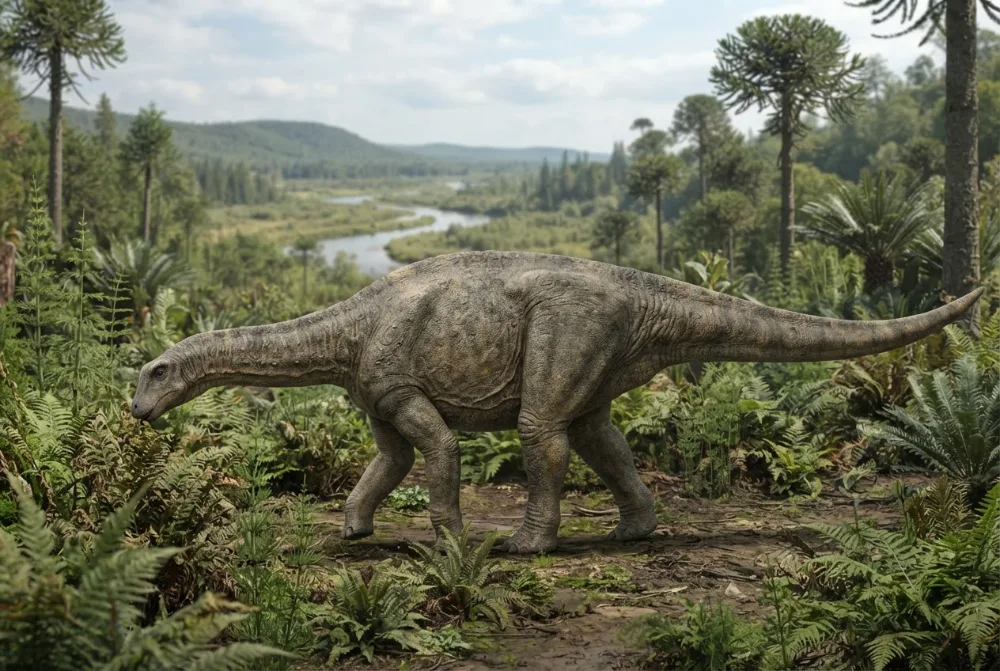
Xiangyunloong was a big, plant-eating dinosaur that lived in what is now China. It had a short neck but a very long and strong tail, which helped it balance its heavy body. This dinosaur shows that not all early long-necked dinosaurs had long necks!2
Ankakhala liti?
Anali wamkulu bwanji?
Anali wautali bwanji?
Msinkhu wake unali wautali bwanji?
kuyerekeza
 wautali ngati magalimoto 2 oimikidwa pamzere🍌wautali ngati nthochi 56 zotsatizana🏃akanatha kuthamanga mamita 100 m'masekondi 16 (munthu waliwiro kwambiri amafunika 9.6)
Xiangyunloong anali wamkulu bwanji poyerekeza ndi IWEYO?
Ndi masamu chabe mu msakatuli wako. Palibe chimene chimasungidwa kapena kutumizidwa kwina kulikonse.
Anali ndi liwiro lotani?


Mfundo zosangalatsa
Xiangyunloong had a short neck but a very long and powerful tail, which is unusual for early sauropodomorphs.2
Its tail was so strong that it could act as a counterbalance, helping the dinosaur stand on two legs to feed.2
Scientists think Xiangyunloong represents an early stage of gigantism, or getting very big, in sauropodomorphs.2
Xiangyunloong lived about 200 million years ago during the Early Jurassic period.4
The fossil of Xiangyunloong was found about 200 kilometers west of the famous Lufeng dinosaur fossil sites in China.2
Xiangyunloong is known from a partial skeleton that includes neck bones, back bones, tail bones, and hip bones.2
Mafunso ofunsidwa kwambiri okhudza Xiangyunloong
?How big was Xiangyunloong?
About 9 to 10 metres long, making it one of the largest early sauropodomorph dinosaurs from China.12
?Did Xiangyunloong have a long neck?
No, it had a short neck, which is unusual for early sauropodomorphs. Instead, it had a very long and strong tail.23
?What did Xiangyunloong eat?
It was a plant eating dinosaur, like other sauropodomorphs.1
Wothetsa nthano zabodza
Nthano: Many people think all early sauropodomorphs had long necks like later sauropods.
Zoona: Xiangyunloong had a short neck and a long, strong tail, showing that early sauropodomorphs had different body shapes.2
Kwa akatswiri a madino
- Dzina la sayansi
- Xiangyunloong
- Anapatsidwa dzina ndi
- Hu et al. 20264
- Gulu
- Makosi atali
- Banja / kladi
- Massopoda4
- Magawidwe a sayansi
- Sauropodomorpha4
- Zaka za miyala
- zaka 201 mpaka 175 miliyoni (Hettangian / Toarcian)4
- Mapangidwe a miyala
- Fengjiahe4
- Mayiko
- China4
- Zolemba za mafosili
- 1 mu The Paleobiology Database4
- Kupezeka
- Xiangyunloong was named in 2026 by Hu and colleagues based on a partial skeleton found in the Fengjiahe Formation in Yunnan, China.2
- Akukambiranabe
- Scientists are still debating whether Xiangyunloong represents a new evolutionary path where the tail, not the neck, became long and strong.2
Kumene mfundo zimachokera
- Xiangyunloong (en.wikipedia.org)
- A new sauropodomorph dinosaur from the Lower Jurassic Fengjiahe Formation of Dali of Yunnan Province, China | Royal Society Open Science | The Royal Society (royalsocietypublishing.org)
- Early Sauropodomorph Dinosaur Unearthed in China | Sci.News (sci.news)
- Xiangyunloong in The Paleobiology Database (CC BY 4.0): zaka, malo, mapangidwe a miyala, magawidwe a sayansi.
Mfundo iliyonse patsamba lino ili ndi nambala yosonyeza kumene yachokera. Ngati talakwitsa kanthu, pepa, ndife okonda madino, osati magazini ya sayansi. Tiuze pa [email protected] ndipo tikonza.
 Rex ali ndi njala! Dino Wiki ndi ntchito ya bambo kwa mwana wawo wamwamuna wokonda madainoso, yaulere popanda zotsatsa ndi zokazonda. Akuluakulu angadyetse Rex zokhwasula-khwasula kuti tsambali lipitirize kupezeka pa intaneti.Dyetsa Rex
 Brachiosaurus
 Diplodocus
 Brontosaurus
 Argentinosaurus
 Camarasaurus
 Morosaurus
 Dilophosaurus
 Stenopterygius
 Dorygnathus
 Scutellosaurus
 Sinosaurus
 Temnodontosaurus