 Ati daayinoo kami? Qormaata
 Lola daayinoo
 Dorgommii daayinoo
 Taphoota daayinoo xixiqqoo
 Albamii istiikarii
 Tarreewwan TOP daayinoo
 Na dinqisiisi!
Caenagnathasia
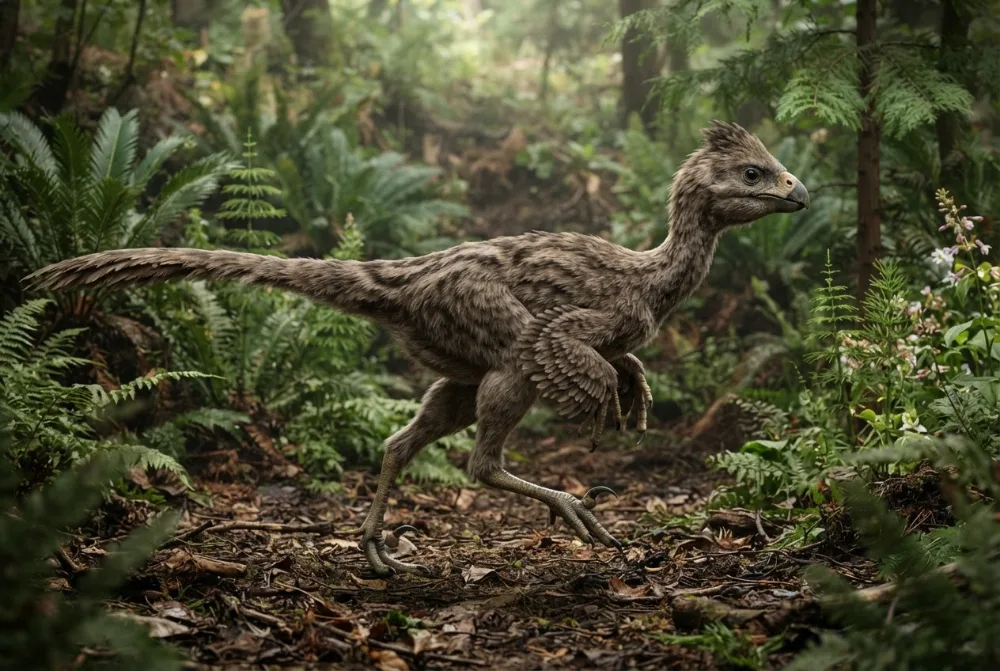
Caenagnathasia was a tiny, feathered dinosaur that looked a bit like a bird. It had a beak and long legs, and it was one of the smallest dinosaurs ever found. It lived in Asia during the Late Cretaceous period.1
Yoom jiraate?
Hammam guddaa ture?
Hammam dheeraa ture?
Hammam ol-dheeraa ture?
tilmaama
Hammam ulfaataa ture?
SI wajjin yoo wal bira qabamu, Caenagnathasia hammam guddaa ture?
Herrega qofa barbaadduu kee keessatti. Wanti tokkollee hin olkaa'amu, eessayyuu hin ergamu.
Hammam saffisaa ture?


Odeeffannoowwan bashannansiisoo
Caenagnathasia is the smallest known oviraptorosaur and one of the smallest non-avian dinosaurs. Its skull was only about 7.6 centimetres (3 inches) long.1
It lived about 90 million years ago, making it the oldest known caenagnathoid.1
The first fossils were just two fused lower jaw bones, found in Uzbekistan.1
Scientists think it was feathered, like other oviraptorosaurs, and looked bird-like with a beak and long neck.1
In 2015, new bones were found, including vertebrae, a dentary, and a femur, which helped confirm it belonged to the Caenagnathidae family.1
The name honors Gerbert Genrikhovich Martinson, a scientist, in the species name martinsoni.1
Gaaffiiwwan waa'ee Caenagnathasia baay'ee gaafataman
?How big was Caenagnathasia?
It was tiny. About 0.6 metres (2 feet) long and weighed around 1.4 kilograms (3 pounds). Its skull was only about 7.6 centimetres (3 inches) long.1
?What did Caenagnathasia eat?
Scientists think it ate plants or small animals, because it had a beak and a special shelf in its mouth for grinding food, like other oviraptorosaurs.12
?Did Caenagnathasia have feathers?
Yes. It was a feathered dinosaur, like other oviraptorosaurs, and looked bird-like with a beak and long neck.1
?When did Caenagnathasia live?
It lived about 90 million years ago, during the Late Cretaceous period. It is the oldest known caenagnathoid.1
Seenaa sobaa diigaa
Seenaa sobaa: Some people think Caenagnathasia was a bird because it had a beak and feathers.
Dhugaa: It was a dinosaur, not a bird. It belonged to a group of feathered theropods called oviraptorosaurs, which are closely related to birds but not birds themselves.1
Ogeeyyii daayinootiif
- Maqaa saayinsii
- Caenagnathasia
- Kan maqaa baase
- Currie et al. 19943
- Garee
- Daayinoowwan rifeensa qaban kan addaa
- Maatii / kilaadii
- Caenagnathidae3
- Ramaddii
- Theropoda > Oviraptorosauria3
- Umurii dhagaawwanii
- waggaa miliyoona 94 hanga 72 (Turonian / Campanian)3
- Caasaawwan dhagaa
- Bissekty, Iren Dabasu3
- Biyyoota
- Uzbekistaan, Chaayinaa3
- Galmee fosilii
- 7 The Paleobiology Database keessa3
- Argannoo
- Caenagnathasia was named in 1994 by Philip J. Currie, Stephen Godfrey, and Lev Nessov. The first fossils were found near Dzharakuduk in Uzbekistan, in the Bissekty Formation.1
- Ammallee falmisiisaa
- Scientists are still debating exactly where Caenagnathasia sits in the dinosaur family tree. Some think it was a primitive member of the Caenagnathidae, while others suggest it might be more basal within Oviraptorosauria.1
Odeeffannoon eessaa dhufa
- Caenagnathasia (en.wikipedia.org)
- New material of Caenagnathasia martinsoni (Dinosauria: Theropoda: Oviraptorosauria) from the Bissekty Formation (Upper Cretaceous: Turonian) of Uzbekistan › SPbU Researchers Portal (pureportal.spbu.ru)
- Caenagnathasia in The Paleobiology Database (CC BY 4.0): umurii, bakkeewwan, caasaawwan dhagaa, ramaddii.
Odeeffannoon fuula kana irra jiru hundi lakkoofsa madda isaa agarsiisu qaba. Yoo waa dogoggorre, dhiifama, nuti jaallattoota daayinoo malee joornaalii saayinsii miti. [email protected] irratti nutti himi, nus ni sirreessina.
 Rex beela'eera! Dino Wiki pirojektii abbaa tokkoo kan ilma isaa daayinoo jaallatuuf hojjetame, bilisa, beeksisa malee fi hordoftuu malee. Ga'eessonni akka inni interneetii irra turuuf Rexiif nyaata xiqqoo kennuu danda'u.Rex soori
 Therizinosaurus
 Oviraptor
 Chirostenotes
 Citipes
 Leptorhynchos
 Avimimus
 Tyrannosaurus
 Triceratops
 Velociraptor
 Spinosaurus
 Ankylosaurus
 Parasaurolophus