 Ati daayinoo kami? Qormaata
 Lola daayinoo
 Dorgommii daayinoo
 Taphoota daayinoo xixiqqoo
 Albamii istiikarii
 Tarreewwan TOP daayinoo
 Na dinqisiisi!
Hagryphus
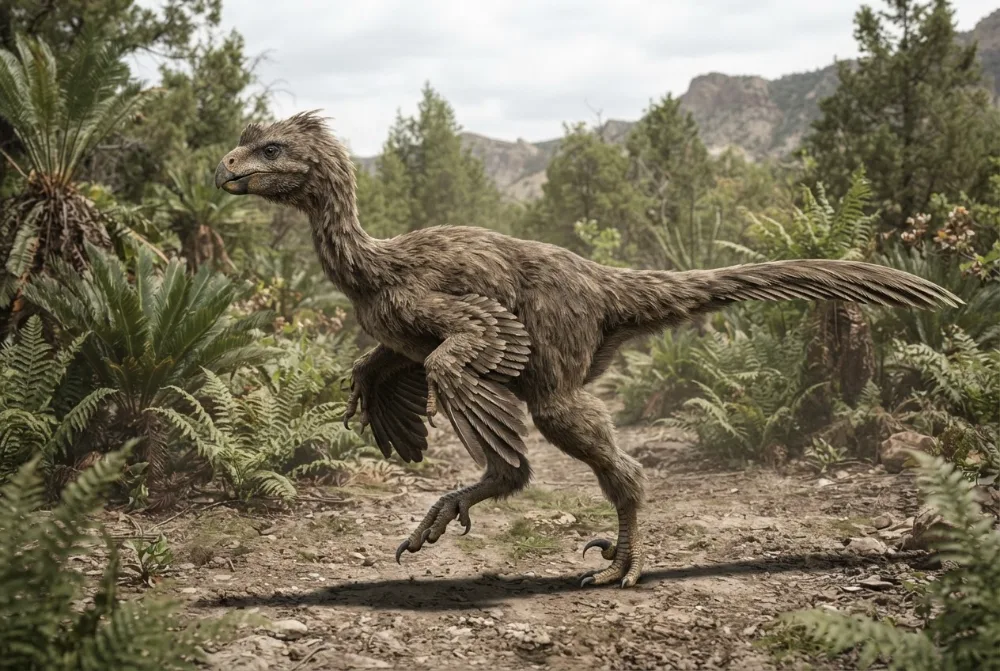
Hagryphus was a big, feathered dinosaur that lived in what is now Utah, USA, about 76 million years ago. It was one of the largest oviraptorosaurs in North America, and it probably used its toothless beak to eat plants and small animals.12
Yoom jiraate?
Hammam guddaa ture?
Hammam dheeraa ture?
Hammam ol-dheeraa ture?
tilmaama
Hammam ulfaataa ture?
 akka saree 3 funyaan hanga eegeetti dheeraa🍌akka muuzii 17 walitti hiriiran dheeraa
 akka adurree manaa 12 ulfaata🍉akka habxuu 10 ulfaata🧸akka ijoollee KG 2.5 ulfaata🎒akka ijoollee mana barumsaa 1.5 ulfaata🏃meetira 100 sekondii 7.7 keessatti fiiguu danda'a (namni hunda caalaa saffisaan 9.6 barbaada)
SI wajjin yoo wal bira qabamu, Hagryphus hammam guddaa ture?
Herrega qofa barbaadduu kee keessatti. Wanti tokkollee hin olkaa'amu, eessayyuu hin ergamu.
Hammam saffisaa ture?


Odeeffannoowwan bashannansiisoo
Hagryphus was about 30 to 40 percent larger than the next largest North American oviraptorosaur, Chirostenotes.1
The only known fossil includes a nearly complete left hand, which was about a foot long, and some foot bones.1
Hagryphus lived near the shore of a huge inland sea called the Western Interior Seaway, in a wet, humid environment with swamps and lakes.1
It was probably covered in feathers, like other oviraptorosaurs, and some scientists think it might have been a true bird.1
The hand of Hagryphus had a very robust first finger, with a claw that was especially thick and strong.1
Gaaffiiwwan waa'ee Hagryphus baay'ee gaafataman
?How big was Hagryphus?
About 2.4 to 3 metres long and weighed around 50 kilograms.1
?Did Hagryphus have feathers?
Yes, evidence suggests it was feathered, like other oviraptorosaurs.1
?What did Hagryphus eat?
It had a toothless beak and probably ate plants or small animals, not just eggs.1
?When did Hagryphus live?
It lived about 76 million years ago, during the Late Cretaceous period.1
Seenaa sobaa diigaa
Seenaa sobaa: Some people think Hagryphus ate only eggs because it had no teeth.
Dhugaa: Scientists now think it likely ate plants and small vertebrates, not just eggs.1
Ogeeyyii daayinootiif
- Maqaa saayinsii
- Hagryphus
- Kan maqaa baase
- Zanno and Sampson 20052
- Garee
- Daayinoowwan rifeensa qaban kan addaa
- Maatii / kilaadii
- Caenagnathidae2
- Ramaddii
- Theropoda > Oviraptorosauria2
- Umurii dhagaawwanii
- waggaa miliyoona 84 hanga 72 (Campanian)2
- Caasaawwan dhagaa
- Kaiparowits2
- Biyyoota
- Ameerikaa2
- Galmee fosilii
- 1 The Paleobiology Database keessa2
- Argannoo
- The fossil was found in 2002 by Michael Getty in southern Utah, and it was named Hagryphus giganteus by Lindsay Zanno and Scott Sampson in 2005.1
- Ammallee falmisiisaa
- Scientists still debate whether Hagryphus was a member of the Caenagnathidae family or a more general oviraptorosaur, and whether it was a bird.1
Odeeffannoon eessaa dhufa
- Hagryphus (en.wikipedia.org)
- Hagryphus in The Paleobiology Database (CC BY 4.0): umurii, bakkeewwan, caasaawwan dhagaa, ramaddii.
Odeeffannoon fuula kana irra jiru hundi lakkoofsa madda isaa agarsiisu qaba. Yoo waa dogoggorre, dhiifama, nuti jaallattoota daayinoo malee joornaalii saayinsii miti. [email protected] irratti nutti himi, nus ni sirreessina.
 Rex beela'eera! Dino Wiki pirojektii abbaa tokkoo kan ilma isaa daayinoo jaallatuuf hojjetame, bilisa, beeksisa malee fi hordoftuu malee. Ga'eessonni akka inni interneetii irra turuuf Rexiif nyaata xiqqoo kennuu danda'u.Rex soori
 Therizinosaurus
 Oviraptor
 Chirostenotes
 Citipes
 Leptorhynchos
 Avimimus
 Tyrannosaurus
 Triceratops
 Velociraptor
 Spinosaurus
 Ankylosaurus
 Parasaurolophus