 Ati daayinoo kami? Qormaata
 Lola daayinoo
 Dorgommii daayinoo
 Taphoota daayinoo xixiqqoo
 Albamii istiikarii
 Tarreewwan TOP daayinoo
 Na dinqisiisi!
Jobaria
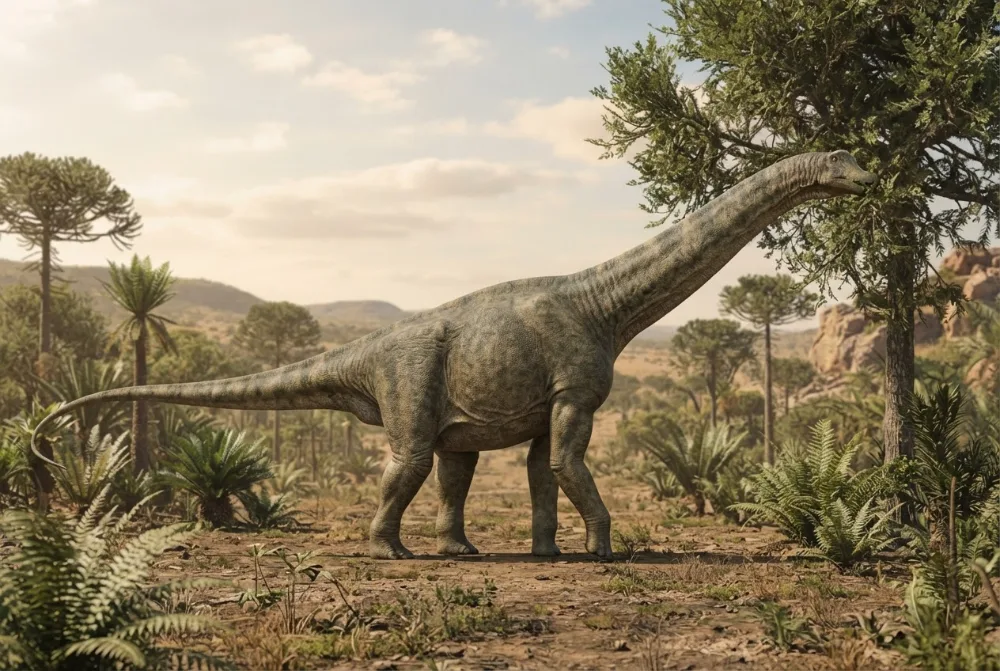
Jobaria was a huge, long-necked plant eater that stomped through the Sahara Desert millions of years ago. It was one of the most complete sauropod skeletons ever found, so scientists know a lot about it!1
Yoom jiraate?
Hammam guddaa ture?
Hammam dheeraa ture?
Hammam ol-dheeraa ture?
Hammam ulfaataa ture?

 akka konkolaataa 5 tarreen dhaabatan dheeraa🍌akka muuzii 120 walitti hiriiran dheeraaakka konkolaataa 15 ulfaata🍉akka habxuu 4500 ulfaata🎒akka kutaalee mana barumsaa guutuu 28 ulfaata🐻❄️akka beeraa adii 50 ulfaata🏢akka foddaa darbii 2 keessa ilaaluu danda'utti ol-dheeraa🏃meetira 100 sekondii 30 keessatti fiiguu danda'a (namni hunda caalaa saffisaan 9.6 barbaada)
SI wajjin yoo wal bira qabamu, Jobaria hammam guddaa ture?
Herrega qofa barbaadduu kee keessatti. Wanti tokkollee hin olkaa'amu, eessayyuu hin ergamu.
Hammam saffisaa ture?


Odeeffannoowwan bashannansiisoo
Jobaria is one of the most complete sauropods ever found, with over 95% of its skeleton preserved.1
Its backbone and tail were simpler than those of later sauropods like Diplodocus, which had complex vertebrae and a whiplash tail.1
Scientists think Jobaria could rear up on its hind legs, like elephants can, because its weight was supported more by its back legs.1
Jobaria lived during the Middle Jurassic, about 167 to 161 million years ago, though some sources say Early Cretaceous.12
The name Jobaria comes from a mythical giant beast called Jobar, whose bones some Tuareg people thought the fossils were.1
Jobaria was discovered in 1997 during a four-month expedition led by paleontologist Paul Sereno.1
Gaaffiiwwan waa'ee Jobaria baay'ee gaafataman
?How big was Jobaria?
About 18.2 metres (60 feet) long and weighing around 22.4 tonnes (24.7 short tons), though some scientists give a smaller estimate of 16 metres (52 feet) and 16 tonnes (18 short tons).1
?What did Jobaria eat?
It was a plant eater, or herbivore, chomping on leaves and other vegetation.2
?Could Jobaria rear up on its hind legs?
Yes, scientists think it could, like elephants do, because its weight was supported more by its back legs.1
?When did Jobaria live?
It lived during the Middle Jurassic Period, about 167 to 161 million years ago, though some older sources say Early Cretaceous.1
Seenaa sobaa diigaa
Seenaa sobaa: Some people think Jobaria lived during the Early Cretaceous, about 132 million years ago.
Dhugaa: Scientists now think the rocks where it was found are actually Middle Jurassic, about 167 to 161 million years old.1
Ogeeyyii daayinootiif
- Maqaa saayinsii
- Jobaria
- Kan maqaa baase
- Sereno et al. 19995
- Garee
- Morma-dheertota
- Maatii / kilaadii
- Eusauropoda5
- Ramaddii
- Sauropodomorpha > Sauropoda5
- Umurii dhagaawwanii
- waggaa miliyoona 162 hanga 143 (Oxfordian / Tithonian)5
- Caasaawwan dhagaa
- Tiourarén5
- Biyyoota
- Niijer5
- Galmee fosilii
- 2 The Paleobiology Database keessa5
- Argannoo
- Jobaria was discovered in 1997 by a team led by Paul Sereno, during an expedition in the Sahara Desert. It was found in a mass-death site in Niger, and the species was named Jobaria tiguidensis in 1999.15
- Ammallee falmisiisaa
- Scientists are still debating exactly where Jobaria fits in the sauropod family tree. Some think it is a basal macronarian, while others think it is a non-neosauropod eusauropod.1
Odeeffannoon eessaa dhufa
- Jobaria (en.wikipedia.org)
- Jobaria | Natural History Museum (nhm.ac.uk)
- Discoveries | Paul Sereno - Paleontologist | The University of Chicago (paulsereno.uchicago.edu)
- paulsereno.uchicago.edu (paulsereno.uchicago.edu)
- Jobaria in The Paleobiology Database (CC BY 4.0): umurii, bakkeewwan, caasaawwan dhagaa, ramaddii.
Odeeffannoon fuula kana irra jiru hundi lakkoofsa madda isaa agarsiisu qaba. Yoo waa dogoggorre, dhiifama, nuti jaallattoota daayinoo malee joornaalii saayinsii miti. [email protected] irratti nutti himi, nus ni sirreessina.
 Rex beela'eera! Dino Wiki pirojektii abbaa tokkoo kan ilma isaa daayinoo jaallatuuf hojjetame, bilisa, beeksisa malee fi hordoftuu malee. Ga'eessonni akka inni interneetii irra turuuf Rexiif nyaata xiqqoo kennuu danda'u.Rex soori
 Brachiosaurus
 Diplodocus
 Brontosaurus
 Argentinosaurus
 Camarasaurus
 Morosaurus
 Allosaurus
 Compsognathus
 Camptosaurus
 Nanosaurus
 Rhamphorhynchus
 Ceratosaurus