 Ati daayinoo kami? Qormaata
 Lola daayinoo
 Dorgommii daayinoo
 Taphoota daayinoo xixiqqoo
 Albamii istiikarii
 Tarreewwan TOP daayinoo
 Na dinqisiisi!
Tlatolophus
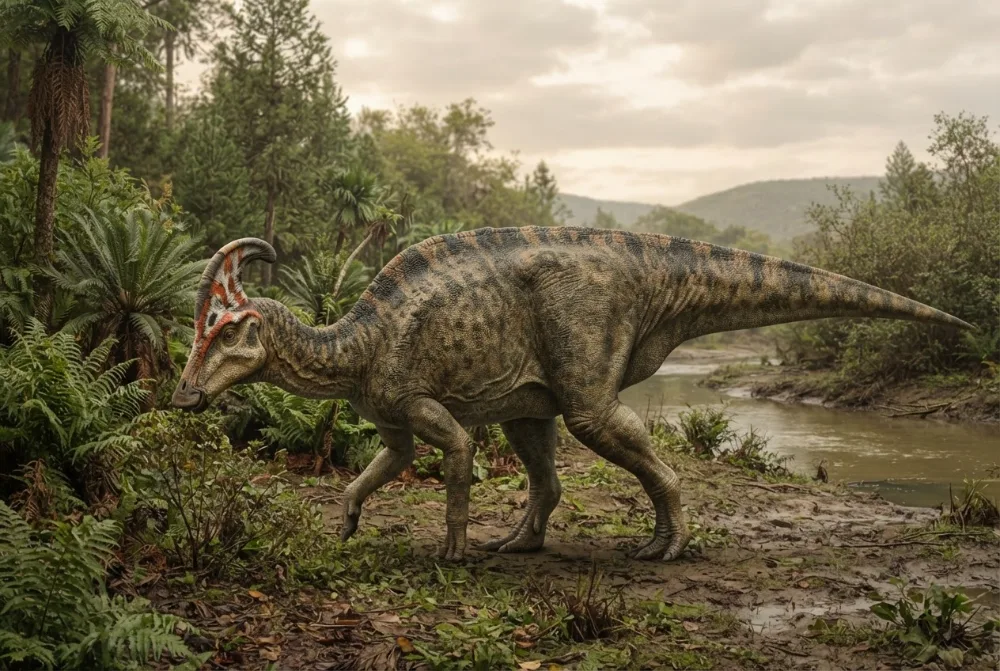
Tlatolophus was a big, plant-eating duck-billed dinosaur with a fancy crest on its head that looked like a comma or a word symbol. It lived in what is now Mexico during the Late Cretaceous, about 73 to 72.5 million years ago. This dinosaur is special because it's one of the most complete duck-billed dinosaurs ever found in Mexico!12
Yoom jiraate?
Hammam guddaa ture?
Hammam dheeraa ture?
Hammam ol-dheeraa ture?
Hammam ulfaataa ture?

 akka saree 8 funyaan hanga eegeetti dheeraa🍌akka muuzii 44 walitti hiriiran dheeraaakka saree 150 ulfaata🍉akka habxuu 600 ulfaata🎒akka kutaalee mana barumsaa guutuu 4 ulfaata🐻❄️akka beeraa adii 7 ulfaata🏃meetira 100 sekondii 14 keessatti fiiguu danda'a (namni hunda caalaa saffisaan 9.6 barbaada)
SI wajjin yoo wal bira qabamu, Tlatolophus hammam guddaa ture?
Herrega qofa barbaadduu kee keessatti. Wanti tokkollee hin olkaa'amu, eessayyuu hin ergamu.
Hammam saffisaa ture?


Odeeffannoowwan bashannansiisoo
Tlatolophus's crest was hollow and shaped like an upside-down comma, which may have been used for making sounds or showing off.1
The name Tlatolophus comes from the Nahuatl word 'tlatolli' meaning 'word', because its crest looks like the Aztec symbol for 'word'.1
The first fossil was a tail found in 2005, but it took until 2013 for scientists to dig out the whole skeleton, including the skull.1
Tlatolophus is the most complete lambeosaurine (crested duck-billed dinosaur) ever found in Mexico.2
Its skull was tall, and the crest was made of bones from the nose and upper jaw, not just a separate bone.1
Scientists think Tlatolophus was about 8 meters long and weighed nearly 3 metric tons, as heavy as a small elephant.1
Gaaffiiwwan waa'ee Tlatolophus baay'ee gaafataman
?What did Tlatolophus eat?
It was a plant-eater, like all duck-billed dinosaurs. It likely ate leaves, ferns, and other plants with its wide beak.1
?How big was Tlatolophus?
About 8 metres long and weighed nearly 3 metric tons, as heavy as a small elephant.1
?Did Tlatolophus have feathers?
No, duck-billed dinosaurs like Tlatolophus did not have feathers. They were covered in scaly skin.1
?When did Tlatolophus live?
It lived during the Late Cretaceous period, about 73 to 72.5 million years ago.1
Seenaa sobaa diigaa
Seenaa sobaa: Some people think Tlatolophus could swim in the ocean.
Dhugaa: No, Tlatolophus was a land dinosaur that walked on four legs or two, and it ate plants on land.4
Ogeeyyii daayinootiif
- Maqaa saayinsii
- Tlatolophus
- Kan maqaa baase
- Ramírez-Velasco et al. 20214
- Garee
- Afaan-daakiyyee
- Maatii / kilaadii
- Hadrosauridae4
- Ramaddii
- Ornithischia > Ornithopoda > Iguanodontia > Hadrosauridae4
- Umurii dhagaawwanii
- waggaa miliyoona 84 hanga 72 (Campanian)4
- Caasaawwan dhagaa
- Cerro del Pueblo4
- Biyyoota
- Meeksikoo4
- Galmee fosilii
- 1 The Paleobiology Database keessa4
- Argannoo
- The first Tlatolophus fossil was found in 2005 in Mexico, but it wasn't until 2013 that a team from INAH and UNAM started digging it out. They named it Tlatolophus galorum in 2021.12
- Ammallee falmisiisaa
- Scientists still debate what the crest was used for, whether for making sounds, attracting mates, or something else.1
Odeeffannoon eessaa dhufa
- Tlatolophus (en.wikipedia.org)
- Tlatolophus galorum, gen. et sp. nov., a parasaurolophini dinosaur from the upper Campanian of the Cerro del Pueblo Formation, Coahuila, northern Mexico (sciencedirect.com)
- El ‘Tlatolophus galorum’, la nueva especie de dinosaurio hallada en México | EL PAÍS México (elpais.com)
- Tlatolophus in The Paleobiology Database (CC BY 4.0): umurii, bakkeewwan, caasaawwan dhagaa, ramaddii.
Odeeffannoon fuula kana irra jiru hundi lakkoofsa madda isaa agarsiisu qaba. Yoo waa dogoggorre, dhiifama, nuti jaallattoota daayinoo malee joornaalii saayinsii miti. [email protected] irratti nutti himi, nus ni sirreessina.
 Rex beela'eera! Dino Wiki pirojektii abbaa tokkoo kan ilma isaa daayinoo jaallatuuf hojjetame, bilisa, beeksisa malee fi hordoftuu malee. Ga'eessonni akka inni interneetii irra turuuf Rexiif nyaata xiqqoo kennuu danda'u.Rex soori
 Parasaurolophus
 Edmontosaurus
 Saurolophus
 Hypacrosaurus
 Corythosaurus
 Kritosaurus
 Tyrannosaurus
 Triceratops
 Velociraptor
 Spinosaurus
 Ankylosaurus
 Pteranodon