 Ati daayinoo kami? Qormaata
 Lola daayinoo
 Dorgommii daayinoo
 Taphoota daayinoo xixiqqoo
 Albamii istiikarii
 Tarreewwan TOP daayinoo
 Na dinqisiisi!
Yoom jiraate?

Hammam guddaa ture?
Hammam dheeraa ture?
Hammam ulfaataa ture?
 akka konkolaataa 22 tarreen dhaabatan dheeraa🍌akka muuzii 560 walitti hiriiran dheeraa
 gara ulfaatina arbaa🍉akka habxuu 1400 ulfaata🎒akka kutaalee mana barumsaa guutuu 9 ulfaata🐻❄️akka beeraa adii 16 ulfaata🏃meetira 100 sekondii 21 keessatti fiiguu danda'a (namni hunda caalaa saffisaan 9.6 barbaada)
SI wajjin yoo wal bira qabamu, Wamweracaudia hammam guddaa ture?
Herrega qofa barbaadduu kee keessatti. Wanti tokkollee hin olkaa'amu, eessayyuu hin ergamu.
Hammam saffisaa ture?


Odeeffannoowwan bashannansiisoo
Wamweracaudia is known from a nearly complete series of thirty tail vertebrae, plus two chevrons and two neural spines.1
Its tail bones were procoelous, meaning they had a hollow at the front and a ball at the back, which made the tail flexible and strong.1
It was a close relative of Mamenchisaurus, a famous long-necked dinosaur from Asia, and scientists think it may be the first mamenchisaurid found outside Asia.1
The fossils were first dug up between 1909 and 1912 by German expeditions, but they were not given their own name until 2019.1
The name honors the Wamwera people who live near the find site, and the specific name keranjei honors Mohammadi Keranje, the foreman who led the excavation team.1
Wamweracaudia lived during the Late Jurassic, about 155 to 145 million years ago.1
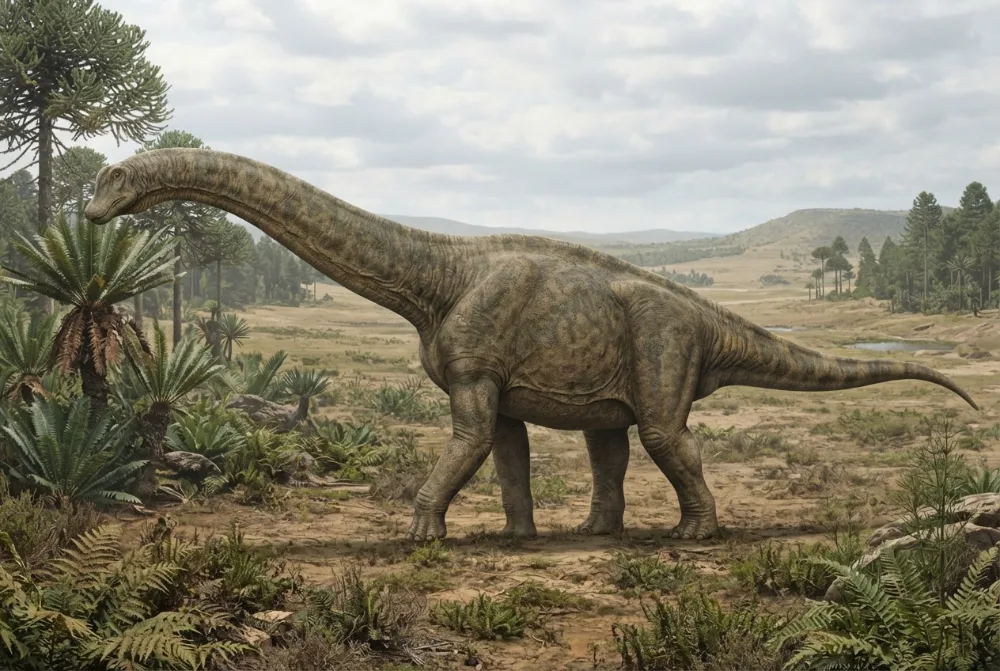
Gaaffiiwwan waa'ee Wamweracaudia baay'ee gaafataman
?What did Wamweracaudia eat?
Wamweracaudia was a herbivore, meaning it ate plants. As a sauropod, it was a large quadrupedal herbivore.1
?When did Wamweracaudia live?
Wamweracaudia lived during the Late Jurassic, about 155 to 145 million years ago.1
?How big was Wamweracaudia?
Scientists don't know exactly, but it was a large sauropod. It is known from a nearly complete series of thirty tail vertebrae, which suggests a long tail.1
?Is Wamweracaudia related to Mamenchisaurus?
Yes, Wamweracaudia is a close relative of Mamenchisaurus. Scientists think it may be the first mamenchisaurid found outside Asia.1
Seenaa sobaa diigaa
Seenaa sobaa: Some people think Wamweracaudia was a titanosaur, a type of giant sauropod.
Dhugaa: Scientists now think it was a mamenchisaurid, more closely related to Mamenchisaurus, because of its tail bone features.1
Ogeeyyii daayinootiif
- Maqaa saayinsii
- Wamweracaudia
- Kan maqaa baase
- Mannion et al. 20194
- Garee
- Morma-dheertota
- Maatii / kilaadii
- Mamenchisauridae4
- Ramaddii
- Sauropodomorpha > Sauropoda4
- Umurii dhagaawwanii
- waggaa miliyoona 149 hanga 143 (Tithonian)4
- Caasaawwan dhagaa
- Tendaguru4
- Biyyoota
- Taanzaaniyaa4
- Galmee fosilii
- 2 The Paleobiology Database keessa4
- Argannoo
- The tail was found during German expeditions to Tendaguru in Tanzania between 1909 and 1912, supervised by paleontologist Werner Janensch. It was named Wamweracaudia keranjei in 2019 by Philip Mannion and colleagues.1
- Ammallee falmisiisaa
- Scientists are still unsure about the exact size of Wamweracaudia because only tail bones have been found, and the PBDB gives a very broad length estimate.2
Odeeffannoon eessaa dhufa
- Wamweracaudia (en.wikipedia.org)
- PBDB Taxon (paleobiodb.org)
- Wamweracaudia keranjei | Dinosaur Database by DinoAnimals.com (dinoanimals.com)
- Wamweracaudia in The Paleobiology Database (CC BY 4.0): umurii, bakkeewwan, caasaawwan dhagaa, ramaddii.
Odeeffannoon fuula kana irra jiru hundi lakkoofsa madda isaa agarsiisu qaba. Yoo waa dogoggorre, dhiifama, nuti jaallattoota daayinoo malee joornaalii saayinsii miti. [email protected] irratti nutti himi, nus ni sirreessina.
 Rex beela'eera! Dino Wiki pirojektii abbaa tokkoo kan ilma isaa daayinoo jaallatuuf hojjetame, bilisa, beeksisa malee fi hordoftuu malee. Ga'eessonni akka inni interneetii irra turuuf Rexiif nyaata xiqqoo kennuu danda'u.Rex soori
 Brachiosaurus
 Diplodocus
 Brontosaurus
 Argentinosaurus
 Camarasaurus
 Morosaurus
 Allosaurus
 Compsognathus
 Camptosaurus
 Nanosaurus
 Rhamphorhynchus
 Ceratosaurus