 Uri dinozore iyihe? Umukino w'ibibazo
 Intambara ya dinozore
 Isiganwa rya dinozore
 Imikino mito ya dinozore
 Alubumu ya sitikeri
 Intonde za TOP za dinozore
 Ntungura!
Aeolosaurus
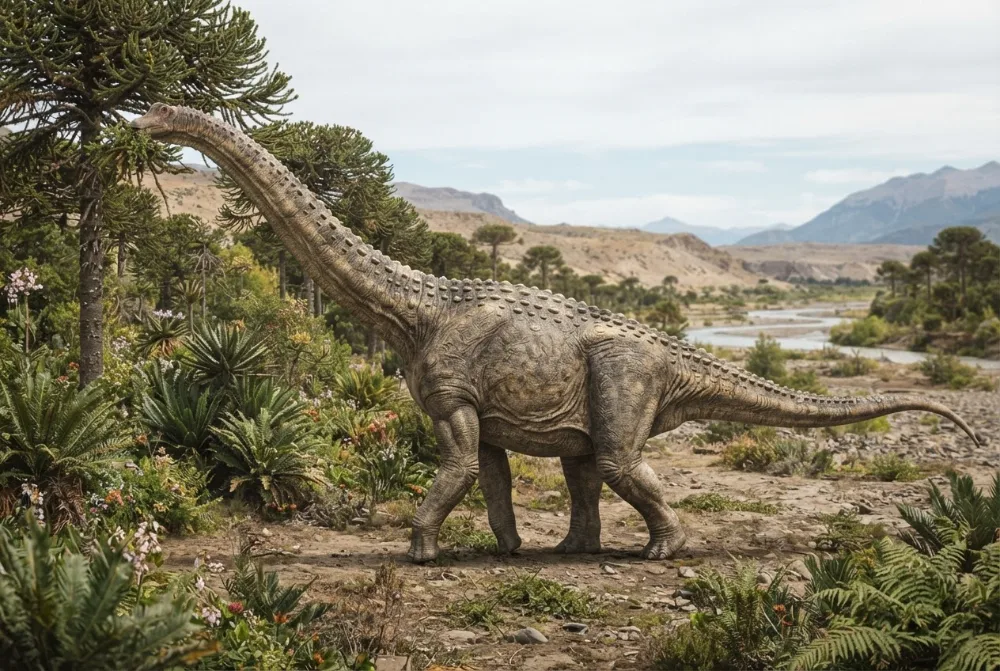
Aeolosaurus was a huge, long-necked plant eater that lived in South America near the end of the Age of Dinosaurs. It walked on four sturdy legs and probably used its long neck to reach leaves high in the trees.6
Yabayeho ryari?
Yanganaga ite?
Yari ndende ite?
Ubutumburuke bwayo bwanganaga iki?
Yari iremereye ite?

 ndende nk'imodoka 22 ziparitse ku murongo🍌ndende nk'imineke 560 ikurikiranyeiremereye nk'imodoka 10🍉iremereye nk'imbuto 2900 za watermelon🦒isumbye nka twiga 18 zihagaze hejuru y'izindi🎒iremereye nk'ibyumba 18 by'amashuri byuzuye abana🐻❄️iremereye nk'idubu 33 zo mu rubura🏢isumbye ku buryo yarunguruka mu idirishya ryo ku igorofa rya 34🏃yashoboraga kwiruka metero 100 mu masegonda 24 (umuntu wihuta kurusha abandi akenera 9,6)
Aeolosaurus yanganaga ite ugereranyije NAWE?
Ni imibare gusa ibarirwa muri mushakisha yawe. Nta kintu kibikwa cyangwa cyoherezwa ahandi.
Yihutaga ite?


Utuntu dushimishije
Aeolosaurus lived between about 83.6 and 66 million years ago, during the Campanian and Maastrichtian ages of the Late Cretaceous.2
It belonged to a group called Aeolosaurini, which is part of the larger titanosaur family. Its closest relatives include Baurutitan, Caieiria, Gondwanatitan, and Panamericansaurus.6
Scientists have named two species: Aeolosaurus rionegrinus, the type species, and Aeolosaurus colhuehuapensis.6
Aeolosaurus fossils have been found in rocks from the Turonian to Santonian ages in central Brazil, which is older than the Campanian-Maastrichtian fossils from Argentina. This shows the genus lived over a long time and a wide area.1
The discovery of Aeolosaurus in the Marilia Formation of Brazil shows that this dinosaur survived after a marine incursion flooded parts of northern Patagonia during the Campanian-Maastrichtian.1
Aeolosaurus had special bones in its tail: the prezygapophyses (joints) curved downward on the front tail vertebrae, and the haemal arches had double articular facets set in a concave surface. This unique combination helps scientists identify it.6
Ibibazo bibazwa cyane kuri Aeolosaurus
?How big was Aeolosaurus?
Estimates vary. Gregory S. Paul said Aeolosaurus rionegrinus was about 14 metres (46 ft) long and weighed 6 tonnes (6.6 short tons). In 2020, Molina-Pérez and Larramendi gave a larger estimate of 18.1 metres (60 ft) and 14.7 tonnes (16.2 short tons).45
?What did Aeolosaurus eat?
Aeolosaurus was a herbivore, meaning it ate plants. Like other sauropods, it used its long neck to reach leaves high in trees.45
Gusenya ibinyoma
Ibivugwa: Some people think Aeolosaurus was a type of marine reptile because its name sounds like 'Aeolus' from the sea.
Ukuri: Aeolosaurus was a land-dwelling dinosaur, a sauropod that lived on land and ate plants. It was not a marine reptile.6
Ku bazobereye muri dinozore
- Izina rya siyansi
- Aeolosaurus
- Yiswe na
- Powell 19876
- Itsinda
- Izifite amajosi maremare
- Umuryango / ishami
- Aeolosaurini6
- Ishyirwa mu byiciro
- Sauropodomorpha > Sauropoda > Titanosauria > Macronaria6
- Imyaka y'amabuye
- imyaka miliyoni 84 kugeza 66 (Campanian / Maastrichtian)6
- Inzego z'amabuye
- Allen, Lago Colhué Huapi, Angostura Colorada6
- Ibihugu
- Arijantine, Burezili, Irigwe6
- Ibisigazwa byanditswe
- 6 muri The Paleobiology Database6
- Ivumburwa
- Aeolosaurus was named by J. E. Powell in 1987. The name comes from the Late Cretaceous fauna of Los Alamitos in Patagonia, Argentina, where the first fossils were found.6
- Biracyagibwaho impaka
- Scientists debate whether Gondwanatitan faustoi is a separate valid genus or a junior synonym of Aeolosaurus. One study says it is valid, but other classifications have placed it as a sister taxon.16
Aho amakuru yakuwe
- Record of the genus Aeolosaurus (Sauropoda, Titanosauria) in the Late Cretaceous of South America: paleogeographic implications (Journal Article) | ETDEWEB (osti.gov)
- PBDB Taxon (paleobiodb.org)
- Aeolosaurus (en.wikipedia.org)
- Aeolosaurus - Wikipedia (en.wikipedia.org)
- Aeolosaurus (en.m.wikipedia.org)
- Aeolosaurus in The Paleobiology Database (CC BY 4.0): imyaka, ahantu, inzego z'amabuye, ishyirwa mu byiciro.
Buri kintu kiri kuri uru rupapuro gifite nimero yerekana aho cyakuwe. Niba hari icyo twibeshye, tubabarire, turi abakunzi ba dinozore, ntituri ikinyamakuru cya siyansi. Tubwire kuri [email protected] tuzagikosora.
 Rex arashonje! Dino Wiki ni umushinga wa papa umwe yakoreye umuhungu we ukunda dinozore, ni ubuntu, nta matangazo kandi nta bigukurikirana. Abantu bakuru bashobora guha Rex akantu ko kurya kugira ngo Dino Wiki ikomeze kuboneka kuri interineti.Gaburira Rex
 Brachiosaurus
 Diplodocus
 Brontosaurus
 Argentinosaurus
 Camarasaurus
 Morosaurus
 Tyrannosaurus
 Triceratops
 Velociraptor
 Spinosaurus
 Ankylosaurus
 Parasaurolophus