 Uri dinozore iyihe? Umukino w'ibibazo
 Intambara ya dinozore
 Isiganwa rya dinozore
 Imikino mito ya dinozore
 Alubumu ya sitikeri
 Intonde za TOP za dinozore
 Ntungura!
Camarasaurus
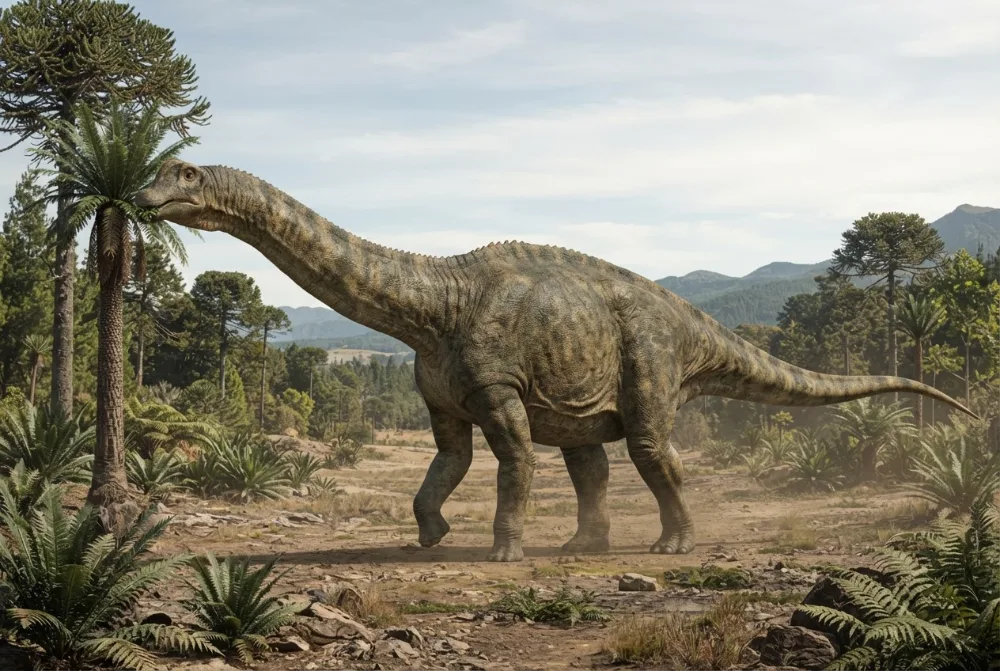
Camarasaurus was a giant, long-necked plant-eater that lived in North America during the Late Jurassic. It had a bulky body, a wide ribcage, and a surprisingly large skull for a sauropod. More than 530 fossils have been found, making it the most common dinosaur in the Morrison Formation.1
Yabayeho ryari?
Yanganaga ite?
Yari ndende ite?
Ubutumburuke bwayo bwanganaga iki?
Yari iremereye ite?

 ndende nk'imodoka 5 ziparitse ku murongo🍌ndende nk'imineke 130 ikurikiranye🍉iremereye nk'imbuto 10000 za watermelon🎒iremereye nk'ibyumba 62 by'amashuri byuzuye abana🐻❄️iremereye nk'idubu 110 zo mu rubura🏢isumbye ku buryo yarunguruka mu idirishya ryo ku igorofa rya 2🏃yashoboraga kwiruka metero 100 mu masegonda 36 (umuntu wihuta kurusha abandi akenera 9,6)
Camarasaurus yanganaga ite ugereranyije NAWE?
Ni imibare gusa ibarirwa muri mushakisha yawe. Nta kintu kibikwa cyangwa cyoherezwa ahandi.
Yihutaga ite?


Utuntu dushimishije
Camarasaurus means 'chambered lizard' because its backbone had hollow chambers, which helped lighten its skeleton.1
It had a relatively short neck and tail compared to other sauropods, and its front legs were longer than its back legs, making its shoulders higher than its hips.1
More than 530 specimens have been found, including several nearly complete skeletons, so scientists know a lot about this dinosaur.1
Camarasaurus lived alongside other famous dinosaurs like Diplodocus, Stegosaurus, and Allosaurus in the Morrison Formation.1
Its teeth had microscopic pits and scratches that show adults ate tough, coarse plants, while juveniles ate softer food.1
A nearly complete skeleton of a young Camarasaurus (CM 11338) was found with its neck curved upward, but that pose may have happened after death, not when it was alive.1
Gusenya ibinyoma
Ibivugwa: Camarasaurus could hold its neck straight up like a giraffe.
Ukuri: Scientists think its neck was held more horizontally or with a slight downward slope, not vertical like a swan.1
Ku bazobereye muri dinozore
- Izina rya siyansi
- Camarasaurus
- Yiswe na
- Cope 18772
- Itsinda
- Izifite amajosi maremare
- Umuryango / ishami
- Camarasauridae2
- Ishyirwa mu byiciro
- Sauropodomorpha > Sauropoda > Macronaria2
- Imyaka y'amabuye
- imyaka miliyoni 162 kugeza 143 (Oxfordian / Tithonian)2
- Inzego z'amabuye
- Morrison, Kadzi, Süntel2
- Ibihugu
- Amerika, Zimbabwe, Ubudage2
- Ibisigazwa byanditswe
- 138 muri The Paleobiology Database2
- Izwi kandi ku izina rya
- Cathetosaurus, Caulodon, Uintasaurus (amazina ya kera ubu abarwa nk'inyamaswa imwe)2
- Ivumburwa
- Camarasaurus was named in 1877 by Edward Drinker Cope, based on fossils from Garden Park, Colorado. Soon after, his rival Othniel Charles Marsh named similar fossils Morosaurus, but those are now considered the same genus.1
- Biracyagibwaho impaka
- Scientists still debate exactly how Camarasaurus held its neck and whether it could rear up on its hind legs to reach high plants.1
Aho amakuru yakuwe
- Camarasaurus (en.wikipedia.org)
- Camarasaurus in The Paleobiology Database (CC BY 4.0): imyaka, ahantu, inzego z'amabuye, ishyirwa mu byiciro.
Buri kintu kiri kuri uru rupapuro gifite nimero yerekana aho cyakuwe. Niba hari icyo twibeshye, tubabarire, turi abakunzi ba dinozore, ntituri ikinyamakuru cya siyansi. Tubwire kuri [email protected] tuzagikosora.
 Rex arashonje! Dino Wiki ni umushinga wa papa umwe yakoreye umuhungu we ukunda dinozore, ni ubuntu, nta matangazo kandi nta bigukurikirana. Abantu bakuru bashobora guha Rex akantu ko kurya kugira ngo Dino Wiki ikomeze kuboneka kuri interineti.Gaburira Rex
 Brachiosaurus
 Diplodocus
 Brontosaurus
 Argentinosaurus
 Morosaurus
 Massospondylus
 Allosaurus
 Compsognathus
 Camptosaurus
 Nanosaurus
 Rhamphorhynchus
 Ceratosaurus