 Uri dinozore iyihe? Umukino w'ibibazo
 Intambara ya dinozore
 Isiganwa rya dinozore
 Imikino mito ya dinozore
 Alubumu ya sitikeri
 Intonde za TOP za dinozore
 Ntungura!
Ajnabia
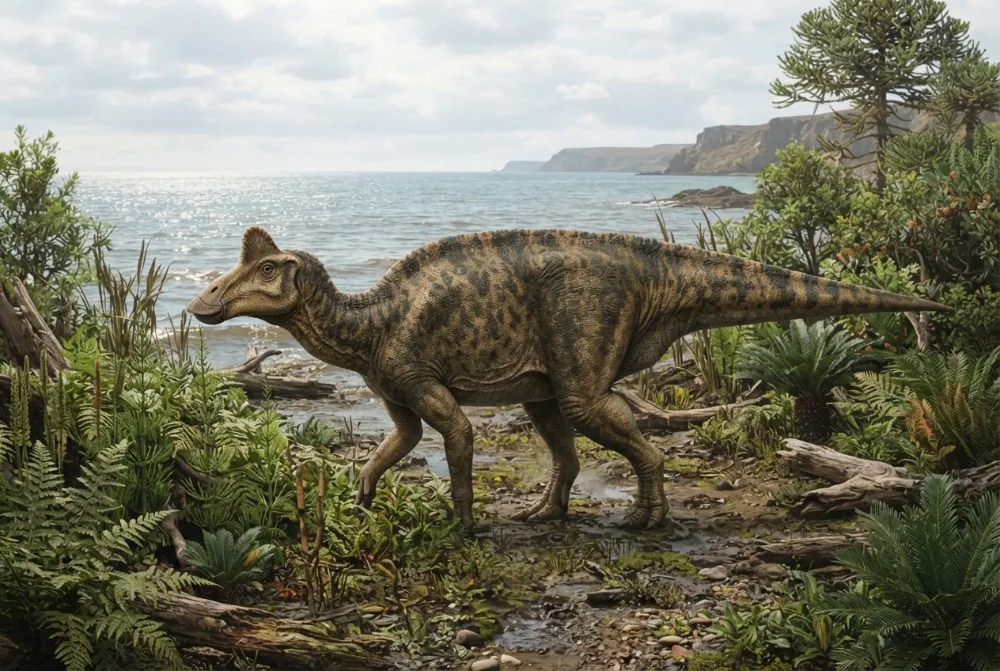
Ajnabia was a small duck-billed dinosaur that lived in Africa at the very end of the Cretaceous. It was a surprise to scientists because duck-billed dinosaurs were not known from Africa before. Ajnabia probably swam or rafted across the sea from Europe to reach its home.2
Yabayeho ryari?
Yanganaga ite?
Yari ndende ite?
Ubutumburuke bwayo bwanganaga iki?
igereranya
Yari iremereye ite?
 ndende nk'imbwa 4 zikurikiranye🍌ndende nk'imineke 19 ikurikiranye🍉iremereye nk'imbuto 50 za watermelon🧸iremereye nk'abana 13 bo mu ishuri ry'incuke🎒iremereye nk'abanyeshuri 8🏃yashoboraga kwiruka metero 100 mu masegonda 8,4 (umuntu wihuta kurusha abandi akenera 9,6)
Ajnabia yanganaga ite ugereranyije NAWE?
Ni imibare gusa ibarirwa muri mushakisha yawe. Nta kintu kibikwa cyangwa cyoherezwa ahandi.
Yihutaga ite?


Utuntu dushimishije
Ajnabia is a lambeosaurine hadrosaur, a group of duck-billed dinosaurs that often had fancy head crests.2
It was one of the smallest duck-billed dinosaurs, only about 3.5 metres (11 feet) long.2
Ajnabia lived around 68 to 66 million years ago, just before the mass extinction that ended the age of dinosaurs.1
Its fossils were found in phosphate mines, which were once a shallow sea. The bones probably washed in from land.2
Ajnabia is related to European duck-billed dinosaurs, suggesting its ancestors crossed the sea from Europe to Africa.2
Only a few bones of Ajnabia have been found: part of the upper jaw, a piece of the lower jaw, and some teeth.1
Ibibazo bibazwa cyane kuri Ajnabia
?What did Ajnabia eat?
It was a herbivore, eating plants. As a duck-billed dinosaur, it had many teeth for chewing tough vegetation.1
?Did Ajnabia have a crest?
It probably did. Ajnabia was a lambeosaurine hadrosaur, a group known for having fancy head crests, though its fossils don't include the skull top.1
?How did Ajnabia get to Africa?
Scientists think it swam or rafted across the sea from Europe, because Africa was isolated by water at the time.12
?When did Ajnabia live?
About 68 to 66 million years ago, in the very latest Cretaceous, just before the asteroid impact that ended the dinosaurs.1
?Is Ajnabia a dinosaur?
Yes, it is a dinosaur. Specifically, it is a duck-billed dinosaur (hadrosaur) from the group Lambeosaurinae.1
Ku bazobereye muri dinozore
- Izina rya siyansi
- Ajnabia
- Yiswe na
- Longrich et al. 20214
- Itsinda
- Iminwa y'imbata
- Umuryango / ishami
- Hadrosauridae4
- Ishyirwa mu byiciro
- Ornithischia > Ornithopoda > Iguanodontia > Hadrosauridae4
- Imyaka y'amabuye
- imyaka miliyoni 72 kugeza 66 (Maastrichtian)4
- Inzego z'amabuye
- Couche III4
- Ibihugu
- Maroke4
- Ibisigazwa byanditswe
- 1 muri The Paleobiology Database4
- Ivumburwa
- Ajnabia was named in 2021 by Longrich and colleagues. The fossils came from phosphate mines in Morocco and were described as a new species of duck-billed dinosaur.3
- Biracyagibwaho impaka
- Scientists are not sure exactly how Ajnabia got to Africa. It may have swum or rafted across the sea from Europe, but the details of this journey are still debated.2
Aho amakuru yakuwe
- Ajnabia (en.wikipedia.org)
- A new small duckbilled dinosaur (Hadrosauridae: Lambeosaurinae) from Morocco and dinosaur diversity in the late Maastrichtian of North Africa | Scientific Reports (nature.com)
- PBDB Taxon (paleobiodb.org)
- Ajnabia in The Paleobiology Database (CC BY 4.0): imyaka, ahantu, inzego z'amabuye, ishyirwa mu byiciro.
Buri kintu kiri kuri uru rupapuro gifite nimero yerekana aho cyakuwe. Niba hari icyo twibeshye, tubabarire, turi abakunzi ba dinozore, ntituri ikinyamakuru cya siyansi. Tubwire kuri [email protected] tuzagikosora.
 Rex arashonje! Dino Wiki ni umushinga wa papa umwe yakoreye umuhungu we ukunda dinozore, ni ubuntu, nta matangazo kandi nta bigukurikirana. Abantu bakuru bashobora guha Rex akantu ko kurya kugira ngo Dino Wiki ikomeze kuboneka kuri interineti.Gaburira Rex
 Parasaurolophus
 Edmontosaurus
 Saurolophus
 Hypacrosaurus
 Corythosaurus
 Kritosaurus
 Tyrannosaurus
 Triceratops
 Velociraptor
 Spinosaurus
 Ankylosaurus
 Pteranodon