 Uri dinozore iyihe? Umukino w'ibibazo
 Intambara ya dinozore
 Isiganwa rya dinozore
 Imikino mito ya dinozore
 Alubumu ya sitikeri
 Intonde za TOP za dinozore
 Ntungura!
Yabayeho ryari?

Yanganaga ite?
Yari ndende ite?
Ubutumburuke bwayo bwanganaga iki?
igereranya
Yari iremereye ite?

 ndende nk'imbwa 8 zikurikiranye🍌ndende nk'imineke 44 ikurikiranyeiremereye nk'imbwa 150🍉iremereye nk'imbuto 600 za watermelon🎒iremereye nk'ibyumba 4 by'amashuri byuzuye abana🐻❄️iremereye nk'idubu 7 zo mu rubura🏃yashoboraga kwiruka metero 100 mu masegonda 15 (umuntu wihuta kurusha abandi akenera 9,6)
Amurosaurus yanganaga ite ugereranyije NAWE?
Ni imibare gusa ibarirwa muri mushakisha yawe. Nta kintu kibikwa cyangwa cyoherezwa ahandi.
Yihutaga ite?


Utuntu dushimishije
Amurosaurus is named after the Amur River, which forms the border between Russia and China.1
Most of the bones found in its bonebed belong to young Amurosaurus, not adults.1
Theropod teeth are common in the bonebed, and many bones have tooth marks, showing that predators or scavengers chewed on them.1
Amurosaurus had a unique S-shaped curve in its lower arm bone, the ulna.1
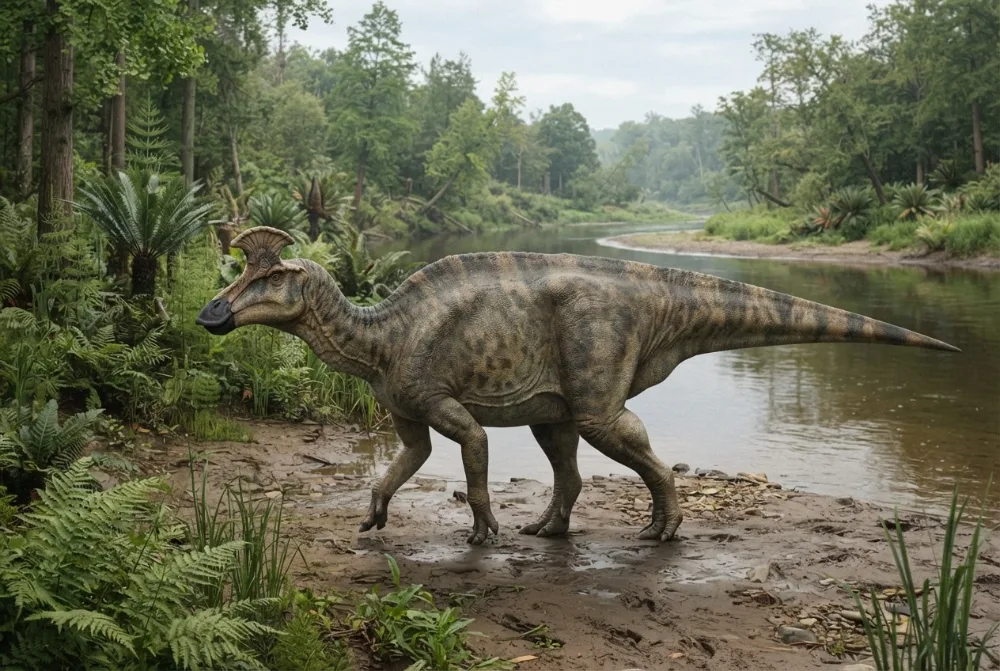
Although the crest bones are missing, the skull roof shows it likely had a hollow crest like other lambeosaurines.1
Amurosaurus had a relatively large brain compared to some other plant-eaters, which might mean it lived in groups.1
Ibibazo bibazwa cyane kuri Amurosaurus
?How big was Amurosaurus?
About 8 metres (26 feet) long and around 3 metric tons (3.3 short tons) in weight, though one source says it may have been up to 12 metres (39 feet) long.12
?What did Amurosaurus eat?
It was a plant-eater, or herbivore, like all hadrosaurid dinosaurs.1
?Did Amurosaurus have a crest?
Yes, it probably had a hollow crest on its head, even though the crest bones themselves have not been found yet.1
?When did Amurosaurus live?
It lived during the Late Cretaceous period, about 70 to 66 million years ago.1
?Where was Amurosaurus found?
All its fossils come from a single bonebed in Blagoveschensk, Russia, near the Amur River.1
?Was Amurosaurus a dinosaur?
Yes, it was a lambeosaurine hadrosaurid dinosaur.1
Gusenya ibinyoma
Ibivugwa: Amurosaurus was a meat-eater because it had sharp teeth.
Ukuri: Amurosaurus was a plant-eater, as shown by its beak and teeth made for grinding plants.1
Ku bazobereye muri dinozore
- Izina rya siyansi
- Amurosaurus
- Yiswe na
- Bolotsky and Kurzanov 19913
- Itsinda
- Iminwa y'imbata
- Umuryango / ishami
- Hadrosauridae3
- Ishyirwa mu byiciro
- Ornithischia > Ornithopoda > Iguanodontia > Hadrosauridae3
- Imyaka y'amabuye
- imyaka miliyoni 72 kugeza 66 (Maastrichtian)3
- Inzego z'amabuye
- Udurchukan, Yuliangzi3
- Ibihugu
- Uburusiya, Ubushinwa3
- Ibisigazwa byanditswe
- 2 muri The Paleobiology Database3
- Izwi kandi ku izina rya
- Sahaliyania (amazina ya kera ubu abarwa nk'inyamaswa imwe)3
- Ivumburwa
- Russian paleontologists Yuri Bolotsky and Sergei Kurzanov named Amurosaurus in 1991. The first fossils were found in 1984 in a bonebed inside the city of Blagoveschensk, Russia.1
- Biracyagibwaho impaka
- Scientists are still debating whether Amurosaurus had a crest and what it looked like, because the crest bones have not been found.1
Aho amakuru yakuwe
- Amurosaurus (en.wikipedia.org)
- Amurosaurus State Darwin Museum (darwinmuseum.ru)
- Amurosaurus in The Paleobiology Database (CC BY 4.0): imyaka, ahantu, inzego z'amabuye, ishyirwa mu byiciro.
Buri kintu kiri kuri uru rupapuro gifite nimero yerekana aho cyakuwe. Niba hari icyo twibeshye, tubabarire, turi abakunzi ba dinozore, ntituri ikinyamakuru cya siyansi. Tubwire kuri [email protected] tuzagikosora.
 Rex arashonje! Dino Wiki ni umushinga wa papa umwe yakoreye umuhungu we ukunda dinozore, ni ubuntu, nta matangazo kandi nta bigukurikirana. Abantu bakuru bashobora guha Rex akantu ko kurya kugira ngo Dino Wiki ikomeze kuboneka kuri interineti.Gaburira Rex
 Parasaurolophus
 Edmontosaurus
 Saurolophus
 Hypacrosaurus
 Corythosaurus
 Kritosaurus
 Tyrannosaurus
 Triceratops
 Velociraptor
 Spinosaurus
 Ankylosaurus
 Pteranodon