 Uri dinozore iyihe? Umukino w'ibibazo
 Intambara ya dinozore
 Isiganwa rya dinozore
 Imikino mito ya dinozore
 Alubumu ya sitikeri
 Intonde za TOP za dinozore
 Ntungura!
Bonapartesaurus
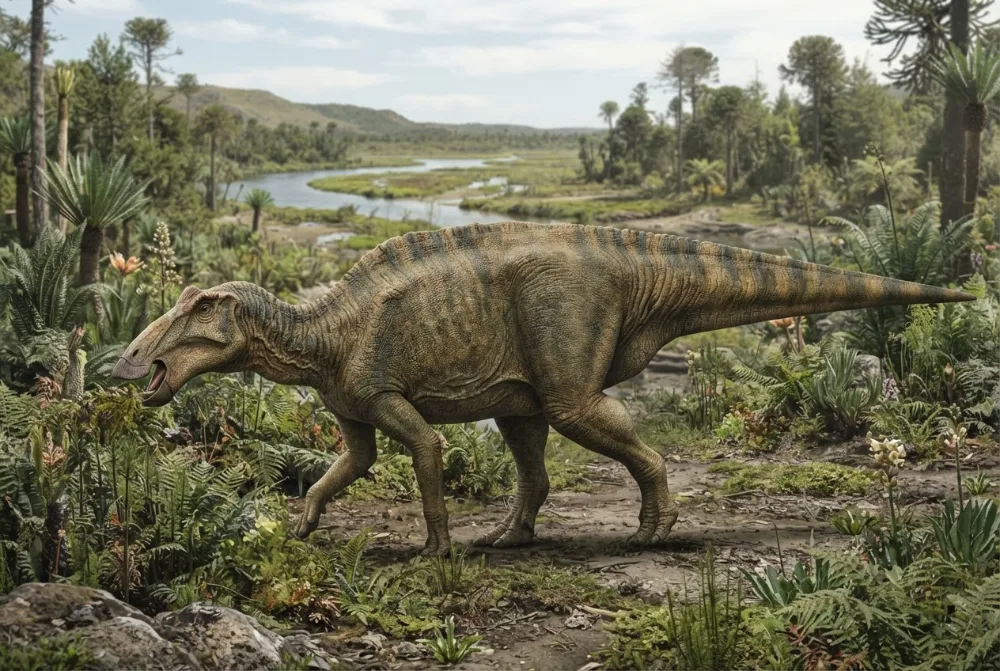
Bonapartesaurus was a duck-billed dinosaur that lived in what is now Argentina, about 72 to 66 million years ago. It walked on two legs or all fours and used its wide, toothless beak to snip off plants. This dinosaur was a hadrosaur, a group known for their amazing teeth that could grind up tough leaves.41
Yabayeho ryari?
Yanganaga ite?
Yari ndende ite?
Ubutumburuke bwayo bwanganaga iki?
igereranya
Yari iremereye ite?

 ndende nk'imbwa 7 zikurikiranye🍌ndende nk'imineke 38 ikurikiranyeiremereye nk'imbwa 92🍉iremereye nk'imbuto 370 za watermelon🧸iremereye nk'abana 97 bo mu ishuri ry'incuke🎒iremereye nk'abanyeshuri 58🐻❄️iremereye nk'idubu 4 zo mu rubura🏃yashoboraga kwiruka metero 100 mu masegonda 13 (umuntu wihuta kurusha abandi akenera 9,6)
Bonapartesaurus yanganaga ite ugereranyije NAWE?
Ni imibare gusa ibarirwa muri mushakisha yawe. Nta kintu kibikwa cyangwa cyoherezwa ahandi.
Yihutaga ite?


Utuntu dushimishije
Bonapartesaurus had very long neural spines on its tail vertebrae, up to four times the height of the backbone center. This may have supported a tall tail fin or sail.2
Its name honors José Bonaparte, a famous Argentine paleontologist who discovered many South American dinosaurs.1
The only known skeleton is a partial, articulated specimen that includes parts of the spine, hips, legs, and feet.1
Bonapartesaurus belongs to the group Saurolophini, which includes duck-billed dinosaurs like Saurolophus and Prosaurolophus.42
Scientists think Bonapartesaurus or its ancestors migrated from North America to South America during the Late Cretaceous.2
Ibibazo bibazwa cyane kuri Bonapartesaurus
?How big was Bonapartesaurus?
No exact size is given in the sources, but it was a medium-sized hadrosaur, probably around 6 to 8 metres long based on related duck-billed dinosaurs.12
?What did Bonapartesaurus eat?
It was a herbivore that ate plants. It used its wide, toothless beak to snip off leaves and branches, and its cheek teeth ground up tough plant material.1
Ku bazobereye muri dinozore
- Izina rya siyansi
- Bonapartesaurus
- Yiswe na
- Cruzado-Caballero and Powell 20174
- Itsinda
- Iminwa y'imbata
- Umuryango / ishami
- Hadrosauridae4
- Ishyirwa mu byiciro
- Ornithischia > Ornithopoda > Iguanodontia > Hadrosauridae4
- Imyaka y'amabuye
- imyaka miliyoni 72 kugeza 66 (Maastrichtian)4
- Inzego z'amabuye
- Allen4
- Ibihugu
- Arijantine4
- Ibisigazwa byanditswe
- 1 muri The Paleobiology Database4
- Ivumburwa
- The fossils were first dug up in 1984 by paleontologist Jaime Powell and his team. In 2017, scientists Cruzado-Caballero and Powell named the new genus Bonapartesaurus after studying the bones.14
- Biracyagibwaho impaka
- Scientists are not sure exactly how Bonapartesaurus is related to other duck-billed dinosaurs, because its skeleton is incomplete.2
Aho amakuru yakuwe
- Bonapartesaurus (en.wikipedia.org)
- Bonapartesaurus rionegrensis, a new hadrosaurine dinosaur from South America: implications for phylogenetic and biogeographic relations with North America (rid.unrn.edu.ar)
- Bonapartesaurus rionegrensis | Dinosaur Database by DinoAnimals.com (dinoanimals.com)
- Bonapartesaurus in The Paleobiology Database (CC BY 4.0): imyaka, ahantu, inzego z'amabuye, ishyirwa mu byiciro.
Buri kintu kiri kuri uru rupapuro gifite nimero yerekana aho cyakuwe. Niba hari icyo twibeshye, tubabarire, turi abakunzi ba dinozore, ntituri ikinyamakuru cya siyansi. Tubwire kuri [email protected] tuzagikosora.
 Rex arashonje! Dino Wiki ni umushinga wa papa umwe yakoreye umuhungu we ukunda dinozore, ni ubuntu, nta matangazo kandi nta bigukurikirana. Abantu bakuru bashobora guha Rex akantu ko kurya kugira ngo Dino Wiki ikomeze kuboneka kuri interineti.Gaburira Rex
 Parasaurolophus
 Edmontosaurus
 Saurolophus
 Hypacrosaurus
 Corythosaurus
 Kritosaurus
 Tyrannosaurus
 Triceratops
 Velociraptor
 Spinosaurus
 Ankylosaurus
 Pteranodon