 Uri dinozore iyihe? Umukino w'ibibazo
 Intambara ya dinozore
 Isiganwa rya dinozore
 Imikino mito ya dinozore
 Alubumu ya sitikeri
 Intonde za TOP za dinozore
 Ntungura!
Caenagnathasia
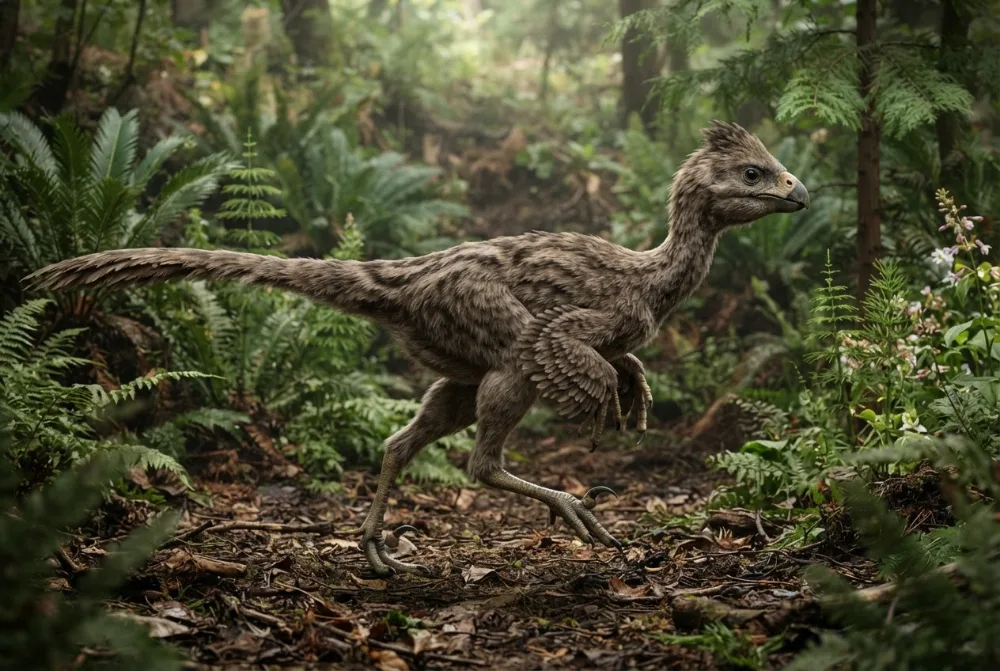
Caenagnathasia was a tiny, feathered dinosaur that looked a bit like a bird. It had a beak and long legs, and it was one of the smallest dinosaurs ever found. It lived in Asia during the Late Cretaceous period.1
Yabayeho ryari?
Yanganaga ite?
Yari ndende ite?
Ubutumburuke bwayo bwanganaga iki?
igereranya
Yari iremereye ite?
Caenagnathasia yanganaga ite ugereranyije NAWE?
Ni imibare gusa ibarirwa muri mushakisha yawe. Nta kintu kibikwa cyangwa cyoherezwa ahandi.
Yihutaga ite?


Utuntu dushimishije
Caenagnathasia is the smallest known oviraptorosaur and one of the smallest non-avian dinosaurs. Its skull was only about 7.6 centimetres (3 inches) long.1
It lived about 90 million years ago, making it the oldest known caenagnathoid.1
The first fossils were just two fused lower jaw bones, found in Uzbekistan.1
Scientists think it was feathered, like other oviraptorosaurs, and looked bird-like with a beak and long neck.1
In 2015, new bones were found, including vertebrae, a dentary, and a femur, which helped confirm it belonged to the Caenagnathidae family.1
The name honors Gerbert Genrikhovich Martinson, a scientist, in the species name martinsoni.1
Ibibazo bibazwa cyane kuri Caenagnathasia
?How big was Caenagnathasia?
It was tiny. About 0.6 metres (2 feet) long and weighed around 1.4 kilograms (3 pounds). Its skull was only about 7.6 centimetres (3 inches) long.1
?What did Caenagnathasia eat?
Scientists think it ate plants or small animals, because it had a beak and a special shelf in its mouth for grinding food, like other oviraptorosaurs.12
?Did Caenagnathasia have feathers?
Yes. It was a feathered dinosaur, like other oviraptorosaurs, and looked bird-like with a beak and long neck.1
?When did Caenagnathasia live?
It lived about 90 million years ago, during the Late Cretaceous period. It is the oldest known caenagnathoid.1
Gusenya ibinyoma
Ibivugwa: Some people think Caenagnathasia was a bird because it had a beak and feathers.
Ukuri: It was a dinosaur, not a bird. It belonged to a group of feathered theropods called oviraptorosaurs, which are closely related to birds but not birds themselves.1
Ku bazobereye muri dinozore
- Izina rya siyansi
- Caenagnathasia
- Yiswe na
- Currie et al. 19943
- Itsinda
- Dinozore zidasanzwe zifite ibyoya
- Umuryango / ishami
- Caenagnathidae3
- Ishyirwa mu byiciro
- Theropoda > Oviraptorosauria3
- Imyaka y'amabuye
- imyaka miliyoni 94 kugeza 72 (Turonian / Campanian)3
- Inzego z'amabuye
- Bissekty, Iren Dabasu3
- Ibihugu
- Uzubekisitani, Ubushinwa3
- Ibisigazwa byanditswe
- 7 muri The Paleobiology Database3
- Ivumburwa
- Caenagnathasia was named in 1994 by Philip J. Currie, Stephen Godfrey, and Lev Nessov. The first fossils were found near Dzharakuduk in Uzbekistan, in the Bissekty Formation.1
- Biracyagibwaho impaka
- Scientists are still debating exactly where Caenagnathasia sits in the dinosaur family tree. Some think it was a primitive member of the Caenagnathidae, while others suggest it might be more basal within Oviraptorosauria.1
Aho amakuru yakuwe
- Caenagnathasia (en.wikipedia.org)
- New material of Caenagnathasia martinsoni (Dinosauria: Theropoda: Oviraptorosauria) from the Bissekty Formation (Upper Cretaceous: Turonian) of Uzbekistan › SPbU Researchers Portal (pureportal.spbu.ru)
- Caenagnathasia in The Paleobiology Database (CC BY 4.0): imyaka, ahantu, inzego z'amabuye, ishyirwa mu byiciro.
Buri kintu kiri kuri uru rupapuro gifite nimero yerekana aho cyakuwe. Niba hari icyo twibeshye, tubabarire, turi abakunzi ba dinozore, ntituri ikinyamakuru cya siyansi. Tubwire kuri [email protected] tuzagikosora.
 Rex arashonje! Dino Wiki ni umushinga wa papa umwe yakoreye umuhungu we ukunda dinozore, ni ubuntu, nta matangazo kandi nta bigukurikirana. Abantu bakuru bashobora guha Rex akantu ko kurya kugira ngo Dino Wiki ikomeze kuboneka kuri interineti.Gaburira Rex
 Therizinosaurus
 Oviraptor
 Chirostenotes
 Citipes
 Leptorhynchos
 Avimimus
 Tyrannosaurus
 Triceratops
 Velociraptor
 Spinosaurus
 Ankylosaurus
 Parasaurolophus