 Uri dinozore iyihe? Umukino w'ibibazo
 Intambara ya dinozore
 Isiganwa rya dinozore
 Imikino mito ya dinozore
 Alubumu ya sitikeri
 Intonde za TOP za dinozore
 Ntungura!
Yabayeho ryari?

Yanganaga ite?
Yari ndende ite?
Ubutumburuke bwayo bwanganaga iki?
Yari iremereye ite?

 ndende nk'imbwa 2,5 zikurikiranye🍌ndende nk'imineke 14 ikurikiranye🍉iremereye nk'imbuto 4 za watermelon🏃yashoboraga kwiruka metero 100 mu masegonda 9,5 (umuntu wihuta kurusha abandi akenera 9,6)
Citipes yanganaga ite ugereranyije NAWE?
Ni imibare gusa ibarirwa muri mushakisha yawe. Nta kintu kibikwa cyangwa cyoherezwa ahandi.
Yihutaga ite?


Utuntu dushimishije
Citipes was named in 2020, but its fossils were first discovered in 1926 and were thought to belong to other dinosaurs like Ornithomimus.1
A fossil of a young Gorgosaurus was found with the legs of at least two Citipes inside its stomach, showing that Citipes was hunted by this larger dinosaur.1
The Citipes legs inside the Gorgosaurus were from babies less than one year old, and the Gorgosaurus seemed to prefer eating the muscular hind legs.1
Citipes had a fused ankle and strong leg muscles, which made it a very fast runner.1
One Citipes fossil shows a broken hip bone that had healed, meaning the animal survived a serious injury.1
Citipes lived alongside two other similar dinosaurs, Caenagnathus and Chirostenotes, but they were different sizes and probably ate different foods to avoid competing.1
Ibibazo bibazwa cyane kuri Citipes
?How big was Citipes?
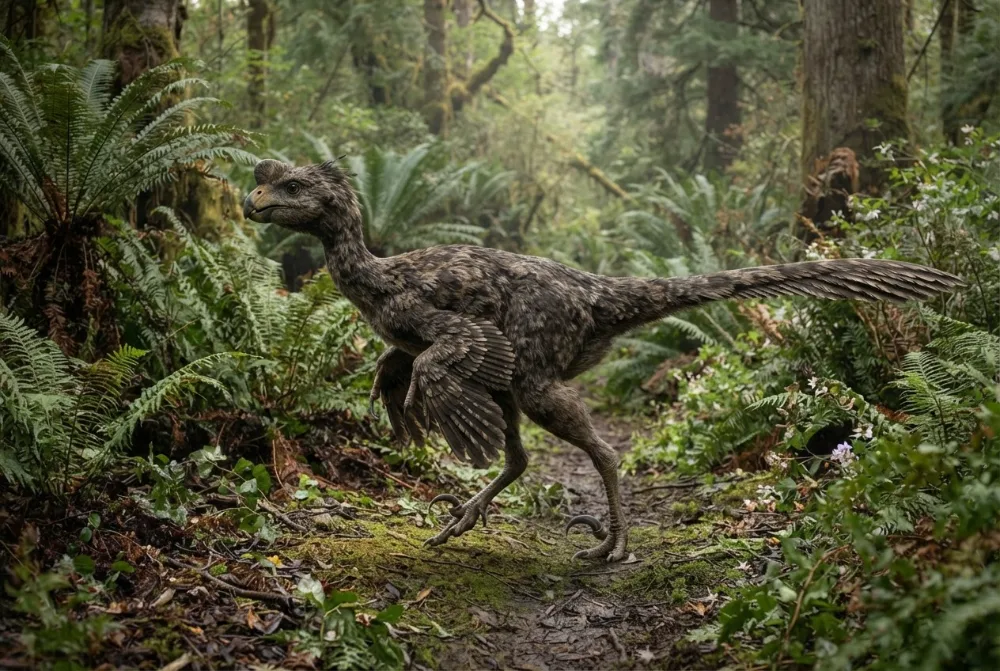
Citipes was a small dinosaur, roughly the size of an emu when fully grown. The juveniles found in the Gorgosaurus stomach were about the size of a turkey.2
?What did Citipes eat?
Citipes probably ate plants and small animals, since it had a beak like a parrot. It lived alongside two similar dinosaurs that ate different foods to avoid competing.1
?Did Citipes have feathers?
Yes, scientists think Citipes was covered in feathers, like many other bird-like dinosaurs. It was a caenagnathid, a type of feathered theropod.1
Gusenya ibinyoma
Ibivugwa: Citipes is often confused with the dinosaur Citipati, which has a similar name.
Ukuri: Citipes and Citipati are different dinosaurs. Citipati is an oviraptorid from Mongolia, while Citipes is a caenagnathid from North America.1
Ku bazobereye muri dinozore
- Izina rya siyansi
- Citipes
- Yiswe na
- Funston 20203
- Itsinda
- Dinozore zidasanzwe zifite ibyoya
- Umuryango / ishami
- Caenagnathidae3
- Ishyirwa mu byiciro
- Theropoda > Oviraptorosauria3
- Imyaka y'amabuye
- imyaka miliyoni 84 kugeza 66 (Campanian / Maastrichtian)3
- Inzego z'amabuye
- Dinosaur Park, Hell Creek3
- Ibihugu
- Kanada, Amerika3
- Ibisigazwa byanditswe
- 12 muri The Paleobiology Database3
- Ivumburwa
- The first Citipes fossils were found in 1926 in Alberta, Canada, by a University of Toronto expedition. They were named Ornithomimus elegans by William Parks in 1933, but later moved to their own genus Citipes by Gregory Funston in 2020.1
- Biracyagibwaho impaka
- Scientists are not sure exactly what Citipes ate. It had a beak but no teeth, so it may have eaten plants, small animals, or both.1
Aho amakuru yakuwe
- Citipes (en.wikipedia.org)
- Young tyrannosaur found with baby dinosaurs in its stomach | CBC News (cbc.ca)
- Citipes in The Paleobiology Database (CC BY 4.0): imyaka, ahantu, inzego z'amabuye, ishyirwa mu byiciro.
Buri kintu kiri kuri uru rupapuro gifite nimero yerekana aho cyakuwe. Niba hari icyo twibeshye, tubabarire, turi abakunzi ba dinozore, ntituri ikinyamakuru cya siyansi. Tubwire kuri [email protected] tuzagikosora.
 Rex arashonje! Dino Wiki ni umushinga wa papa umwe yakoreye umuhungu we ukunda dinozore, ni ubuntu, nta matangazo kandi nta bigukurikirana. Abantu bakuru bashobora guha Rex akantu ko kurya kugira ngo Dino Wiki ikomeze kuboneka kuri interineti.Gaburira Rex
 Therizinosaurus
 Oviraptor
 Chirostenotes
 Leptorhynchos
 Avimimus
 Caenagnathus
 Tyrannosaurus
 Triceratops
 Velociraptor
 Spinosaurus
 Ankylosaurus
 Parasaurolophus