 Uri dinozore iyihe? Umukino w'ibibazo
 Intambara ya dinozore
 Isiganwa rya dinozore
 Imikino mito ya dinozore
 Alubumu ya sitikeri
 Intonde za TOP za dinozore
 Ntungura!
Caenagnathus
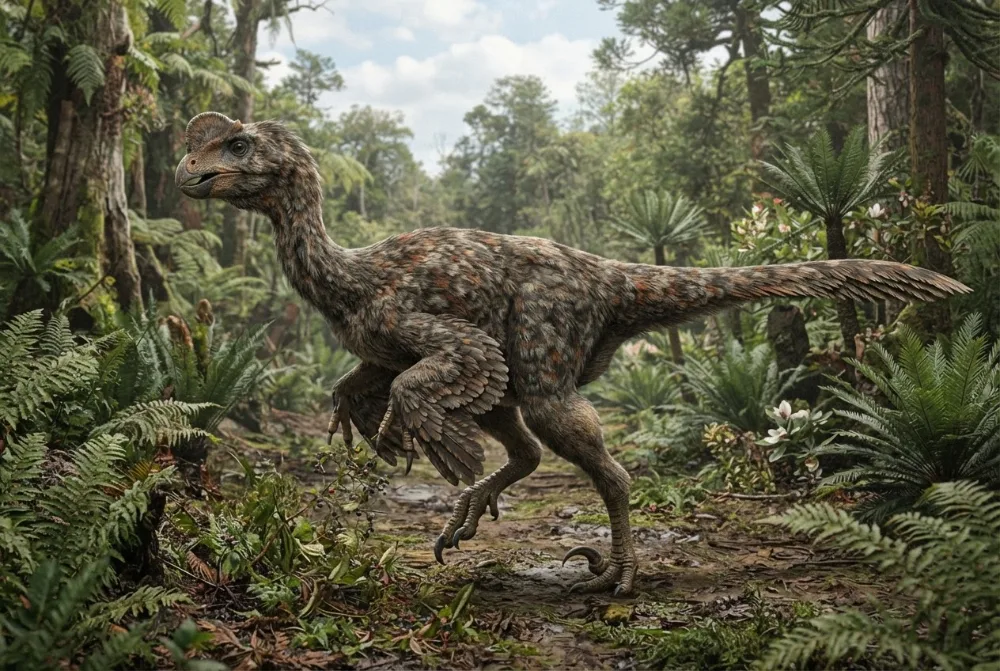
Caenagnathus was a big, bird-like dinosaur with a toothless beak. It lived in what is now Canada and the United States during the Late Cretaceous. Scientists think it ate both plants and meat, like a modern-day crow.41
Yabayeho ryari?
Yanganaga ite?
Yari ndende ite?
Ubutumburuke bwayo bwanganaga iki?
Yari iremereye ite?
 ndende nk'imbwa 4 zikurikiranye🍌ndende nk'imineke 19 ikurikiranye🍉iremereye nk'imbuto 20 za watermelon🧸iremereye nk'abana 5 bo mu ishuri ry'incuke🎒iremereye nk'abanyeshuri 3🏃yashoboraga kwiruka metero 100 mu masegonda 7,5 (umuntu wihuta kurusha abandi akenera 9,6)
Caenagnathus yanganaga ite ugereranyije NAWE?
Ni imibare gusa ibarirwa muri mushakisha yawe. Nta kintu kibikwa cyangwa cyoherezwa ahandi.
Yihutaga ite?


Utuntu dushimishije
Caenagnathus was first thought to be a bird because its jaw looked so bird-like.4
It was one of the largest caenagnathids, rivaling the size of Anzu wyliei.1
Its beak had three ridges on the tip, which may have helped it grip food.2
Caenagnathus lived alongside other caenagnathids like Citipes and Chirostenotes in the Dinosaur Park Formation.1
The type specimen is a lower jaw (mandible) found in Alberta, Canada.2
It was a ground-dwelling dinosaur that walked on two legs.4
Ibibazo bibazwa cyane kuri Caenagnathus
?How big was Caenagnathus?
Caenagnathus was about 2.5 metres (8.2 feet) long and weighed around 85 to 100 kilograms (187 to 220 pounds). It was one of the largest caenagnathids, similar in size to its relative Anzu.3
?What did Caenagnathus eat?
Scientists think Caenagnathus ate both plants and meat, like a modern-day crow. Its toothless beak likely helped it grip a variety of foods.3
?Did Caenagnathus have feathers?
Yes, like all oviraptorosaurs, Caenagnathus would most likely have had a coat of feathers over its body.3
?Is Caenagnathus a dinosaur?
Yes, Caenagnathus is a dinosaur. It is a genus of caenagnathid oviraptorosaurian dinosaur from the Late Cretaceous.3
Gusenya ibinyoma
Ibivugwa: Caenagnathus was a bird.
Ukuri: Caenagnathus was a feathered dinosaur, not a bird. It belongs to the oviraptorosaur group.4
Ku bazobereye muri dinozore
- Izina rya siyansi
- Caenagnathus
- Yiswe na
- Sternberg 19404
- Itsinda
- Dinozore zidasanzwe zifite ibyoya
- Umuryango / ishami
- Caenagnathidae4
- Ishyirwa mu byiciro
- Theropoda > Oviraptorosauria4
- Imyaka y'amabuye
- imyaka miliyoni 84 kugeza 66 (Campanian / Maastrichtian)4
- Inzego z'amabuye
- Dinosaur Park, Hell Creek4
- Ibihugu
- Kanada, Amerika4
- Ibisigazwa byanditswe
- 8 muri The Paleobiology Database4
- Ivumburwa
- Caenagnathus was named by R. M. Sternberg in 1940 based on a jaw fossil from the Dinosaur Park Formation in Alberta, Canada.4
- Biracyagibwaho impaka
- Scientists are still debating whether some fossils belong to Caenagnathus or to other similar caenagnathids.1
Aho amakuru yakuwe
- Caenagnathids of the Dinosaur Park Formation (Campanian) of Alberta, Canada: anatomy, osteohistology, taxonomy, and evolution | Vertebrate Anatomy Morphology Palaeontology (journals.library.ualberta.ca)
- PBDB Taxon (paleobiodb.org)
- Caenagnathus (en.wikipedia.org)
- Caenagnathus in The Paleobiology Database (CC BY 4.0): imyaka, ahantu, inzego z'amabuye, ishyirwa mu byiciro.
Buri kintu kiri kuri uru rupapuro gifite nimero yerekana aho cyakuwe. Niba hari icyo twibeshye, tubabarire, turi abakunzi ba dinozore, ntituri ikinyamakuru cya siyansi. Tubwire kuri [email protected] tuzagikosora.
 Rex arashonje! Dino Wiki ni umushinga wa papa umwe yakoreye umuhungu we ukunda dinozore, ni ubuntu, nta matangazo kandi nta bigukurikirana. Abantu bakuru bashobora guha Rex akantu ko kurya kugira ngo Dino Wiki ikomeze kuboneka kuri interineti.Gaburira Rex
 Therizinosaurus
 Oviraptor
 Chirostenotes
 Citipes
 Leptorhynchos
 Avimimus
 Tyrannosaurus
 Triceratops
 Velociraptor
 Spinosaurus
 Ankylosaurus
 Parasaurolophus