 Uri dinozore iyihe? Umukino w'ibibazo
 Intambara ya dinozore
 Isiganwa rya dinozore
 Imikino mito ya dinozore
 Alubumu ya sitikeri
 Intonde za TOP za dinozore
 Ntungura!
Compsognathus
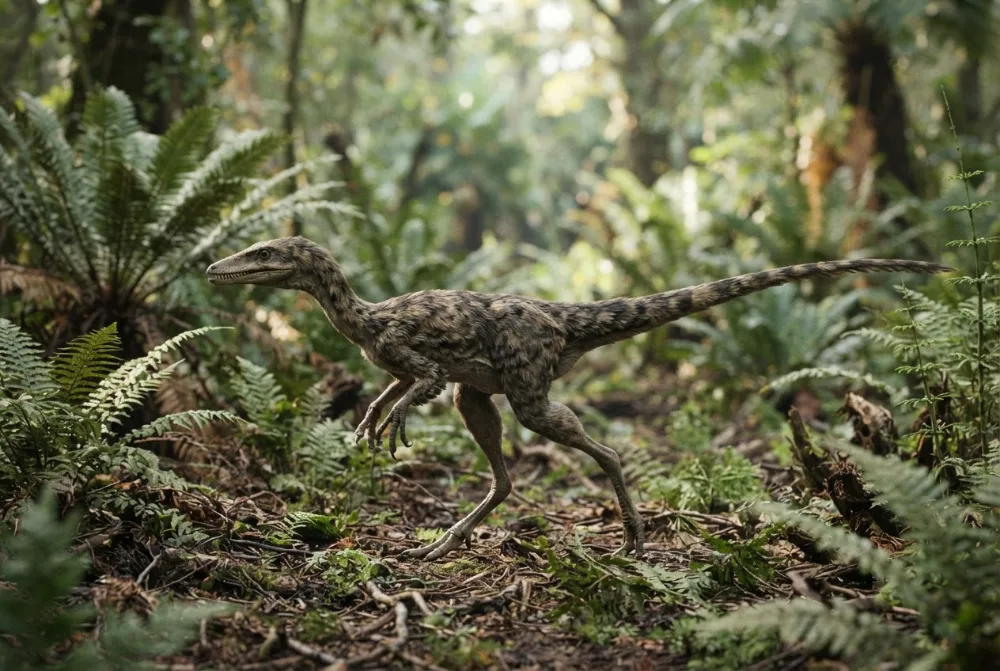
Compsognathus was a tiny, speedy dinosaur about the size of a chicken. It ran on two legs and hunted small lizards and insects. This little predator lived in Europe during the Late Jurassic period, around 150 million years ago.1
Yabayeho ryari?
Yanganaga ite?
Yari ndende ite?
Ubutumburuke bwayo bwanganaga iki?
Yari iremereye ite?
 ndende nk'injangwe 3 zo mu rugo zikurikiranye🍌ndende nk'imineke 8 ikurikiranyeiremereye nk'injangwe yo mu rugo🍌iremereye nk'imineke 25🪑nto ku buryo yanyura munsi y'intebe🏃yashoboraga kwiruka metero 100 mu masegonda 5,6 (umuntu wihuta kurusha abandi akenera 9,6)
Compsognathus yanganaga ite ugereranyije NAWE?
Ni imibare gusa ibarirwa muri mushakisha yawe. Nta kintu kibikwa cyangwa cyoherezwa ahandi.
Yihutaga ite?


Utuntu dushimishije
Compsognathus was one of the smallest dinosaurs ever discovered. Until the 1990s, it was the smallest known non-bird dinosaur.1
Scientists know exactly what Compsognathus ate because both fossils have the remains of lizards in their bellies.1
The first Compsognathus fossil was found in Germany in the 1850s. It was originally thought to be a lizard, not a dinosaur.1
Compsognathus lived on islands in a warm, tropical sea. Its fossils were preserved in fine limestone that was once lagoon mud.1
The German specimen of Compsognathus is only about 0.7 metres (2.3 feet) long. Scientists think it was a juvenile.21
Compsognathus had small, sharp teeth. The front teeth had no serrations, but the back teeth had fine serrations on the rear edge.1
Ibibazo bibazwa cyane kuri Compsognathus
?How big was Compsognathus?
The smaller German specimen was about 0.7 to 0.9 m (2.3 to 3 ft) long and weighed around 0.3 to 0.6 kg (0.7 to 1.3 lb). The larger French specimen reached about 1.25 to 1.4 m (4.1 to 4.6 ft) and weighed up to 3.5 kg (7.7 lb).12
?Was Compsognathus a dinosaur?
Yes, Compsognathus was a small, bipedal, carnivorous theropod dinosaur. It is one of the first theropod dinosaurs known from a nearly complete skeleton.1
?What did Compsognathus eat?
Compsognathus was a carnivore that ate small vertebrates, especially lizards. Both known fossils have lizard remains preserved in their stomachs.12
?How fast could Compsognathus run?
Maybe up to about 64 km/h (40 mph), almost as fast as a galloping horse! A computer model of its legs and muscles worked this out, though some scientists think that is too fast. It was small, light and very quick.3
?Did Compsognathus have feathers?
No direct feather fossils have been found with Compsognathus. It lived in the same environment as the feathered dinosaur Archaeopteryx, so some scientists think it may have had simple feathers, but there is no proof yet.1
?Was Compsognathus smaller than a chicken?
The German specimen was roughly chicken-sized, about 0.7 m (2.3 ft) long. The French specimen was larger, about 1.25 to 1.4 m (4.1 to 4.6 ft).12
?When did Compsognathus live?
Compsognathus lived about 150 million years ago, during the late Jurassic period. Its fossils are from the Tithonian age.12
?Where was Compsognathus found?
Two nearly complete fossils have been found: one in Bavaria, Germany, discovered in the 1850s, and one in Canjuers near Nice, France, discovered in the 1970s. Possible teeth have also been found in Portugal.12
?Could Compsognathus swim?
There is no evidence that Compsognathus could swim, but it lived on tropical islands near lagoons and may have occasionally entered shallow water.1
?Was Compsognathus the smallest dinosaur?
Until the 1990s, it was the smallest known non-bird dinosaur, but later discoveries like Microraptor and Mahakala are even smaller.1
Gusenya ibinyoma
Ibivugwa: Compsognathus is often shown as a tiny dinosaur that hunted in packs.
Ukuri: There is no evidence that Compsognathus lived or hunted in groups. The fossils found are of single animals.1
Ku bazobereye muri dinozore
- Izina rya siyansi
- Compsognathus
- Yiswe na
- Wagner 18614
- Itsinda
- Dinozore zirya inyama
- Umuryango / ishami
- Compsognathidae4
- Ishyirwa mu byiciro
- Theropoda > Compsognathidae4
- Imyaka y'amabuye
- imyaka miliyoni 155 kugeza 145 (Kimmeridgian / Tithonian)4
- Inzego z'amabuye
- Alcobaça, Painten4
- Ibihugu
- Ubufaransa, Porutugali, Ubudage4
- Ibisigazwa byanditswe
- 4 muri The Paleobiology Database4
- Ivumburwa
- The first Compsognathus fossil was found in Germany in the 1850s by a doctor named Joseph Oberndorfer. He lent it to paleontologist Johann A. Wagner, who named it Compsognathus longipes in 1859.1
- Biracyagibwaho impaka
- Scientists are not sure if the smaller German specimen is a juvenile or a different species. Some think both fossils belong to the same species, Compsognathus longipes.1
Aho amakuru yakuwe
- Compsognathus (en.wikipedia.org)
- Compsognathus | Natural History Museum (nhm.ac.uk)
- Compsognathus- Enchanted Learning Software (enchantedlearning.com)
- Compsognathus in The Paleobiology Database (CC BY 4.0): imyaka, ahantu, inzego z'amabuye, ishyirwa mu byiciro.
Buri kintu kiri kuri uru rupapuro gifite nimero yerekana aho cyakuwe. Niba hari icyo twibeshye, tubabarire, turi abakunzi ba dinozore, ntituri ikinyamakuru cya siyansi. Tubwire kuri [email protected] tuzagikosora.
 Rex arashonje! Dino Wiki ni umushinga wa papa umwe yakoreye umuhungu we ukunda dinozore, ni ubuntu, nta matangazo kandi nta bigukurikirana. Abantu bakuru bashobora guha Rex akantu ko kurya kugira ngo Dino Wiki ikomeze kuboneka kuri interineti.Gaburira Rex
 Allosaurus
 Carnotaurus
 Dilophosaurus
 Giganotosaurus
 Paronychodon
 Megalosaurus
 Brachiosaurus
 Diplodocus
 Brontosaurus
 Camarasaurus
 Morosaurus
 Apatosaurus