 Uri dinozore iyihe? Umukino w'ibibazo
 Intambara ya dinozore
 Isiganwa rya dinozore
 Imikino mito ya dinozore
 Alubumu ya sitikeri
 Intonde za TOP za dinozore
 Ntungura!
Yabayeho ryari?

Yanganaga ite?
Yari ndende ite?
Ubutumburuke bwayo bwanganaga iki?
igereranya
Yari iremereye ite?
 ndende nk'imbwa 3 zikurikiranye🍌ndende nk'imineke 17 ikurikiranye
 iremereye nk'injangwe 10 zo mu rugo🍉iremereye nk'imbuto 8 za watermelon🧸iremereye nk'abana 2 bo mu ishuri ry'incuke🎒iremereye nk'abanyeshuri 1🏃yashoboraga kwiruka metero 100 mu masegonda 7,5 (umuntu wihuta kurusha abandi akenera 9,6)
Dromaeosauroides yanganaga ite ugereranyije NAWE?
Ni imibare gusa ibarirwa muri mushakisha yawe. Nta kintu kibikwa cyangwa cyoherezwa ahandi.
Yihutaga ite?


Utuntu dushimishije
Dromaeosauroides is the first dinosaur ever found in Denmark and the only one that has been given a scientific name.1
It is known from only two teeth, one found in 2000 and another in 2008.1
The first tooth was declared a 'Danekræ' (Danish creature) because of its scientific importance.1
Dromaeosauroides lived about 140 million years ago in a coastal lagoon environment.1
Scientists think Dromaeosauroides used its large sickle claw to grip and hold onto prey while eating it, like a bird of prey does.1
Some fossil droppings (coprolites) found in the same area contain fish scales and may have come from Dromaeosauroides or a similar dromaeosaur.1
Dromaeosauroides is one of the oldest known dromaeosaurs in the world.1
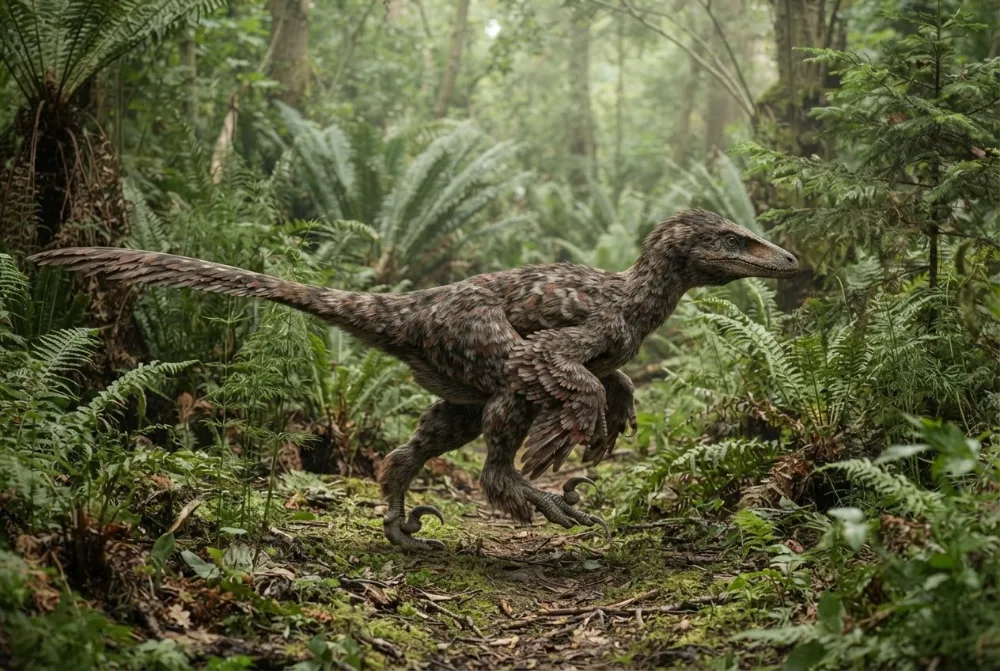
Ibibazo bibazwa cyane kuri Dromaeosauroides
?How big was Dromaeosauroides?
Dromaeosauroides was about 2 to 3 metres (7 to 10 ft) long and weighed around 40 kilograms (88 lb). Some estimates suggest it could have been up to 3 to 4 metres (9.8 to 13.1 ft) long.1
?Did Dromaeosauroides have feathers?
Yes, as a dromaeosaur, Dromaeosauroides would have been covered in feathers. A life-sized sculpture at the NaturBornholm centre shows it with feathers.1
?What did Dromaeosauroides eat?
Dromaeosauroides was a meat-eater. It likely used its large sickle claw to grip and hold prey while eating it, and may have even caught fish.1
?When did Dromaeosauroides live?
Dromaeosauroides lived about 140 million years ago, during the Early Cretaceous period.1
Ku bazobereye muri dinozore
- Izina rya siyansi
- Dromaeosauroides
- Yiswe na
- Christiansen and Bonde 20032
- Itsinda
- Raputori
- Umuryango / ishami
- Dromaeosauridae2
- Ishyirwa mu byiciro
- Theropoda > Dromaeosauridae2
- Imyaka y'amabuye
- imyaka miliyoni 139 kugeza 137 (Berriasian)2
- Inzego z'amabuye
- Jydegaard2
- Ibihugu
- Danimarike2
- Ibisigazwa byanditswe
- 1 muri The Paleobiology Database2
- Ivumburwa
- The first tooth was found in September 2000 by geology student Eliza Jarl Estrup during a field course taught by palaeontologists Per Christiansen and Niels Bonde. They named the dinosaur Dromaeosauroides bornholmensis in 2003.1
- Biracyagibwaho impaka
- Scientists are not sure exactly how Dromaeosauroides used its large sickle claw, but most think it was for gripping and holding prey.1
Aho amakuru yakuwe
- Dromaeosauroides (en.wikipedia.org)
- Dromaeosauroides in The Paleobiology Database (CC BY 4.0): imyaka, ahantu, inzego z'amabuye, ishyirwa mu byiciro.
Buri kintu kiri kuri uru rupapuro gifite nimero yerekana aho cyakuwe. Niba hari icyo twibeshye, tubabarire, turi abakunzi ba dinozore, ntituri ikinyamakuru cya siyansi. Tubwire kuri [email protected] tuzagikosora.
 Rex arashonje! Dino Wiki ni umushinga wa papa umwe yakoreye umuhungu we ukunda dinozore, ni ubuntu, nta matangazo kandi nta bigukurikirana. Abantu bakuru bashobora guha Rex akantu ko kurya kugira ngo Dino Wiki ikomeze kuboneka kuri interineti.Gaburira Rex
 Velociraptor
 Microraptor
 Deinonychus
 Asiamericana
 Richardoestesia
 Saurornitholestes
 Stegosaurus
 Iguanodon
 Archaeopteryx
 Giganotosaurus
 Baryonyx
 Paronychodon