 Uri dinozore iyihe? Umukino w'ibibazo
 Intambara ya dinozore
 Isiganwa rya dinozore
 Imikino mito ya dinozore
 Alubumu ya sitikeri
 Intonde za TOP za dinozore
 Ntungura!
Erliansaurus
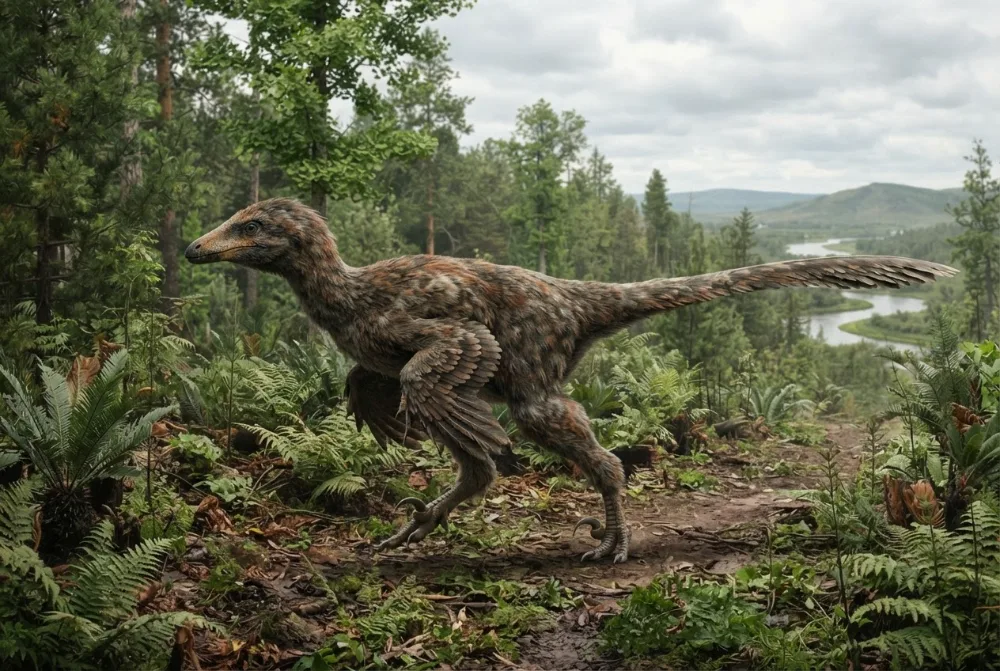
Erliansaurus was a plant-eating dinosaur with giant claws on its hands. It lived in what is now Inner Mongolia, China, about 85 to 68 million years ago. Even though it looked a bit like a giant sloth, it was actually a type of theropod dinosaur, related to T. rex!12
Yabayeho ryari?
Yanganaga ite?
Yari ndende ite?
Ubutumburuke bwayo bwanganaga iki?
igereranya
Yari iremereye ite?
 ndende nk'imbwa 4 zikurikiranye🍌ndende nk'imineke 22 ikurikiranye🍉iremereye nk'imbuto 80 za watermelon🧸iremereye nk'abana 21 bo mu ishuri ry'incuke🎒iremereye nk'abanyeshuri 12🏃yashoboraga kwiruka metero 100 mu masegonda 12 (umuntu wihuta kurusha abandi akenera 9,6)
Erliansaurus yanganaga ite ugereranyije NAWE?
Ni imibare gusa ibarirwa muri mushakisha yawe. Nta kintu kibikwa cyangwa cyoherezwa ahandi.
Yihutaga ite?


Utuntu dushimishije
Erliansaurus had very long and sharp claws on its hands, and the thumb claw was the biggest of all.1
Its left arm is almost complete and beautifully preserved, which is why its species name means 'beautiful hand'.1
No skull bones of Erliansaurus have ever been found, so we don't know exactly what its head looked like.1
Erliansaurus lived at the same time and place as another therizinosaur called Neimongosaurus.1
Its thigh bone (femur) is very straight and about 41 centimeters (16 inches) long.1
Erliansaurus was a therizinosaur, a group of dinosaurs that looked like they had potbellies, long necks, and huge claws.1
Ibibazo bibazwa cyane kuri Erliansaurus
?How big was Erliansaurus?
It was a small to medium sized dinosaur, about 2.6 to 4 metres (8.5 to 13.1 feet) long and weighed 91 to 400 kilograms (201 to 882 pounds).1
?What did Erliansaurus eat?
Erliansaurus was a plant-eater, or herbivore.1
?Did Erliansaurus have feathers?
Yes, Erliansaurus was a theropod dinosaur, and many theropods, especially close relatives like therizinosaurs, are thought to have had feathers.1
?When did Erliansaurus live?
It lived during the Late Cretaceous period, about 85 to 68 million years ago.1
?Why is Erliansaurus called 'beautiful hand'?
Its species name, bellamanus, means 'beautiful hand' in Latin because its left arm and claws are so well preserved.1
?Was Erliansaurus bigger than Neimongosaurus?
Scientists think it might have been, because the only Erliansaurus fossil found is from a young animal that was not fully grown, so adults could have been larger than Neimongosaurus.1
Ku bazobereye muri dinozore
- Izina rya siyansi
- Erliansaurus
- Yiswe na
- Xu et al. 20022
- Itsinda
- Dinozore zidasanzwe zifite ibyoya
- Umuryango / ishami
- Therizinosauridae2
- Ishyirwa mu byiciro
- Theropoda > Therizinosauria2
- Imyaka y'amabuye
- imyaka miliyoni 84 kugeza 72 (Campanian)2
- Inzego z'amabuye
- Iren Dabasu2
- Ibihugu
- Ubushinwa2
- Ibisigazwa byanditswe
- 1 muri The Paleobiology Database2
- Ivumburwa
- Erliansaurus was discovered in 1999 near Sanhangobi in Inner Mongolia. A team of scientists led by Xu Xing named it in 2002, and the name comes from the town of Erlian.12
- Biracyagibwaho impaka
- Scientists are not sure whether Erliansaurus is a primitive or a more advanced therizinosaur. Different studies place it in different parts of the family tree.1
Aho amakuru yakuwe
- Erliansaurus (en.wikipedia.org)
- Erliansaurus in The Paleobiology Database (CC BY 4.0): imyaka, ahantu, inzego z'amabuye, ishyirwa mu byiciro.
Buri kintu kiri kuri uru rupapuro gifite nimero yerekana aho cyakuwe. Niba hari icyo twibeshye, tubabarire, turi abakunzi ba dinozore, ntituri ikinyamakuru cya siyansi. Tubwire kuri [email protected] tuzagikosora.
 Rex arashonje! Dino Wiki ni umushinga wa papa umwe yakoreye umuhungu we ukunda dinozore, ni ubuntu, nta matangazo kandi nta bigukurikirana. Abantu bakuru bashobora guha Rex akantu ko kurya kugira ngo Dino Wiki ikomeze kuboneka kuri interineti.Gaburira Rex
 Therizinosaurus
 Oviraptor
 Chirostenotes
 Citipes
 Leptorhynchos
 Avimimus
 Tyrannosaurus
 Triceratops
 Velociraptor
 Spinosaurus
 Ankylosaurus
 Parasaurolophus