 Uri dinozore iyihe? Umukino w'ibibazo
 Intambara ya dinozore
 Isiganwa rya dinozore
 Imikino mito ya dinozore
 Alubumu ya sitikeri
 Intonde za TOP za dinozore
 Ntungura!
Geminiraptor
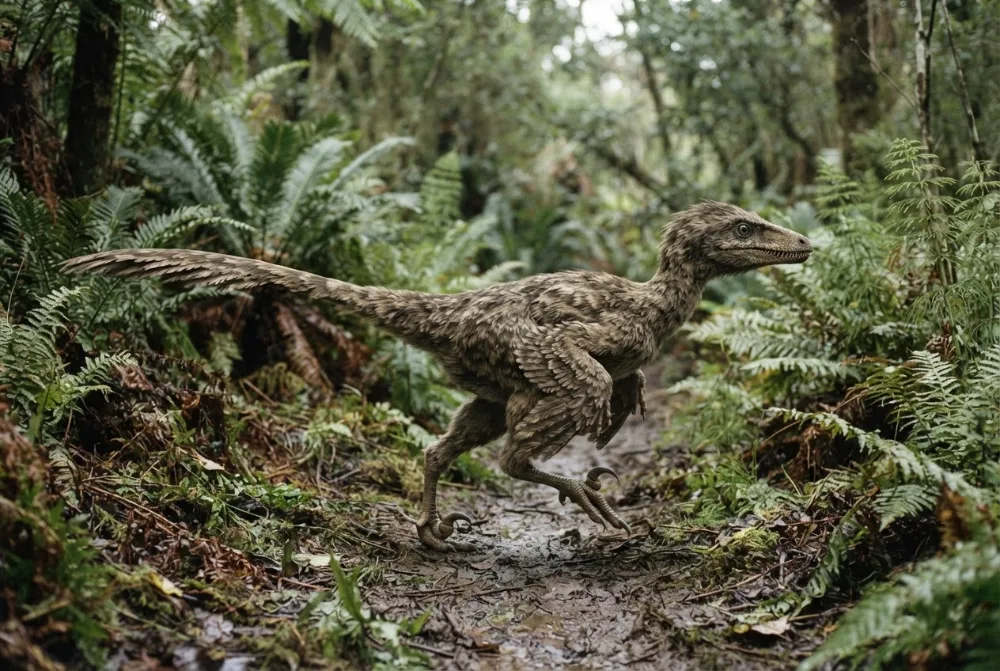
Geminiraptor was a small, fast, meat-eating dinosaur with lots of sharp teeth. It lived in what is now Utah, USA, about 139 to 134 million years ago. This dinosaur was a troodontid, a group known for being brainy and bird-like.1
Yabayeho ryari?
Yanganaga ite?
Yari ndende ite?
Ubutumburuke bwayo bwanganaga iki?
Yari iremereye ite?
 ndende nk'injangwe 3 zo mu rugo zikurikiranye🍌ndende nk'imineke 8 ikurikiranye🍌iremereye nk'imineke 76🏃yashoboraga kwiruka metero 100 mu masegonda 12 (umuntu wihuta kurusha abandi akenera 9,6)
Geminiraptor yanganaga ite ugereranyije NAWE?
Ni imibare gusa ibarirwa muri mushakisha yawe. Nta kintu kibikwa cyangwa cyoherezwa ahandi.
Yihutaga ite?


Utuntu dushimishije
Geminiraptor is named after twin geologists Marina and Celina Suarez, who discovered the fossil site. The name means 'twin seizer'.1
Only one piece of the skull, an upper jaw bone called a maxilla, has been found. Scientists think the whole dinosaur was about 1.5 meters (5 feet) long.1
Its upper jaw had at least 19 teeth, and the sockets were square-shaped, which is unusual. This feature is only known in one other troodontid, Sinovenator.1
Geminiraptor's upper jaw had a big air pocket inside, giving it a triangular shape when cut across. This helped make the skull lighter.1
It lived alongside other dinosaurs such as the theropods Falcarius and Yurgovuchia, the sauropod Mierasaurus, and the large plant-eater Iguanacolossus.1
Ibibazo bibazwa cyane kuri Geminiraptor
?How big was Geminiraptor?
It was a small dinosaur, about 1.5 metres (5 feet) long and weighed roughly 2.3 to 9 kilograms (5 to 20 pounds).1
?What did Geminiraptor eat?
It was a meat-eater, a carnivore that likely hunted small animals. Its many sharp teeth helped it catch and eat prey.14
?When did Geminiraptor live?
It lived during the Early Cretaceous period, about 139 to 134 million years ago.1
?Where was Geminiraptor found?
Its only fossil, an upper jaw bone, was found in Utah, USA, in the Cedar Mountain Formation.14
?Is Geminiraptor a dinosaur?
Yes, it is a dinosaur. It belongs to the group Troodontidae, which are small, bird-like theropod dinosaurs.1
?Why is it called Geminiraptor?
Its name means 'twin seizer' in Latin, after the twin geologists Marina and Celina Suarez who found the fossil site.1
Ku bazobereye muri dinozore
- Izina rya siyansi
- Geminiraptor
- Yiswe na
- Senter et al. 20104
- Itsinda
- Raputori
- Umuryango / ishami
- Troodontidae4
- Ishyirwa mu byiciro
- Theropoda > Troodontidae4
- Imyaka y'amabuye
- imyaka miliyoni 137 kugeza 133 (Valanginian)4
- Inzego z'amabuye
- Cedar Mountain4
- Ibihugu
- Amerika4
- Ibisigazwa byanditswe
- 1 muri The Paleobiology Database4
- Ivumburwa
- Geminiraptor was named by Phil Senter, James I. Kirkland, John Bird, and Jeff A. Bartlett in 2010. It was described from a single upper jaw bone found in Utah, USA.1
- Biracyagibwaho impaka
- Scientists are not sure exactly where Geminiraptor fits in the troodontid family tree. It might be closely related to Sinovenator because both have bony walls between their tooth sockets.1
Aho amakuru yakuwe
- Geminiraptor (en.wikipedia.org)
- S-EPMC3002269 - A new troodontid theropod dinosaur from the lower Cretaceous of Utah. - OmicsDI (omicsdi.org)
- Falcarius (Wikipedia) (Wikipedia)
- Geminiraptor in The Paleobiology Database (CC BY 4.0): imyaka, ahantu, inzego z'amabuye, ishyirwa mu byiciro.
Buri kintu kiri kuri uru rupapuro gifite nimero yerekana aho cyakuwe. Niba hari icyo twibeshye, tubabarire, turi abakunzi ba dinozore, ntituri ikinyamakuru cya siyansi. Tubwire kuri [email protected] tuzagikosora.
 Rex arashonje! Dino Wiki ni umushinga wa papa umwe yakoreye umuhungu we ukunda dinozore, ni ubuntu, nta matangazo kandi nta bigukurikirana. Abantu bakuru bashobora guha Rex akantu ko kurya kugira ngo Dino Wiki ikomeze kuboneka kuri interineti.Gaburira Rex
 Velociraptor
 Microraptor
 Deinonychus
 Asiamericana
 Richardoestesia
 Saurornitholestes
 Stegosaurus
 Iguanodon
 Archaeopteryx
 Giganotosaurus
 Baryonyx
 Paronychodon