 Uri dinozore iyihe? Umukino w'ibibazo
 Intambara ya dinozore
 Isiganwa rya dinozore
 Imikino mito ya dinozore
 Alubumu ya sitikeri
 Intonde za TOP za dinozore
 Ntungura!
Gurilynia
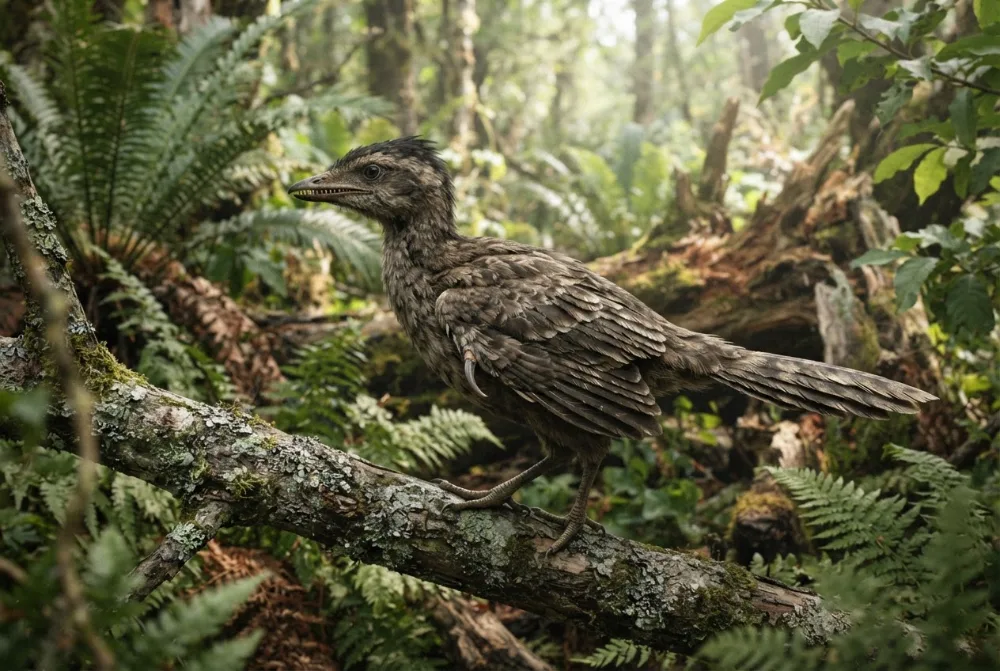
Gurilynia was a big, ancient bird that lived in Mongolia near the end of the Age of Dinosaurs. It was one of the largest birds of its time, about the size of a modern chicken but much heavier. It flew over dry plains and hunted for food.1
Yabayeho ryari?
Yanganaga ite?
Yari ndende ite?
Ubutumburuke bwayo bwanganaga iki?
Yari iremereye ite?
 iremereye nk'injangwe yo mu rugo🍌iremereye nk'imineke 18🧱ndende nk'ibikinisho 17 byo kubaka bikurikiranye🪑nto ku buryo yanyura munsi y'intebe⚽yashoboraga kuguruka ikambuka ikibuga cyose cy'umupira w'amaguru mu masegonda 11
Gurilynia yanganaga ite ugereranyije NAWE?
Ni imibare gusa ibarirwa muri mushakisha yawe. Nta kintu kibikwa cyangwa cyoherezwa ahandi.
Yihutaga ite?


Utuntu dushimishije
Gurilynia is known from only three partial bones: the top end of a right upper arm bone, the bottom end of a left upper arm bone, and the shoulder end of a left coracoid.1
It was the largest bird ever found from the Cretaceous period in Mongolia, weighing about 2.1 kilograms (4.6 pounds).1
The head of its upper arm bone was about 29 millimeters (1.1 inches) wide, much bigger than that of Pengornis, the largest Early Cretaceous enantiornithine.1
Gurilynia belonged to a group of ancient birds called enantiornithines, which had teeth and claws on their wings.1
It lived between 70 and 66 million years ago, right before the mass extinction that wiped out the non-avian dinosaurs.1
The fossils were found in the Nemegt Formation, which was a wet floodplain with rivers and forests during the Late Cretaceous.1
Ku bazobereye muri dinozore
- Izina rya siyansi
- Gurilynia
- Yiswe na
- Kurochkin 19993
- Itsinda
- Inyoni za mbere
- Umuryango / ishami
- Enantiornithidae3
- Ishyirwa mu byiciro
- Theropoda > Avialae3
- Imyaka y'amabuye
- imyaka miliyoni 72 kugeza 66 (Maastrichtian)3
- Inzego z'amabuye
- Nemegt3
- Ibihugu
- Mongoliya3
- Ibisigazwa byanditswe
- 1 muri The Paleobiology Database3
- Ivumburwa
- Gurilynia was named by Russian paleontologist Evgeny Kurochkin in 1999, based on fossils collected from the Gurilyn Tsav locality in Mongolia. The species name nessovi honors a colleague.12
- Biracyagibwaho impaka
- Scientists are not sure exactly how big Gurilynia was because only a few bone fragments have been found. The size estimates might change if more complete fossils are discovered.1
Aho amakuru yakuwe
- Gurilynia (en.wikipedia.org)
- PBDB Taxon (paleobiodb.org)
- Gurilynia in The Paleobiology Database (CC BY 4.0): imyaka, ahantu, inzego z'amabuye, ishyirwa mu byiciro.
Buri kintu kiri kuri uru rupapuro gifite nimero yerekana aho cyakuwe. Niba hari icyo twibeshye, tubabarire, turi abakunzi ba dinozore, ntituri ikinyamakuru cya siyansi. Tubwire kuri [email protected] tuzagikosora.
 Rex arashonje! Dino Wiki ni umushinga wa papa umwe yakoreye umuhungu we ukunda dinozore, ni ubuntu, nta matangazo kandi nta bigukurikirana. Abantu bakuru bashobora guha Rex akantu ko kurya kugira ngo Dino Wiki ikomeze kuboneka kuri interineti.Gaburira Rex
 Archaeopteryx
 Hesperornis
 Ichthyornis
 Baptornis
 Jurapteryx
 Gobipteryx
 Tyrannosaurus
 Triceratops
 Velociraptor
 Spinosaurus
 Ankylosaurus
 Parasaurolophus