 Uri dinozore iyihe? Umukino w'ibibazo
 Intambara ya dinozore
 Isiganwa rya dinozore
 Imikino mito ya dinozore
 Alubumu ya sitikeri
 Intonde za TOP za dinozore
 Ntungura!
Helicoprion
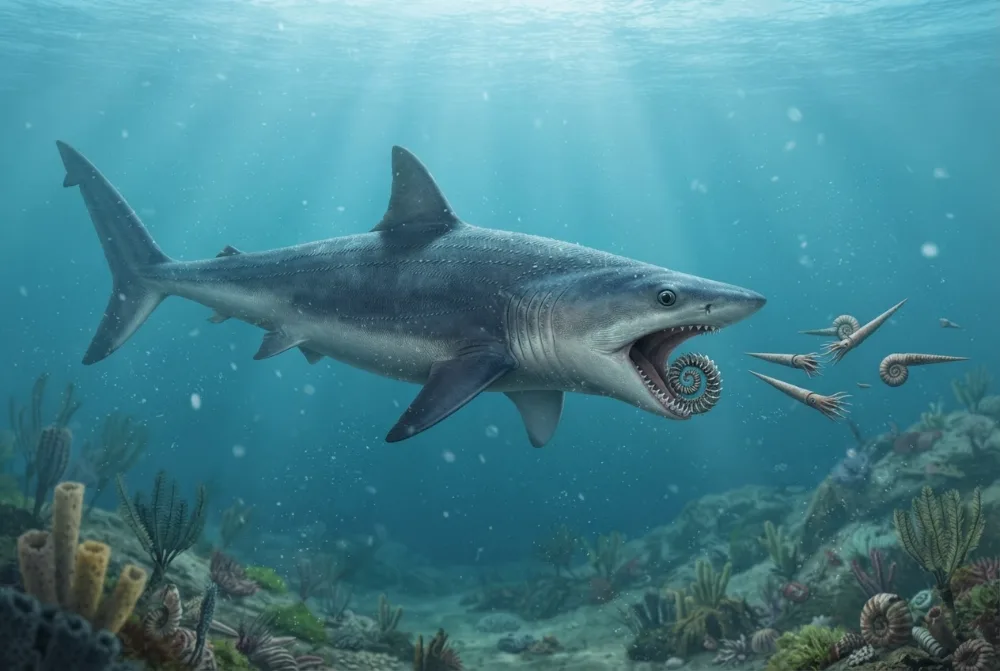
Helicoprion was a shark-like fish that lived in the Permian seas. It had a strange, spiral-shaped tooth whorl in its lower jaw that looked like a buzz-saw. This helped it catch and eat soft prey like squid and other cephalopods.12
Yabayeho ryari?
Yanganaga ite?
Yari ndende ite?
 ndende nk'imodoka 2,5 ziparitse ku murongo🍌ndende nk'imineke 67 ikurikiranye🏊yashoboraga koga uburebure bwa pisine nini (50 m) mu masegonda 6
Helicoprion yanganaga ite ugereranyije NAWE?
Ni imibare gusa ibarirwa muri mushakisha yawe. Nta kintu kibikwa cyangwa cyoherezwa ahandi.
Yihutaga ite?


Utuntu dushimishije
Helicoprion is known mostly from its spiral tooth whorls, because its skeleton was made of cartilage and did not fossilize easily.12
The tooth whorl sat in the lower jaw, and each tooth had a different job: front teeth hooked prey, middle teeth pierced and cut, and back teeth pushed food into the throat.12
Helicoprion lived during the Permian Period, about 290 to 270 million years ago, which is before the dinosaurs.1
Scientists think Helicoprion was an apex predator in its environment, and it may have gathered in deep inland seas like the Phosphoria Sea (now Idaho) to breed or hunt.1
The name Helicoprion comes from Greek words meaning 'spiral saw', because of its coiled tooth whorl.1
Helicoprion could grow up to 12 metres (39 feet) long, about as long as a school bus.1
Ibibazo bibazwa cyane kuri Helicoprion
?Was Helicoprion a dinosaur?
No, Helicoprion was a shark-like cartilaginous fish, not a dinosaur. It lived in the Permian seas long before the first dinosaurs appeared.1
?How big was Helicoprion?
Helicoprion is estimated to have reached lengths between 5 and 12 metres, about as long as a school bus.1
?What did Helicoprion eat?
Helicoprion ate soft-bodied prey like squid, belemnoids, and other cephalopods. It may also have eaten hard-shelled ammonoids and nautiloids by pulling the body out of the shell.12
?When did Helicoprion live?
Helicoprion lived from the Early to the Middle Permian, about 290 to 270 million years ago. That is before the dinosaurs.1
?Where was Helicoprion found?
Helicoprion fossils have been found all over the world, including in the United States (especially Idaho), Russia, Australia, China, and Japan. It lived in many seas.12
?How did Helicoprion use its tooth whorl?
The tooth whorl sat in the lower jaw and worked like a saw. Front teeth hooked prey, middle teeth pierced and cut, and back teeth pushed food into the throat.12
?Why did Helicoprion have a spiral tooth?
The spiral tooth whorl helped Helicoprion catch and eat soft prey like squid. It could also help shell hard-shelled animals by pulling the body out of the shell.12
?Is Helicoprion still alive?
No, Helicoprion went extinct about 270 million years ago, at the end of the Middle Permian. It is only known from fossils.1
?How fast could Helicoprion swim?
Maybe up to about 30 km/h (19 mph). This is a guess: nobody knows for sure. Its body was probably shaped like a tuna or mackerel shark, so it was likely a fast swimmer.1
?What would happen if Helicoprion was alive today?
If Helicoprion were alive today, it would be a large, fast-swimming predator that ate squid and fish. But it lived in the Permian and is extinct, so we can only imagine.1
Ku bazobereye muri dinozore
- Izina rya siyansi
- Helicoprion
- Yiswe na
- Karpinsky 18993
- Itsinda
- Ibyamamare bya kera
- Umuryango / ishami
- Helicoprionidae3
- Ishyirwa mu byiciro
- Chondrichthyes > Eugeneodontiformes > Helicoprionidae3
- Imyaka y'amabuye
- imyaka miliyoni 299 kugeza 254 (Asselian / Wuchiapingian)3
- Inzego z'amabuye
- Phosphoria, Assistance, Bone Spring3
- Ibihugu
- Amerika, Kanada, Ubuyapani, Megizike, Ositaraliya, Kazakisitani3
- Ibisigazwa byanditswe
- 35 muri The Paleobiology Database3
- Ivumburwa
- Helicoprion was first named in 1899 by Russian geologist Alexander Karpinsky, based on fossils found in Russia and Australia. The type species is Helicoprion bessonowi.13
- Biracyagibwaho impaka
- Scientists are still unsure about the exact shape of Helicoprion's body, because almost no skeleton has been found, only tooth whorls.12
Aho amakuru yakuwe
- Helicoprion (en.wikipedia.org)
- Helicoprion - The Australian Museum (australian.museum)
- Helicoprion in The Paleobiology Database (CC BY 4.0): imyaka, ahantu, inzego z'amabuye, ishyirwa mu byiciro.
Buri kintu kiri kuri uru rupapuro gifite nimero yerekana aho cyakuwe. Niba hari icyo twibeshye, tubabarire, turi abakunzi ba dinozore, ntituri ikinyamakuru cya siyansi. Tubwire kuri [email protected] tuzagikosora.
 Rex arashonje! Dino Wiki ni umushinga wa papa umwe yakoreye umuhungu we ukunda dinozore, ni ubuntu, nta matangazo kandi nta bigukurikirana. Abantu bakuru bashobora guha Rex akantu ko kurya kugira ngo Dino Wiki ikomeze kuboneka kuri interineti.Gaburira Rex
 Megalodon
 Sabre-toothed cat
 Dimetrodon
 Woolly mammoth
 Arthropleura
 Deinosuchus