 Uri dinozore iyihe? Umukino w'ibibazo
 Intambara ya dinozore
 Isiganwa rya dinozore
 Imikino mito ya dinozore
 Alubumu ya sitikeri
 Intonde za TOP za dinozore
 Ntungura!
Woolly mammoth
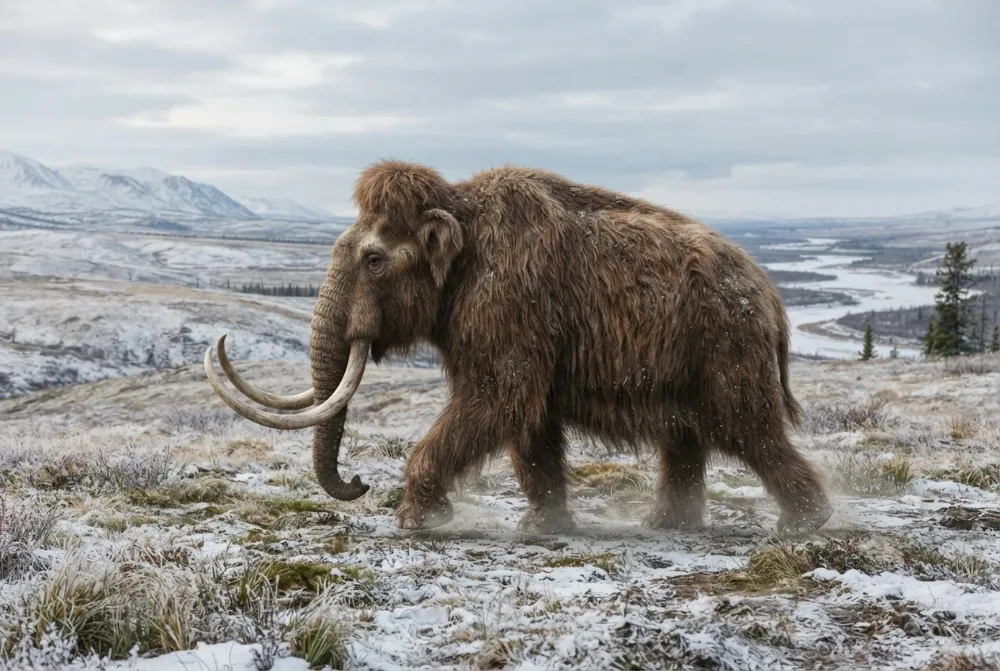
The woolly mammoth was a huge, furry elephant that lived during the Ice Age. It had long, curved tusks and a thick coat of hair to keep warm in the freezing cold. These amazing animals roamed across Europe, Asia, and North America.1
Yabayeho ryari?
Yanganaga ite?
Yari ndende ite?
Ubutumburuke bwayo bwanganaga iki?
Yari iremereye ite?

 ndende nk'imbwa 4 zikurikiranye🍌ndende nk'imineke 25 ikurikiranye
 iremereye nk'inzovu 1,5🍉iremereye nk'imbuto 1600 za watermelon🎒iremereye nk'ibyumba 10 by'amashuri byuzuye abana🐻❄️iremereye nk'idubu 18 zo mu rubura🏃yashoboraga kwiruka metero 100 mu masegonda 14 (umuntu wihuta kurusha abandi akenera 9,6)
Woolly mammoth yanganaga ite ugereranyije NAWE?
Ni imibare gusa ibarirwa muri mushakisha yawe. Nta kintu kibikwa cyangwa cyoherezwa ahandi.
Yihutaga ite?


Utuntu dushimishije
Woolly mammoths had very small ears and a short tail to stop them from getting frostbite in the cold.1
A newborn woolly mammoth calf weighed about 90 kilograms (200 pounds), as much as a large adult human.1
Woolly mammoths and Columbian mammoths sometimes mated and had hybrid babies in North America.1
The last woolly mammoths lived on Wrangel Island in the Arctic Ocean until about 4,000 years ago, when the Egyptian pyramids were already built.1
Woolly mammoths had four molars that were replaced six times during their life, just like modern elephants.1
Scientists have found frozen woolly mammoth carcasses with fur, skin, and even stomach contents still preserved.1
Ibibazo bibazwa cyane kuri Woolly mammoth
?How big was a woolly mammoth?
About the same size as a modern African elephant. Males stood 2.67 to 3.49 metres tall at the shoulder and weighed 3.9 to 8.2 tonnes.1
?What did woolly mammoths eat?
They mainly ate forbs and grasses. Their diet was similar to that of modern elephants.1
?When did woolly mammoths go extinct?
Most woolly mammoths died out about 10,000 years ago, but small groups survived on islands. The very last ones lived on Wrangel Island until about 4,000 years ago.1
?Did woolly mammoths have fur?
Yes, they had a thick, shaggy coat of fur to keep warm in the Ice Age cold. It had long guard hairs and a shorter, dense undercoat.1
?How long were woolly mammoth tusks?
Their tusks were long and curved, but the exact length varied. They used them for fighting, foraging, and moving objects.1
?Did humans hunt woolly mammoths?
Yes, early humans hunted woolly mammoths for food and used their bones and tusks to make art, tools, and shelters.1
?Are woolly mammoths dinosaurs?
No, they are not dinosaurs. Woolly mammoths are mammals, specifically a type of extinct elephant.1
?Why did woolly mammoths have small ears?
Their small ears helped prevent frostbite and reduce heat loss in the freezing cold.1
?Can we bring woolly mammoths back?
Scientists have talked about trying to revive them using DNA, but none of those methods are possible right now.1
Gusenya ibinyoma
Ibivugwa: Many people think woolly mammoths lived only in snowy, icy landscapes.
Ukuri: Woolly mammoths actually lived on a dry, grassy steppe called the mammoth steppe, which was not covered in ice and snow all year.1
Ku bazobereye muri dinozore
- Izina rya siyansi
- Mammuthus primigenius
- Yiswe na
- (Blumenbach 1799)4
- Itsinda
- Ibyamamare bya kera
- Umuryango / ishami
- Elephantidae4
- Ishyirwa mu byiciro
- Mammalia > Proboscidea > Elephantidae4
- Imyaka y'amabuye
- imyaka miliyoni 7,2 kugeza 0,01 (Messinian / Holocene)4
- Inzego z'amabuye
- Wiota Gravels, Oberer Travertin4
- Ibihugu
- Amerika, Kanada, Ubudage, Ubwongereza, Uburusiya, Ubuholandi4
- Ibisigazwa byanditswe
- 77 muri The Paleobiology Database4
- Ivumburwa
- In 1796, French scientist Georges Cuvier was the first to show that woolly mammoth fossils were from an extinct species, not modern elephants. German naturalist Johann Friedrich Blumenbach gave it the scientific name Elephas primigenius in 1799.1
- Biracyagibwaho impaka
- Scientists are still debating exactly why woolly mammoths went extinct, whether it was due to climate change, hunting by humans, or a combination of both.1
Aho amakuru yakuwe
- Woolly mammoth (en.wikipedia.org)
- Genomics of adaptive evolution in the woolly mammoth: Current Biology (cell.com)
- Woolly Mammoth — size, diet & habitat | DinoLifePedia (dinolifepedia.com)
- Woolly mammoth in The Paleobiology Database (CC BY 4.0): imyaka, ahantu, inzego z'amabuye, ishyirwa mu byiciro.
Buri kintu kiri kuri uru rupapuro gifite nimero yerekana aho cyakuwe. Niba hari icyo twibeshye, tubabarire, turi abakunzi ba dinozore, ntituri ikinyamakuru cya siyansi. Tubwire kuri [email protected] tuzagikosora.
 Rex arashonje! Dino Wiki ni umushinga wa papa umwe yakoreye umuhungu we ukunda dinozore, ni ubuntu, nta matangazo kandi nta bigukurikirana. Abantu bakuru bashobora guha Rex akantu ko kurya kugira ngo Dino Wiki ikomeze kuboneka kuri interineti.Gaburira Rex
 Megalodon
 Sabre-toothed cat
 Dimetrodon
 Arthropleura
 Helicoprion
 Deinosuchus