 Uri dinozore iyihe? Umukino w'ibibazo
 Intambara ya dinozore
 Isiganwa rya dinozore
 Imikino mito ya dinozore
 Alubumu ya sitikeri
 Intonde za TOP za dinozore
 Ntungura!
Janavis
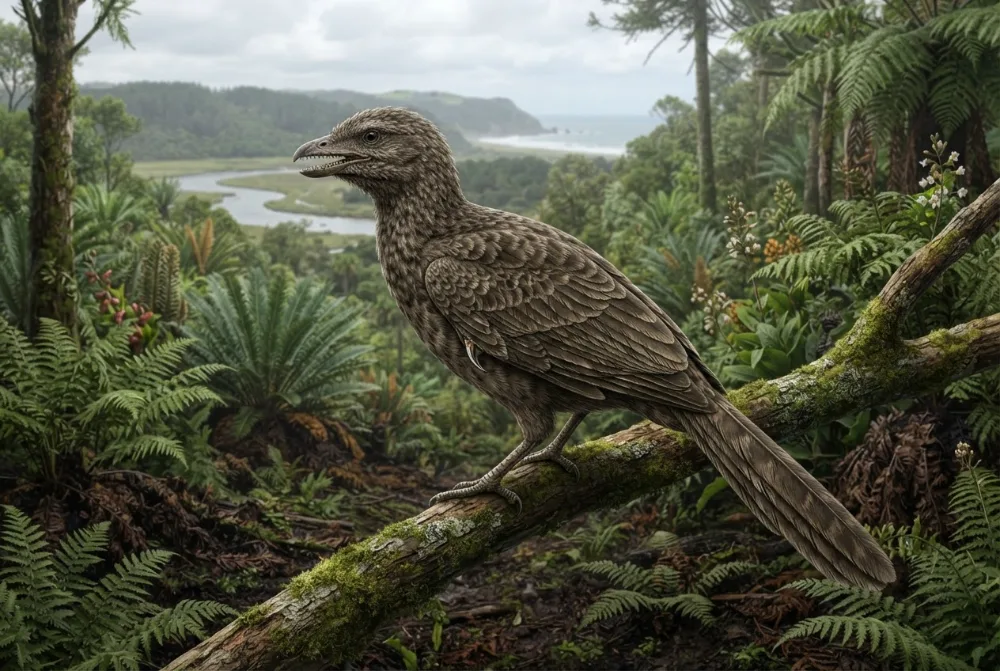
Janavis was a toothed bird that lived right at the end of the Age of Dinosaurs. It was one of the last birds with teeth, and its skull could move like a modern bird's skull.1
Yabayeho ryari?
Yanganaga ite?
Amababa yayo yari arambuye angana iki?
Yari iremereye ite?
 ndende nk'injangwe 3 zo mu rugo zikurikiranye🪶yoroheje kurusha injangwe yo mu rugo🍌iremereye nk'imineke 13⚽yashoboraga kuguruka ikambuka ikibuga cyose cy'umupira w'amaguru mu masegonda 9
Janavis yanganaga ite ugereranyije NAWE?
Ni imibare gusa ibarirwa muri mushakisha yawe. Nta kintu kibikwa cyangwa cyoherezwa ahandi.
Yihutaga ite?


Utuntu dushimishije
Janavis lived about 66.8 million years ago, just 800,000 years before the asteroid that killed the dinosaurs.1
Its wing bones were hollow and filled with air, like modern birds, making it lighter for flying.1
The fossil was found in a Belgian quarry in 2000 by an amateur fossil hunter named Rudi Dortangs.1
Janavis had a skull that could move its upper jaw up and down, a feature of modern birds called neognathous palate.1
Scientists first thought a piece of its skull was a wing bone, until a CT scan in 2021 showed the truth.1
Janavis was bigger than its relative Ichthyornis, with a wingspan of about 1.5 metres (5 feet).1
Ibibazo bibazwa cyane kuri Janavis
?How big was Janavis?
Janavis was a relatively large bird, with an estimated wingspan of about 1.5 metres (5 feet) and a weight of around 1.5 kilograms (3.3 pounds).12
?Did Janavis have teeth?
Yes, Janavis had teeth. It was one of the last toothed birds to ever live.12
?When did Janavis live?
Janavis lived about 66.8 million years ago, right at the end of the Cretaceous period, just 800,000 years before the asteroid impact.1
?Could Janavis fly?
Yes, Janavis could fly. Its wing bones were hollow and filled with air, like modern birds, making it lighter for flying.1
Gusenya ibinyoma
Ibivugwa: All ancient birds had rigid skulls like dinosaurs.
Ukuri: Janavis had a flexible skull like modern chickens and ducks, showing that movable skulls evolved early.1
Ku bazobereye muri dinozore
- Izina rya siyansi
- Janavis
- Yiswe na
- Benito et al. 20223
- Itsinda
- Inyoni za mbere
- Umuryango / ishami
- Ichthyornithes3
- Ishyirwa mu byiciro
- Theropoda > Avialae3
- Imyaka y'amabuye
- imyaka miliyoni 72 kugeza 66 (Maastrichtian)3
- Inzego z'amabuye
- Maastricht3
- Ibihugu
- Ububiligi3
- Ibisigazwa byanditswe
- 1 muri The Paleobiology Database3
- Ivumburwa
- The fossil was collected in 2000 by amateur palaeontologist Rudi Dortangs in Belgium. It was first reported in 2002, and in 2022 scientists named it Janavis finalidens after CT scans revealed its true identity.1
- Biracyagibwaho impaka
- Scientists debate whether Janavis could fly as well as modern birds, because its wing bones were very air-filled but its shoulder blade lacked a normal hook.1
Aho amakuru yakuwe
- Janavis (en.wikipedia.org)
- Bird beak evolved before dinosaur extinction | University of Cambridge (cam.ac.uk)
- Janavis in The Paleobiology Database (CC BY 4.0): imyaka, ahantu, inzego z'amabuye, ishyirwa mu byiciro.
Buri kintu kiri kuri uru rupapuro gifite nimero yerekana aho cyakuwe. Niba hari icyo twibeshye, tubabarire, turi abakunzi ba dinozore, ntituri ikinyamakuru cya siyansi. Tubwire kuri [email protected] tuzagikosora.
 Rex arashonje! Dino Wiki ni umushinga wa papa umwe yakoreye umuhungu we ukunda dinozore, ni ubuntu, nta matangazo kandi nta bigukurikirana. Abantu bakuru bashobora guha Rex akantu ko kurya kugira ngo Dino Wiki ikomeze kuboneka kuri interineti.Gaburira Rex
 Archaeopteryx
 Hesperornis
 Ichthyornis
 Baptornis
 Jurapteryx
 Gobipteryx
 Tyrannosaurus
 Triceratops
 Velociraptor
 Spinosaurus
 Ankylosaurus
 Parasaurolophus