 Uri dinozore iyihe? Umukino w'ibibazo
 Intambara ya dinozore
 Isiganwa rya dinozore
 Imikino mito ya dinozore
 Alubumu ya sitikeri
 Intonde za TOP za dinozore
 Ntungura!
Kerberosaurus
Kerberosaurus was a duck-billed dinosaur that lived in what is now Russia. It had a flat head and a wide, flattened crest around its nostrils. This plant-eater could walk on two legs or all fours.1
Yabayeho ryari?
Yanganaga ite?
Yari ndende ite?
Ubutumburuke bwayo bwanganaga iki?
igereranya
 ndende nk'imbwa 8 zikurikiranye🍌ndende nk'imineke 44 ikurikiranye🏃yashoboraga kwiruka metero 100 mu masegonda 14 (umuntu wihuta kurusha abandi akenera 9,6)
Kerberosaurus yanganaga ite ugereranyije NAWE?
Ni imibare gusa ibarirwa muri mushakisha yawe. Nta kintu kibikwa cyangwa cyoherezwa ahandi.
Yihutaga ite?


Utuntu dushimishije
Kerberosaurus is named after Kerberos, the three-headed dog that guarded the underworld in Greek myths.1
Its fossils were found in a bonebed with many other dinosaurs, including Amurosaurus, turtles, crocodiles, and even meat-eaters.1
Scientists think Kerberosaurus was closely related to Saurolophus and Prosaurolophus, which lived in North America.1
Kerberosaurus lived about 66 million years ago, right at the end of the Age of Dinosaurs.1
The first fossils of Kerberosaurus were discovered in 1984, but the dinosaur was not named until 2004.1
Kerberosaurus had a narrow frontal bone on its skull and a unique shape to its braincase.1
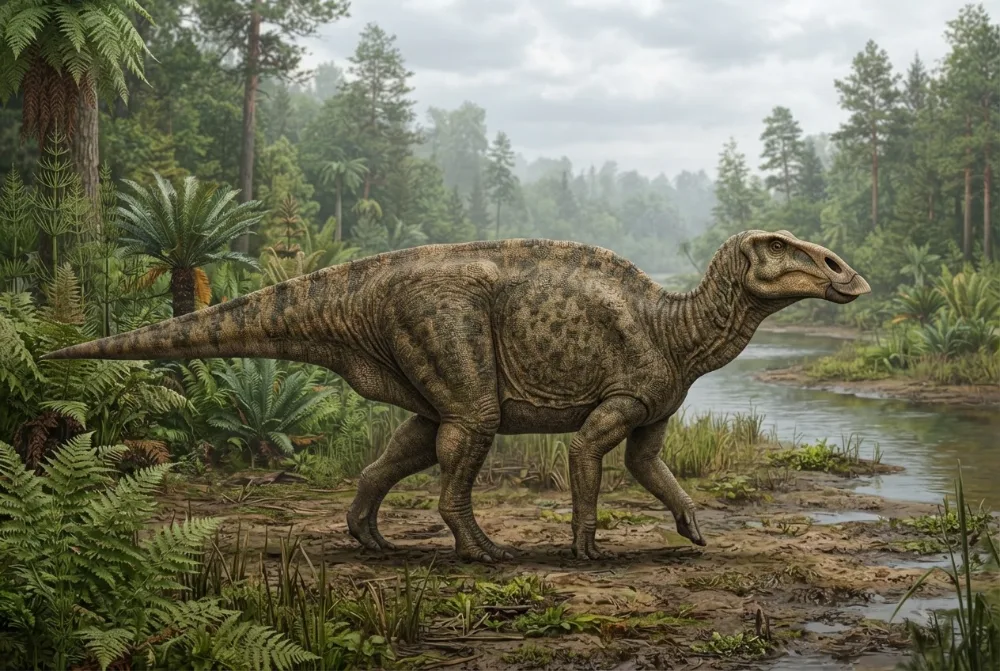
Ibibazo bibazwa cyane kuri Kerberosaurus
?How big was Kerberosaurus?
Kerberosaurus was about 8 metres (26 feet) long.1
?What did Kerberosaurus eat?
Kerberosaurus was a plant-eater. It ate plant matter using its complex teeth.1
?When did Kerberosaurus live?
Kerberosaurus lived about 66 million years ago, at the very end of the Age of Dinosaurs.1
?Where was Kerberosaurus found?
Kerberosaurus was found in Russia, in the Amur Region near Blagoveshchensk.1
Gusenya ibinyoma
Ibivugwa: Kerberosaurus might be the same dinosaur as Kundurosaurus.
Ukuri: Some scientists think Kundurosaurus is a younger name for the same animal, but others are not sure.2
Ku bazobereye muri dinozore
- Izina rya siyansi
- Kerberosaurus
- Yiswe na
- Bolotsky and Godefroit 20042
- Itsinda
- Iminwa y'imbata
- Umuryango / ishami
- Hadrosauridae2
- Ishyirwa mu byiciro
- Ornithischia > Ornithopoda > Iguanodontia > Hadrosauridae2
- Imyaka y'amabuye
- imyaka miliyoni 72 kugeza 66 (Maastrichtian)2
- Inzego z'amabuye
- Udurchukan2
- Ibihugu
- Uburusiya2
- Ibisigazwa byanditswe
- 2 muri The Paleobiology Database2
- Izwi kandi ku izina rya
- Kundurosaurus (amazina ya kera ubu abarwa nk'inyamaswa imwe)2
- Ivumburwa
- Yuri Bolotsky and the Amur Complex Integrated Research Institute found the first fossils in 1984 at a bonebed near Blagoveschensk, Russia. The dinosaur was named Kerberosaurus manakini by Bolotsky and Pascal Godefroit in 2004.1
- Biracyagibwaho impaka
- Scientists debate whether Kerberosaurus is the same as Kundurosaurus, another duck-billed dinosaur from the same area.2
Aho amakuru yakuwe
- Kerberosaurus (en.wikipedia.org)
- Kerberosaurus in The Paleobiology Database (CC BY 4.0): imyaka, ahantu, inzego z'amabuye, ishyirwa mu byiciro.
Buri kintu kiri kuri uru rupapuro gifite nimero yerekana aho cyakuwe. Niba hari icyo twibeshye, tubabarire, turi abakunzi ba dinozore, ntituri ikinyamakuru cya siyansi. Tubwire kuri [email protected] tuzagikosora.
 Rex arashonje! Dino Wiki ni umushinga wa papa umwe yakoreye umuhungu we ukunda dinozore, ni ubuntu, nta matangazo kandi nta bigukurikirana. Abantu bakuru bashobora guha Rex akantu ko kurya kugira ngo Dino Wiki ikomeze kuboneka kuri interineti.Gaburira Rex
 Parasaurolophus
 Edmontosaurus
 Saurolophus
 Hypacrosaurus
 Corythosaurus
 Kritosaurus
 Tyrannosaurus
 Triceratops
 Velociraptor
 Spinosaurus
 Ankylosaurus
 Pteranodon