 Uri dinozore iyihe? Umukino w'ibibazo
 Intambara ya dinozore
 Isiganwa rya dinozore
 Imikino mito ya dinozore
 Alubumu ya sitikeri
 Intonde za TOP za dinozore
 Ntungura!
Yabayeho ryari?

Yanganaga ite?
Yari ndende ite?
Ubutumburuke bwayo bwanganaga iki?
igereranya
Yari iremereye ite?
 ndende nk'imodoka 2 ziparitse ku murongo🍌ndende nk'imineke 56 ikurikiranye
 iremereye nk'inzovu🍉iremereye nk'imbuto 1000 za watermelon🎒iremereye nk'ibyumba 6 by'amashuri byuzuye abana🐻❄️iremereye nk'idubu 11 zo mu rubura🏃yashoboraga kwiruka metero 100 mu masegonda 19 (umuntu wihuta kurusha abandi akenera 9,6)
Mansourasaurus yanganaga ite ugereranyije NAWE?
Ni imibare gusa ibarirwa muri mushakisha yawe. Nta kintu kibikwa cyangwa cyoherezwa ahandi.
Yihutaga ite?


Utuntu dushimishije
Mansourasaurus is the most complete land-living vertebrate from the last 30 million years of the Age of Dinosaurs in Africa.1
Its skeleton includes parts of the skull, which is very rare for sauropods.1
Mansourasaurus is closely related to titanosaurs from Europe and Asia, showing that dinosaurs could walk between Africa and Europe.1
It lived about 83 to 72 million years ago, during the Campanian age.2
The name honors Mansoura University, where the research team worked.1
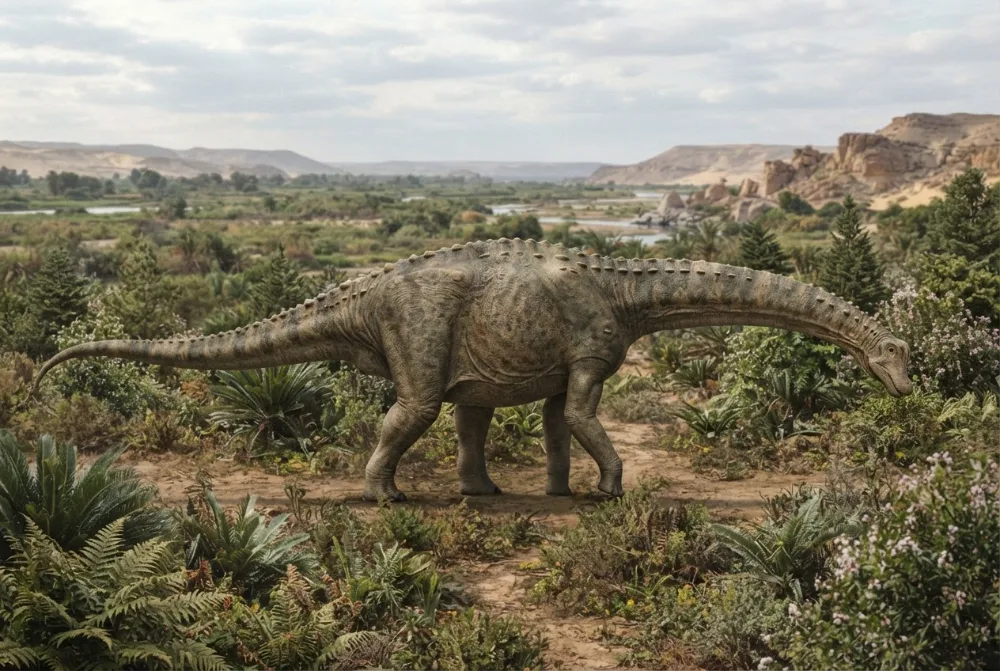
Ibibazo bibazwa cyane kuri Mansourasaurus
?How big was Mansourasaurus?
The not fully-grown holotype was about 8 to 10 metres (26 to 33 feet) long. It probably weighed about 5,000 kilograms, roughly the same as a bull African elephant.3
?What did Mansourasaurus eat?
Mansourasaurus was a herbivore, meaning it ate plants. Each lower jaw bone had ten teeth for chewing plant material.3
?When did Mansourasaurus live?
Mansourasaurus lived during the Late Cretaceous period, about 73 million years ago. Its fossils were found in rocks from the Campanian age.3
?Where was Mansourasaurus found?
Mansourasaurus was discovered in the Dakhla Oasis in Egypt's Western Desert. It was found in the Quseir Formation.3
Gusenya ibinyoma
Ibivugwa: Some people think African dinosaurs were completely isolated from Europe.
Ukuri: Mansourasaurus shows that dinosaurs could move between Africa and Europe, so they were not completely isolated.1
Ku bazobereye muri dinozore
- Izina rya siyansi
- Mansourasaurus
- Yiswe na
- Sallam et al. 20184
- Itsinda
- Izifite amajosi maremare
- Umuryango / ishami
- Diamantinasauria4
- Ishyirwa mu byiciro
- Sauropodomorpha > Sauropoda > Macronaria4
- Imyaka y'amabuye
- imyaka miliyoni 84 kugeza 72 (Campanian)4
- Inzego z'amabuye
- Quseir4
- Ibihugu
- Misiri4
- Ibisigazwa byanditswe
- 1 muri The Paleobiology Database4
- Ivumburwa
- Mansourasaurus was named by Sallam and colleagues in 2018 from fossils found in the Quseir Formation of Egypt.12
- Biracyagibwaho impaka
- Scientists still debate exactly where Mansourasaurus fits in the sauropod family tree, with some placing it in a group called Lithostrotia and others in Diamantinasauria.2
Aho amakuru yakuwe
- New Egyptian sauropod reveals Late Cretaceous dinosaur dispersal between Europe and Africa | Nature Ecology & Evolution (nature.com)
- PBDB Taxon (paleobiodb.org)
- Mansourasaurus (en.wikipedia.org)
- Mansourasaurus in The Paleobiology Database (CC BY 4.0): imyaka, ahantu, inzego z'amabuye, ishyirwa mu byiciro.
Buri kintu kiri kuri uru rupapuro gifite nimero yerekana aho cyakuwe. Niba hari icyo twibeshye, tubabarire, turi abakunzi ba dinozore, ntituri ikinyamakuru cya siyansi. Tubwire kuri [email protected] tuzagikosora.
 Rex arashonje! Dino Wiki ni umushinga wa papa umwe yakoreye umuhungu we ukunda dinozore, ni ubuntu, nta matangazo kandi nta bigukurikirana. Abantu bakuru bashobora guha Rex akantu ko kurya kugira ngo Dino Wiki ikomeze kuboneka kuri interineti.Gaburira Rex
 Brachiosaurus
 Diplodocus
 Brontosaurus
 Argentinosaurus
 Camarasaurus
 Morosaurus
 Tyrannosaurus
 Triceratops
 Velociraptor
 Spinosaurus
 Ankylosaurus
 Parasaurolophus